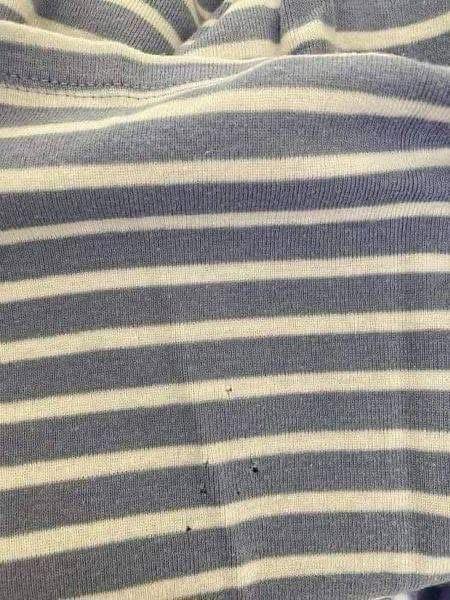
If you’ve ever pulled a favorite shirt out of the drawer and noticed tiny, mysterious holes—right around the stomach or chest—you know the feeling. That quick flash of annoyance mixed with confusion. How did this happen? I remember standing there one morning, holding up a striped tee I loved, staring at it like it had personally betrayed me.
I waited way too long before I realized what those little holes actually meant.
At first, I did what most people do: I blamed the washing machine. Or the dryer. Or cheap fabric. I told myself it must’ve snagged on something—maybe a zipper, maybe a button, maybe just bad luck. I folded it anyway, shoved it back into the drawer, and moved on.
Then it happened again.
Another shirt. Same kind of holes. Small, clean, almost intentional-looking. Not ripped seams. Not fraying edges. Just tiny dots, always clustered in the same general area. I started noticing a pattern—and once you see it, you can’t unsee it.
That’s when the slow realization crept in: this wasn’t random.
The Usual Suspects (That Aren’t Actually Guilty)
Before we get to the real cause, let’s clear a few things up—because most of us blame the wrong things.
Washing machines and dryers get accused first, but modern machines rarely cause pinpoint holes like this unless something sharp is involved. Even then, damage tends to be larger or more irregular.
Cheap fabric gets a bad reputation too, but even high-quality cotton shirts fall victim. This isn’t just a fast-fashion problem.
Moths are another popular guess—and while they can cause holes, they usually go for wool, cashmere, and natural fibers stored away for long periods. Plus, moth holes tend to appear in less obvious places, not right at waist level on your everyday shirts.
So if it’s not the washer, not the dryer, and probably not moths… what is it?
The Real Culprit (And Why No One Talks About It)
Here’s the part most people don’t realize until they’re already missing half their wardrobe:
Those tiny holes are often caused by friction—specifically between your clothes and everyday items you don’t even think about.
Things like:
- Belt buckles
- Jean buttons
- Zippers
- Countertops and desk edges
- Kitchen counters while cooking
- Bathroom sinks while brushing your teeth
Every time you lean forward against a hard surface, your shirt gets trapped between that surface and something rigid on your body—usually a metal button or buckle. Over time, that repeated rubbing weakens the fabric in one very specific spot.
That’s why the holes always show up in the same area.
It’s not one dramatic moment. It’s hundreds of tiny ones.
Why It Took Me So Long to Figure It Out
Looking back, the signs were obvious. I just didn’t know what I was looking for.
The holes weren’t jagged. They weren’t stretched. They were neat, almost circular, like someone poked them with a pin. And they showed up more often on shirts I wore while cooking, cleaning, or working at a desk.
Once I noticed that, everything clicked.
I thought about how often I lean against the kitchen counter while chopping vegetables. How I rest against the bathroom sink half-awake in the mornings. How my jeans have that sturdy metal button that presses right into my shirt all day long.
It wasn’t one bad wash.
It was daily life.
Why Some Shirts Are Hit Harder Than Others
Not all fabrics respond the same way to friction. Softer cottons, lightweight blends, and stretchy materials wear down faster. Add in a bit of tension—like bending forward or sitting down—and the fibers don’t stand a chance.
Dark shirts tend to hide early damage, so you don’t notice until the hole fully forms. Light shirts show it sooner, which tricks you into thinking it’s a color issue when it’s not.
And if you wear the same few favorites over and over (who doesn’t?), they’re naturally more vulnerable.
The Moment I Finally Stopped Losing Shirts
Once I understood what was happening, the fix was surprisingly simple.
I started paying attention to how I moved through my day.
I stopped leaning against counters as much. I switched to belts with smoother buckles. I tucked in shirts less aggressively when wearing jeans with heavy buttons. I even noticed that wearing an apron while cooking saved my tops without me even trying.
And the holes stopped appearing.
Not overnight—but noticeably.
What You Can Do Right Now
If you’re dealing with the same problem, here are a few easy changes that actually help:
- Be mindful of how often you lean against hard surfaces
- Choose smoother belt buckles or softer waistbands
- Wash shirts inside out to reduce stress on weakened fibers
- Avoid over-drying, which makes fabric more brittle
- Rotate your wardrobe so the same shirts don’t take all the wear
You don’t need to replace your entire closet or buy special detergents. You just need to understand what’s really causing the damage.
Why This Matters More Than You Think
It’s easy to shrug this off as a minor annoyance—but those little holes add up. Shirts get tossed. Money gets wasted. And somehow, we end up blaming ourselves or the clothes instead of the habits quietly wearing them down.
Once you know the cause, it feels almost ridiculous that no one explains it sooner.
I wish someone had told me years ago. I could’ve saved so many shirts—and a lot of frustration.
So if you’ve been finding those tiny holes and wondering what they mean, now you know. It’s not bad luck. It’s not poor quality. It’s just life rubbing up against your clothes, one small moment at a time.
And the good news? Now that you see it, you can stop it.