I never told my husband’s family that I understood Spanish.
Not fully, anyway.
I let them believe I only caught a word here and there—enough to smile politely, nod at the right moments, and stay out of conversations that weren’t meant for me. And for a long time, that worked just fine.
Until the day I heard my mother-in-law say, “She can’t know the truth yet.”
When I married Luis, I knew marrying into a large, close-knit family meant learning when to speak and when to simply listen. I’m American. He’s Mexican. His parents, siblings, aunts, and cousins are all deeply connected, and Spanish is the language that binds them. From the beginning, I understood far more than they realized, but I never corrected their assumptions.
At first, it was almost… harmless.
Little comments whispered across the dinner table. Remarks about my accent when I tried to speak Spanish. About my cooking not being “how mamá makes it.” About the baby weight I hadn’t lost fast enough after giving birth.
It hurt, sure. But I told myself it wasn’t worth rocking the boat. I loved my husband. I wanted peace. And honestly, I didn’t want to turn every family visit into a confrontation.
So I swallowed it.
For the first few years, Luis’s parents came to stay with us every summer. They’d talk freely around me, never bothering to lower their voices. I learned quickly how much people will say when they think you don’t understand.
Still, nothing prepared me for what happened last Christmas.
That year, they stayed with us for two full weeks. By day four, the house already felt too small. Tension hung in the air the way it always did when routines were disrupted and boundaries blurred.
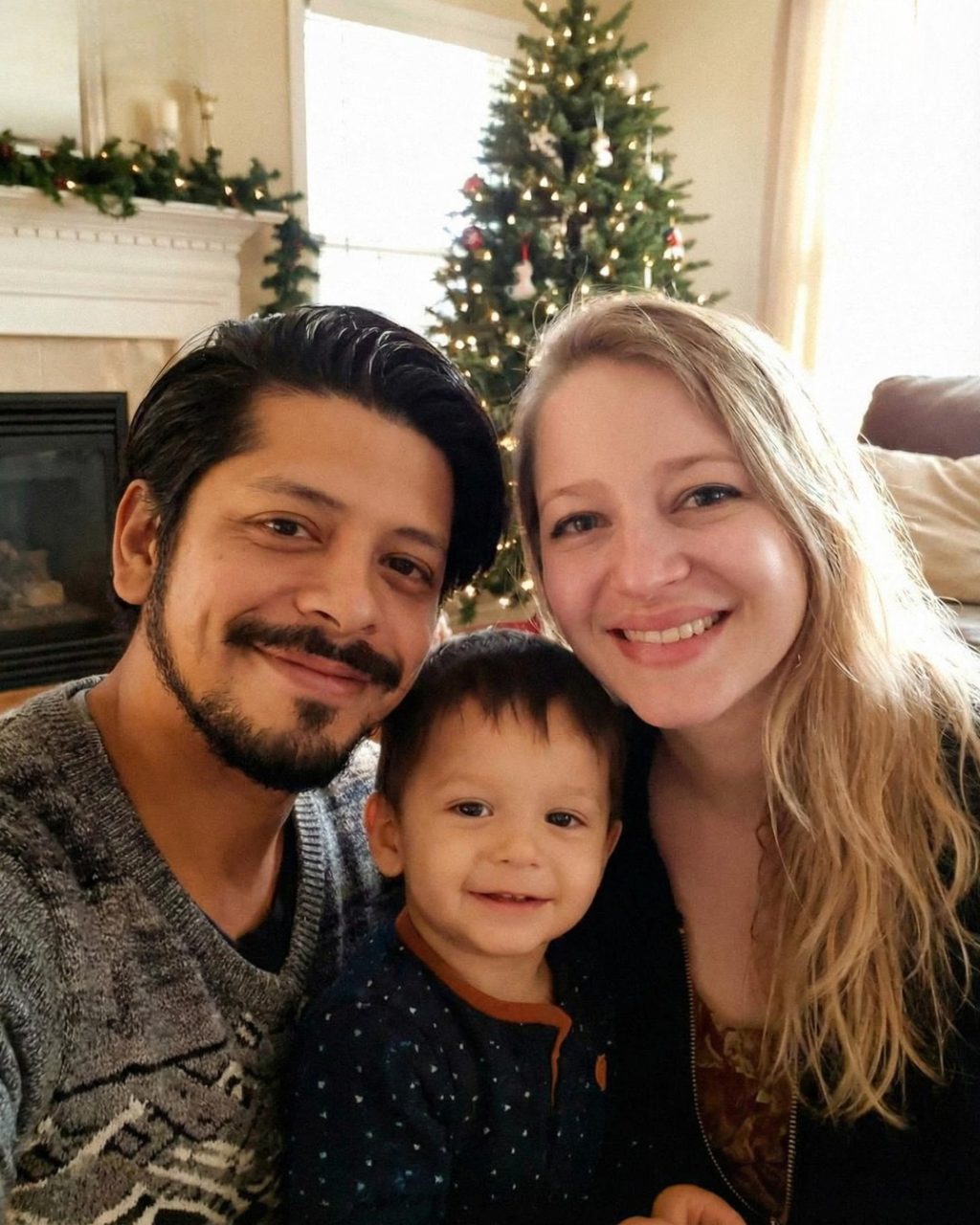
One afternoon, I was upstairs putting our two-year-old son, Mateo, down for his nap. He was fighting sleep, clinging to my neck, his warm breath heavy against my shoulder. I rocked him gently, humming under my breath, when voices drifted up from the kitchen below.
My mother-in-law’s voice cut through first. Low. Sharp.
“¿Ella todavía no sabe, verdad? Sobre el bebé.”
She still doesn’t know, does she? About the baby.
My heart skipped.
I froze, one hand resting on Mateo’s back, my entire body suddenly alert.
My father-in-law chuckled quietly. “No. Y Luis prometió no decirle nada.”
No. And Luis promised not to tell her.
I felt a chill crawl up my spine.
Then my mother-in-law said the words that still echo in my head:
“Ella no puede saber la verdad todavía. Y dudo que eso se considere un crimen.”
She can’t know the truth yet. And I’m sure it won’t be considered a crime.
My stomach dropped.
This wasn’t gossip. This wasn’t another petty comment about me. The word baby rang loud and clear in my mind, and all I could think about was Mateo sleeping in my arms.
I stayed completely still until their voices faded. Mateo eventually drifted off, unaware that my world had just tilted.
That evening, I waited.
I went through the motions—fed Mateo dinner, bathed him, read his favorite book—but my thoughts were racing. Every scenario felt darker than the last. Was Mateo sick? Adopted? Was there something about his birth I didn’t know?
When Luis finally walked through the door from work, I didn’t let him get far.
“We need to talk,” I said, meeting him at the entryway. “Now.”
He looked at me, surprised by my tone. “Okay… what’s wrong?”
I didn’t answer until we were alone in our bedroom. My hands were shaking, so I crossed my arms tightly in front of me.
“There’s something you need to explain,” I said, forcing my voice to stay steady.
He frowned. “Explain what?”
I looked him straight in the eyes. “What are you and your family hiding from me?”
His face drained of color.
“I don’t know what you mean,” he said, too quickly.
“Don’t,” I said quietly. “Please don’t pretend. I heard your parents talking today. In Spanish. About Mateo. About something you promised not to tell me.”
That’s when I saw it—real fear flash across his face.
He didn’t argue. He didn’t deny it. He sat down heavily on the edge of the bed and rubbed his hands together, like he was bracing himself.
“Okay,” he said after a long pause. “I’ll tell you. Even though I wasn’t supposed to.”
My heart pounded so loudly I could hear it in my ears.
He took a deep breath. “Mateo is ours. He’s your son. Nothing like that,” he said quickly, as if reading my panic. “But… there was something wrong at the hospital when he was born.”
I felt dizzy. “What do you mean, wrong?”
Luis explained that during delivery, there had been a brief but serious complication. Mateo wasn’t breathing properly at first. The doctors acted fast, and within minutes, he was stable. But later, a nurse told Luis and his parents—not me—that there could be long-term effects. Developmental delays. Learning challenges. Things that might not show up for years.
“They told me not to worry yet,” Luis said. “They said sometimes babies recover completely. My parents didn’t want to scare you. They thought… if nothing happens, why cause panic?”
“And you agreed with them?” I whispered.
He looked ashamed. “I was scared. And they convinced me it was better not to say anything unless we had proof.”
I felt like the air had been knocked out of me.
“You took that choice away from me,” I said. “I’m his mother.”
“I know,” he said, tears in his eyes. “I know. I’m so sorry.”
Anger and relief tangled together in my chest. Mateo was okay—for now—but the betrayal cut deep. It wasn’t the secret itself. It was the fact that they decided I didn’t deserve the truth.
“And your mom saying it wouldn’t be a crime?” I asked.
Luis swallowed. “She meant… not telling you. She thinks shielding you was protecting the family.”
I laughed bitterly. “Protecting who?”
That night, I didn’t sleep.
The next morning, I confronted my in-laws—in Spanish. Their faces were priceless. Shock. Embarrassment. Guilt.
“I understand everything you say,” I told them calmly. “And I always have.”
There were tears. Apologies. Excuses. But something had shifted permanently.
I made it clear: no more secrets. Not about my child. Not about my marriage. Ever.
Today, Mateo is thriving. Loud, curious, stubborn, perfect. Maybe there will be challenges ahead. Maybe there won’t. But if there are, I’ll face them informed, prepared, and involved.
Because being left in the dark isn’t protection.
It’s betrayal.
And I will never again pretend not to understand when the truth matters most.