This article may contain commentary
which reflects the author’s opinion.
Scott Adams, the influential cartoonist behind Dilbert and one of the most recognizable voices in American workplace satire, is preparing for a public Christian conversion as he confronts the final chapter of his life amid a battle with advanced cancer.
Adams, 67, who revealed earlier this year that he has metastatic prostate cancer that has spread to his bones, has spoken openly in recent months about mortality, faith, and the nature of reality itself.
Friends and supporters say his decision to formally embrace Christianity reflects a long period of reflection brought on by declining health and a growing sense that time is limited.
Best known as the creator of Dilbert, Adams spent decades shaping how Americans laughed at office culture, bureaucracy, and corporate absurdity.
His work earned him a devoted readership, syndication in hundreds of newspapers, and a reputation as a sharp, if sometimes controversial, cultural commentator.
Admirers have increasingly referred to him as a national treasure, a cartoonist whose influence far exceeded the confines of the funny pages.
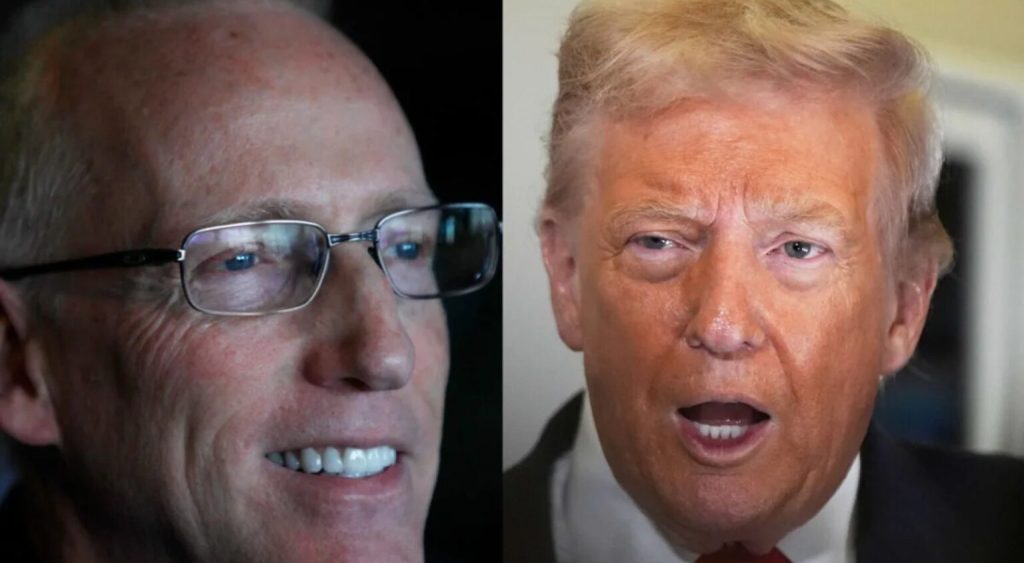
In recent weeks, Adams has also drawn national attention for a public plea for help with his cancer treatment, a plea that reached the highest levels of government. President Donald Trump responded directly after Adams said his health care provider had failed to promptly schedule an FDA-approved treatment he had been cleared to receive.
“On Monday, I will ask President Trump, via X, to help save my life,” Adams wrote in a widely shared post. “He offered to help me if I needed it. I need it.”
Trump replied succinctly on his Truth Social platform: “On it!”
The exchange set off a flurry of attention, including outreach from Health and Human Services Secretary Robert F. Kennedy Jr., who wrote directly to Adams that the president wanted to help. Adams said he had been approved to receive Pluvicto, a targeted radiopharmaceutical treatment, but that his provider, Kaiser Permanente, had not yet scheduled the brief IV procedure.
“I am declining fast,” Adams wrote at the time. “It is not a cure, but it does give good results to many people.”
Kaiser Permanente said in a statement that Adams’s oncology team was already working with him and noted that the organization has treated more than 150 patients with the drug in Northern California alone.
Against this backdrop, Adams has continued to share long-form reflections with his audience, including a recent monologue that he explicitly framed as part of his spiritual reckoning. In that transcript, Adams said:
“Whenever I talk about the simulation, and especially when I talk about it with people who work in technology, there’s always this moment where they pause and say, ‘Wait a second.’ … In the end, the simulation argument isn’t about proving that we are in a simulation. It’s about showing that, given certain assumptions about technology and probability, it might actually be the most reasonable conclusion. And once you see that, it’s very hard to unsee it.”
Supporters say those philosophical explorations eventually led Adams back to faith, and that his upcoming Christian conversion will be formal and public, though no specific date has been announced. Those close to him describe it as less a dramatic turn than a culmination, shaped by illness, gratitude, and a desire for meaning as his health worsens.
Adams has been candid that his prognosis is grim, and while he continues to pursue treatment, he has also spoken openly about preparing for death. Even critics have acknowledged the unusual transparency with which he has approached his final months.
Despite past controversies and polarizing political statements, Adams’s influence on American culture is difficult to deny. For millions of readers, Dilbert articulated the frustrations of modern work life with a precision that felt both funny and true. For others, Adams’s willingness to speak bluntly, even at personal cost, became a defining trait of his public persona.
As he faces the end of his life, Adams appears intent on turning toward Christianity. It is part of a final reckoning that we all someday must face.