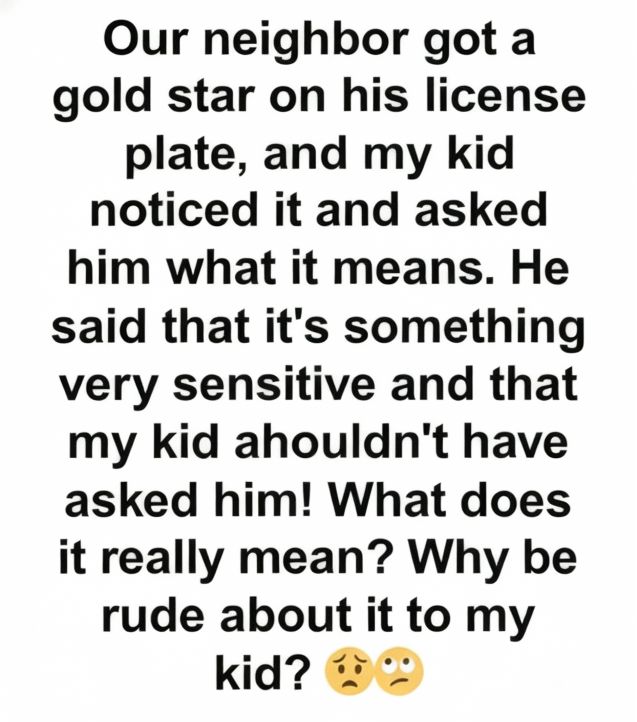
Seeing a gold star on a license plate can spark curiosity, especially for children who naturally ask questions about the world around them. While the symbol may appear simple, its meaning is deeply emotional and rooted in sacrifice, grief, and honor. Understanding what a Gold Star license plate represents helps explain why some people may find the subject difficult to discuss.
What Does a Gold Star Mean?
The Gold Star symbol originates from the U.S. military tradition dating back to World War I. Families with loved ones serving in the military would display a service flag in their window. A blue star represented an active-duty service member. If that service member died in the line of duty, the blue star was replaced with a gold one.
A Gold Star, therefore, signifies that a family has lost an immediate loved one—such as a son, daughter, spouse, or parent—while they were serving in the armed forces.
Gold Star License Plates
Gold Star license plates are issued to eligible family members of fallen service members in many U.S. states. While the design varies by state, they often include a gold star emblem or wording such as “Gold Star Family.”
These plates are not decorative or honorary in a casual sense—they are a public acknowledgment of a profound personal loss and a symbol of respect for the ultimate sacrifice made by both the service member and their family.
Why the Topic Is So Sensitive
For families who carry the Gold Star designation, the symbol is closely tied to grief, trauma, and remembrance. The loss of a loved one in military service is not just a historical fact—it is an ongoing emotional reality.
When asked about the meaning, especially unexpectedly or by a stranger, some individuals may feel caught off guard. They may not be emotionally prepared to explain something so personal, particularly to a child. What might feel like a harmless question can reopen painful memories.
This sensitivity can sometimes come across as rudeness, but more often it reflects emotional self-protection rather than anger or disrespect.
Why Some People Choose Not to Explain
Gold Star families are not obligated to share their stories. Many live with a quiet grief they carry daily, and being asked to explain the symbol can feel overwhelming or intrusive—especially in casual or public settings.
For some, the license plate is a way to honor their loved one without words. For others, it is a private marker of loss rather than an invitation for conversation.
How to Talk to Children About It
If a child notices a Gold Star license plate and asks questions, parents can explain it in a gentle, age-appropriate way without involving the plate owner directly. For example:
“That star means someone in their family was very brave and served their country, but they didn’t come home. It’s something that can make people feel very sad, so we try to be kind and respectful.”
This approach teaches empathy while honoring the meaning behind the symbol.
A Symbol of Sacrifice and Respect
Gold Star license plates exist to honor fallen service members and acknowledge the families who live with their absence. While curiosity is natural, understanding the emotional weight behind the symbol helps explain why some people guard that part of their story closely.
At its core, the Gold Star is not just a symbol—it represents love, loss, courage, and remembrance. Treating it with quiet respect is one of the simplest ways to honor those who have given so much.