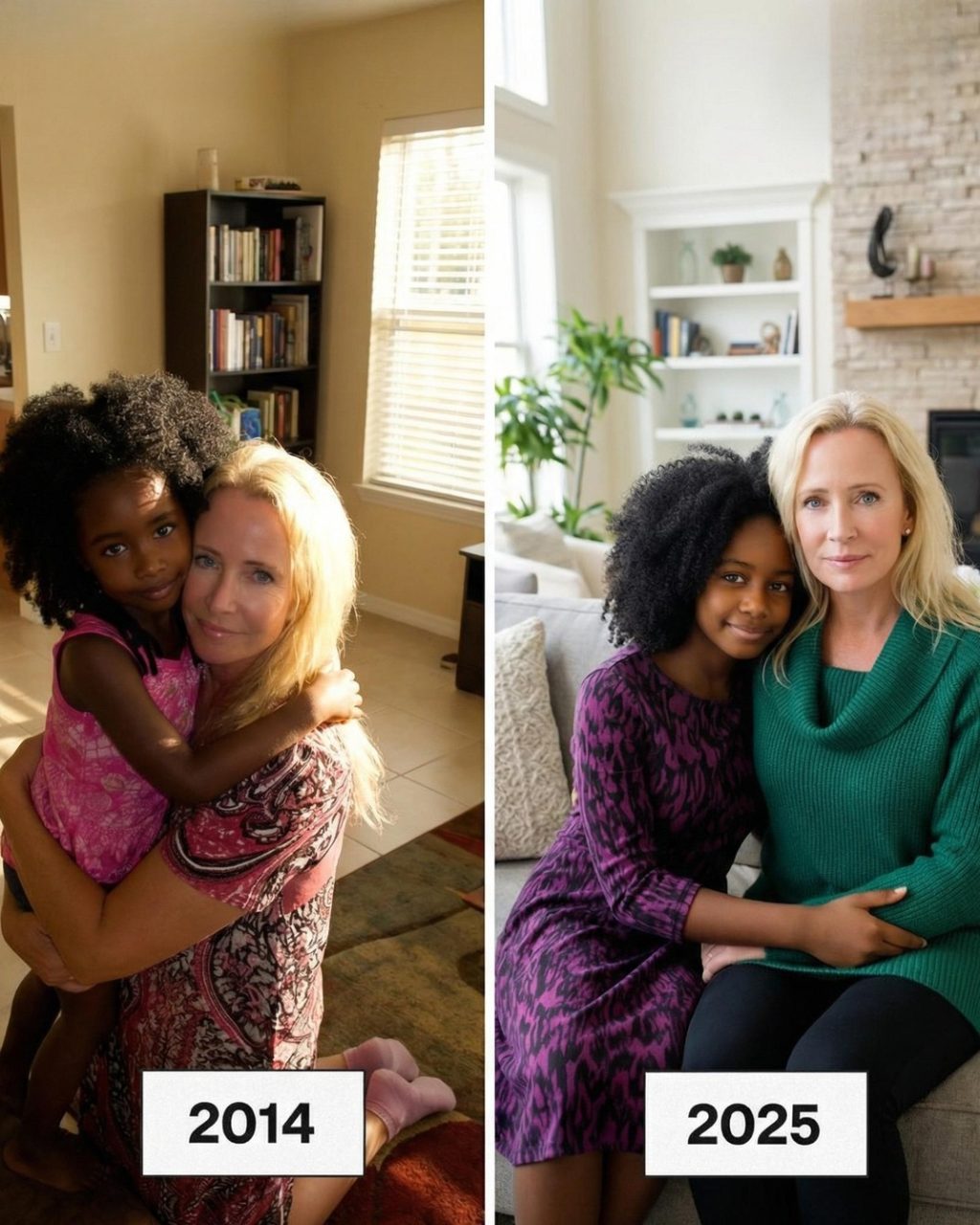
When I met my husband, Daniel, he already had a daughter.
Lily was seven then—small, serious-eyed, and painfully polite in the way kids are when they’re not sure where they belong. Her biological mother was still alive, but she’d vanished years earlier. No calls. No cards. No birthdays. Just… gone.
From the beginning, I made one quiet decision: I would never try to replace her mother.
I would just be there.
I packed her lunches the way she liked them—no crusts, apples sliced thin. I learned how to braid her hair without pulling. I showed up to school concerts where she searched the audience until she found my face. I sat on cold bleachers at soccer games and yelled encouragement even when she barely looked up.
When she needed braces, I picked up extra shifts. When math started getting hard, I found a tutor. I listened when she talked. I stayed when she shut down.
And I never once asked her to call me “Mom.”
Daniel used to squeeze my hand and say, “She’s lucky to have you.”
I always shook my head and said, “No. I’m lucky to have her.”
Then Daniel died.
It was sudden. A heart attack that came out of nowhere and took everything with it.
Lily was sixteen.
I held her while she screamed until her voice cracked. I held her when she went completely silent. When she stopped eating. When she stared at the wall for hours like she was afraid to blink.
Overnight, I became her only parent—but not on paper.
I never adopted her. Not because I didn’t want to, but because I didn’t want to take something from her. Her mother was still alive, at least technically. I told myself love didn’t need legal proof. That being there was enough.
For a while, it seemed like it was.
Life moved forward in that uneven, limping way grief forces on you. Lily finished high school. Got a part-time job at a bookstore. Learned how to drive. She wasn’t the little girl who used to fall asleep on my shoulder during movies anymore. She was taller than me now. Quieter. More guarded.
Still, I thought we were okay.
Her eighteenth birthday landed on a Tuesday.
That morning, I hugged her before work, told her I loved her, and promised we’d do something special that weekend. She nodded, but her phone was clutched tight in her hand, her thumb hovering over the screen like she was waiting for something.
I didn’t think much of it.
When I came home that evening, my world tilted.
My suitcase was sitting on the porch.
Not tossed. Not messy. Carefully placed.
On top of it was a folded note, written in Lily’s handwriting.
“I packed your things. You’re not allowed in the house anymore.”
That was it.
No explanation. No goodbye.
I couldn’t breathe.
I tried the door. Locked. The lights inside were off. The house I had lived in, loved in, raised her in—suddenly sealed against me.
My hands shook as I called her.
She answered on the second ring.
“Lily,” I said, my voice breaking. “What is this? What did I do?”
There was a pause on the other end. Long enough to hurt.
“There’s one last thing I need to tell you before you leave,” she said quietly. “Let’s meet. I’ll text you the address.”
The text came through a second later.
I didn’t recognize it.
I drove there in a fog, tears blurring the road, my mind spinning through every possible mistake I’d ever made. Had I pushed too hard? Not hard enough? Had she always been waiting for the moment she could legally get rid of me?
The address led me to a small community center on the edge of town.
Lily was standing near the entrance, hands shoved deep into her jacket pockets. She looked nervous. Pale. Not angry—if anything, terrified.
“Lily,” I said, stepping toward her.
She swallowed. “Come inside.”
The room was quiet and softly lit. Folding chairs lined the walls. At the front was a table covered in papers.
And a woman.
I recognized her instantly, even though I’d only seen her once before—in an old photograph Daniel kept tucked into a drawer.
Lily’s biological mother.
My knees nearly buckled.
“She came back,” Lily said quickly, words tumbling over each other. “She found me online. She said… she said she wanted to make things right. She told me that once I turned eighteen, she could take over. That she could take the house. That she could kick you out.”
My heart dropped into my stomach.
“She told me you stayed because you had to. Because of Dad’s money. Because the house was yours now.”
Lily’s voice shook. “I didn’t believe her. Not really. But I was scared. And she kept saying if I didn’t do it first, she’d do it herself. Legally.”
I stared at the woman, who wouldn’t meet my eyes.
“So I did what she said,” Lily whispered. “I packed your things. I told you to leave. Because I needed to know.”
“Know what?” I asked softly.
“If you’d still show up.”
She pulled something from her pocket—another folded piece of paper.
“I talked to a lawyer,” Lily said. “Behind her back. The house isn’t hers. Dad left it to me. In trust. And you’re listed as my guardian until I turned eighteen.”
She took a breath. “I invited her here today because I wanted her to hear this.”
Lily turned to the woman. “You don’t get to rewrite my life. You don’t get to erase the person who raised me.”
The woman stood up, furious, sputtering about rights and blood and family. Lily didn’t flinch.
“You left,” Lily said. “She stayed.”
Then Lily turned back to me, tears finally spilling over.
“I needed to know you weren’t here because you had to be,” she said. “I needed to know you’d still choose me… even when you didn’t have to.”
I crossed the room in two steps and pulled her into my arms.
“I chose you every single day,” I whispered. “And I always will.”
The woman stormed out shortly after, slamming the door behind her.
Lily handed me a new set of keys.
“I didn’t kick you out,” she said through tears. “I just… needed to be sure.”
I nodded, holding her close, my heart aching and full all at once.
Love doesn’t need paperwork.
But sometimes, it does need to be tested.
And that night, standing in that quiet room, I knew something with absolute certainty:
I wasn’t her stepmother.
I was her parent.
And she was still my home.