There was a girl in my class who made my childhood miserable. Her name was Nancy, and she had a gift for cruelty that went far beyond playground teasing.
Nancy wasn’t loud or sloppy with it. She was precise. Strategic. She knew exactly when to roll her eyes, when to whisper, when to laugh just loudly enough so others would join in. She never needed to shove me or scream insults. She did something worse—she made sure everyone else saw me as a joke.
I was always picked last in gym. Always “forgotten” when group projects were formed. At lunch, I learned how to sit very still and pretend I preferred being alone. By the time I got home every day, I felt smaller than I had that morning.
She never left bruises. She left dents.
The only thing that saved me was time. After high school, I left town without looking back. I moved states, went to college, built a career, and slowly—painfully—put together a version of myself that didn’t revolve around surviving someone else’s cruelty. For years, Nancy became nothing more than a name I rarely thought about.
So when my brother called me one evening and said, breathless with excitement, “I’m engaged!” I was genuinely happy for him.
Then he said her name.
Nancy.
I actually laughed. Out loud. I thought it had to be a coincidence, or maybe a different Nancy. There had to be thousands of them in the world.
There weren’t.
“She’s great,” my brother said. “You’ll love her.”
I didn’t correct him. I told myself people change. That adulthood softens sharp edges. That maybe the girl who made my life miserable at fourteen had grown into a decent woman at thirty.
That illusion lasted exactly one evening.
At the engagement party, she barely acknowledged me at first. Then the comments started—small, sugar-coated, perfectly timed.
“Oh wow, you really went with that haircut?”
“I love how brave you are to stay in such a… niche field.”
“So are you seeing anyone, or are you just focusing on yourself now?”
Every jab was delivered with a smile, framed as a joke. People laughed politely. My brother laughed too. And every time, she glanced at me afterward, checking to see if it landed.
When we were alone, the mask slipped.
“Some things never change,” she murmured as she passed me in the hallway.
“I always wondered what you’d end up doing with your life,” she said softly, like a secret.
I felt fourteen again. Cornered. Small.
But this time, I didn’t cry.
I observed.
I watched how she thrived on power. How she loved an audience. How she needed to feel superior to feel secure. And somewhere between the champagne toasts and the forced hugs, something in me settled.
Fine, I thought. If this is the game she wants to play, I finally know the rules.
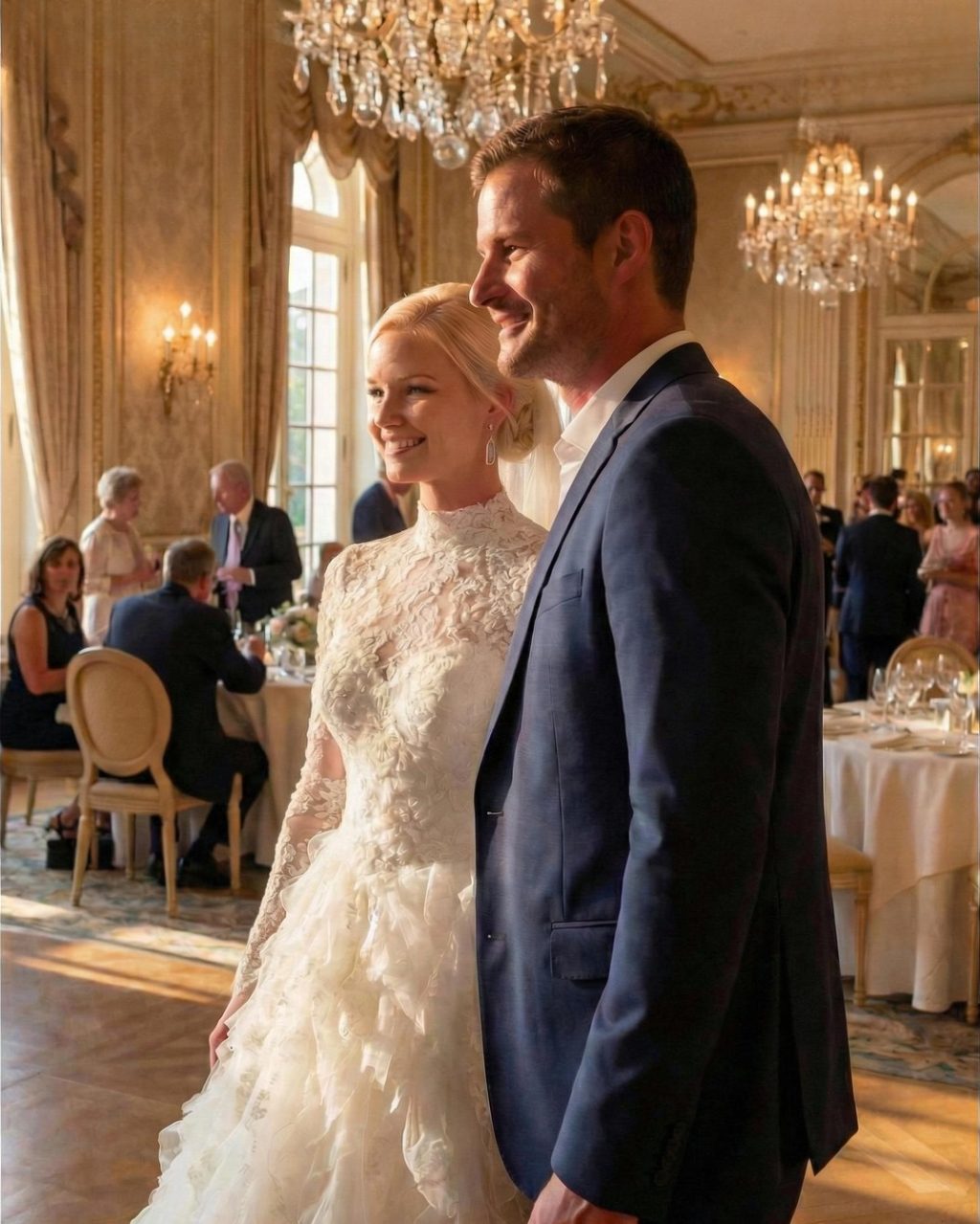
The wedding itself was lavish—flowers everywhere, soft music, expensive wine. Nancy floated through the room glowing with attention, soaking it up like oxygen. When she spotted me, she lifted her glass and smirked.
“So,” she said sweetly, “where’s your gift?”
I smiled back, calm and unbothered. “Oh, I didn’t forget. It’s special. Expensive. Delivered straight to your house.”
Her eyes lit up immediately. Of course they did.
“What is it?” she asked.
I leaned in, just close enough for only her to hear. “Something you’ll never forget.”
Her smile widened. She was pleased with herself all night.
The gift arrived three days later.
It wasn’t flashy. No bows. No monogram. Just a neatly wrapped package with a card that read, Congratulations on your new beginning.
Inside was a framed scrapbook.
Page after page documented my childhood—not with accusations, but with facts. Old school photos. Yearbook quotes. Notes from teachers about “social dynamics.” Screenshots of messages I’d received years later from classmates apologizing for “not stopping what Nancy did.”
I included dates. Ages. Locations.
I never called her names. I never editorialized. I simply told the story she thought no one remembered.
The last page was a letter.
I wrote about the girl who ate lunch alone. The girl who learned to stay quiet. The girl who grew up anyway. And I ended it with one line:
You get to move on from who you were. I get to remember.
Nancy called me that night, screaming. Accusing me of trying to ruin her marriage. Threatening to tell my brother I was “obsessed” and “unstable.”
I told her calmly that I hadn’t sent the scrapbook to anyone else. Not to my brother. Not to her parents. Not online.
“But now,” I said, “you know I could.”
She hung up.
My brother called a week later. He sounded tired. Confused. He asked why Nancy was suddenly so angry around me. I told him the truth—not dramatically, not emotionally. Just honestly.
He didn’t say much. But he listened.
I don’t know what will happen to their marriage. That was never the point.
The point was this: I stopped carrying her silence for her.
Bullies rely on one thing above all else—forgetting. They count on time to erase the past and on their victims to stay quiet out of politeness or fear. I gave Nancy a gift that time couldn’t take away.
Closure doesn’t always look like forgiveness.
Sometimes, it looks like finally being heard.