I never imagined I’d one day sit in the front row of my daughter’s wedding and watch her marry a man I once called my husband.
I married young. I was barely twenty when I had my daughter, still figuring out who I was while learning how to be someone’s mother. Two years later, my son arrived, loud and curious and endlessly observant. Their father and I were together for seventeen years. We didn’t have a dramatic love story—just years layered with responsibility, compromise, and the quiet kind of exhaustion that settles in when two people stop talking honestly.
We didn’t explode. We eroded.
By the time we divorced, there was no hatred left—just fatigue and a mutual understanding that love alone isn’t always enough when communication never learned how to grow up.
Five years later, Arthur entered my life.
He was thirty-eight, recently divorced, with three kids of his own. Calm, attentive, gentle in a way that felt deliberate. After years of feeling invisible, I felt noticed again. We talked for hours about parenting, regrets, books we never finished, dreams that had softened with age. He laughed at my dry jokes. He listened when I spoke.
I thought, This is it. This is the second chapter.
It wasn’t.
Six months into the marriage, we sat across from each other at the kitchen table and said the quiet truth out loud: this wasn’t working. There were no slammed doors, no accusations. Just two adults realizing that compatibility on paper doesn’t always translate to real life.
The divorce was quick. Kind, even. We wished each other well and promised to move forward with grace.
I believed him when he said goodbye.
I believed that chapter was closed.
Two years later, my daughter asked if we could talk.
She was twenty-four then—confident, glowing, standing on the edge of her own adult life. She sat across from me, hands folded, eyes shining with a mixture of excitement and fear.
“Mom,” she said softly, “I’m in love.”
I smiled. Of course I did. That’s what mothers do.
Then she said his name.
Arthur.
The room tilted. My ears rang. I felt the blood drain from my face as my mind tried—failed—to make sense of what I’d just heard.
She rushed to explain. They’d reconnected. It was unexpected. He understood her. He made her feel safe. Age didn’t matter. The past didn’t matter.
I wanted to scream. I wanted to cry. I wanted to ask questions I already knew would only hurt us both.
Instead, she looked me straight in the eye and delivered the sentence that still echoes in my chest:
“You either accept this… or you’re not part of my life anymore.”
There it was. A line drawn so clean and sharp it stole my breath.
I grieved for days. Weeks. I grieved for the daughter I thought I knew, for the man I thought I’d left behind, for myself—for the way women are taught to swallow discomfort to keep the family intact.
In the end, fear won.
The fear of losing her entirely was stronger than my anger, stronger than my instincts screaming that something was wrong.
So I said yes.
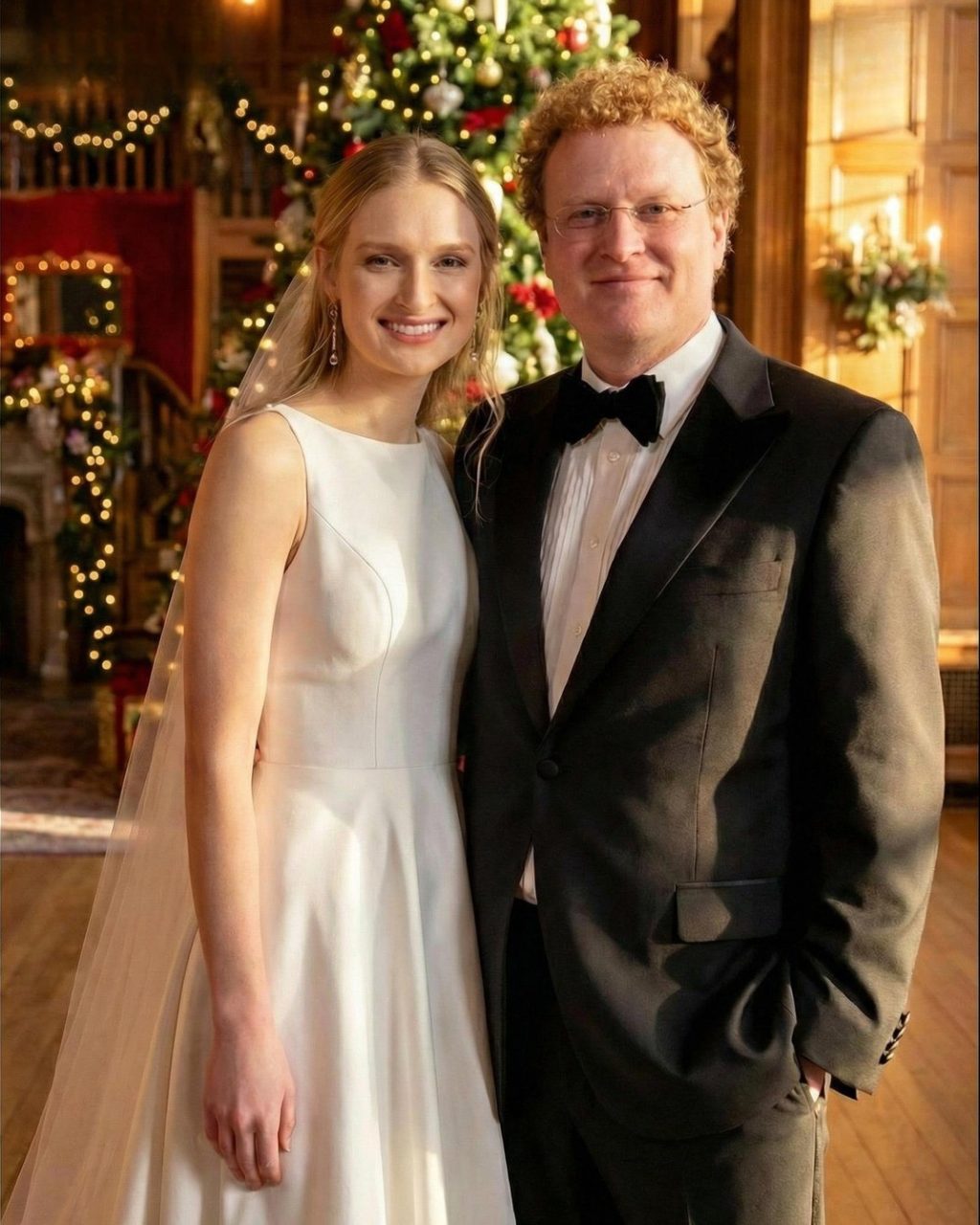
A year later, the wedding invitations arrived.
The family reaction was explosive. Whispers, arguments, fractured loyalties. Some relatives refused to attend. Others came but wouldn’t speak his name. My son was quiet through all of it. Too quiet.
The day of the wedding, I put on a dress I barely recognized myself in and practiced a smile that didn’t reach my eyes. I hugged my daughter. I wished her happiness. I told myself that love comes in strange shapes sometimes—and that I had already survived worse.
At the reception, music pulsed through the room, glasses clinked, laughter echoed. Arthur looked confident, relaxed, as if this was exactly where he belonged.
That’s when my son took my hand.
His grip was firm. Grounding.
“Mom,” he said quietly, leaning close, “there’s something you need to know about Arthur.”
My stomach dropped.
“What do you mean?” I whispered.
He didn’t answer right away. Instead, he glanced toward the head table where my daughter laughed beside her new husband, completely unaware.
“I found out some things,” he said. “Things he didn’t tell you. Or her.”
The room felt suddenly too loud, too bright.
“Show me,” I said.
We walked out to the parking lot, the night air cool against my skin. He led me to his car and opened the trunk. Inside was a folder—thick, organized, deliberate.
“Before the wedding, something didn’t sit right with me,” he said. “So I checked.”
He handed me the documents.
Court records. Financial statements. Old complaints.
Arthur hadn’t just been divorced.
He had been sued. Multiple times. For emotional abuse. Financial manipulation. One restraining order that had quietly expired. A trail of women who had been isolated, drained, and left questioning their sanity.
My hands shook as I flipped through the pages.
“He’s done this before,” my son said. “Married younger women. Positioned himself as stable. Safe. And then slowly took control.”
My heart broke in a way I didn’t know was possible.
“What about my daughter?” I whispered.
“I tried to tell her,” he said. “She wouldn’t listen. She said I was jealous. That I was trying to ruin her happiness.”
I closed the folder.
Inside the reception hall, my daughter was dancing. Smiling. Trusting.
And for the first time since this nightmare began, I understood something with painful clarity:
Acceptance is not the same as silence.
I couldn’t stop the wedding. But I could stop pretending.
That night, I didn’t confront Arthur publicly. I didn’t cause a scene. I hugged my daughter tightly and told her I loved her—always.
But the next morning, I asked her to meet me alone.
And this time, I brought the truth with me.
Some stories don’t end with fireworks or instant justice. Some end with boundaries. With hard conversations. With choosing courage over comfort—finally.
And that was the day I stopped being afraid of losing my child… and started being brave enough to protect her.
Even if it meant she hated me for a while.
Because love, real love, doesn’t stay quiet when something is wrong.