After the funeral, I went back to my grandmother’s house to gather the last of her things.
I wasn’t ready, but my husband made it clear he thought I should be.
“We need the money,” Paul said as we pulled into the driveway. “Not your memories.”
He didn’t say it cruelly. Worse—he said it like it was obvious, like grief was an inconvenience we couldn’t afford.
The old porch still smelled like her. Lavender soap, herbal tea, and something warm I could never quite name. The kind of smell that wraps around you before you realize you’re crying.
Inside, the house was quiet in a way that felt heavy rather than peaceful. The funeral had taken everything out of me. Even the sky seemed exhausted—flat, gray, unmoving.
I wandered into her bedroom and sat down on the bed.
It was the same one where she’d passed three days earlier.
The mattress dipped and the springs creaked softly beneath me, like the house itself was sighing. I pressed my hands into the quilt she’d stitched years ago and tried to breathe.
Paul came in without knocking.
His shoes were too loud against the floorboards. He didn’t belong in this space, and somehow, we both knew it.
“It’s getting late, Mira,” he said. “We should go.”
I nodded, even though I wasn’t ready. I grabbed my coat and followed him outside, my chest tight, my thoughts sluggish.
That’s when Mrs. Callahan appeared at the gate.
She was my grandmother’s neighbor—quiet, observant, always tending her roses. She caught my arm gently before I could pass.
“Mira,” she said, glancing around as if checking to see who might be listening. Her voice dropped. “If you only knew what your husband was doing here… while your grandmother was still alive.”
The words hit me so suddenly I forgot how to respond.
Before I could ask anything, she slipped something into my palm.
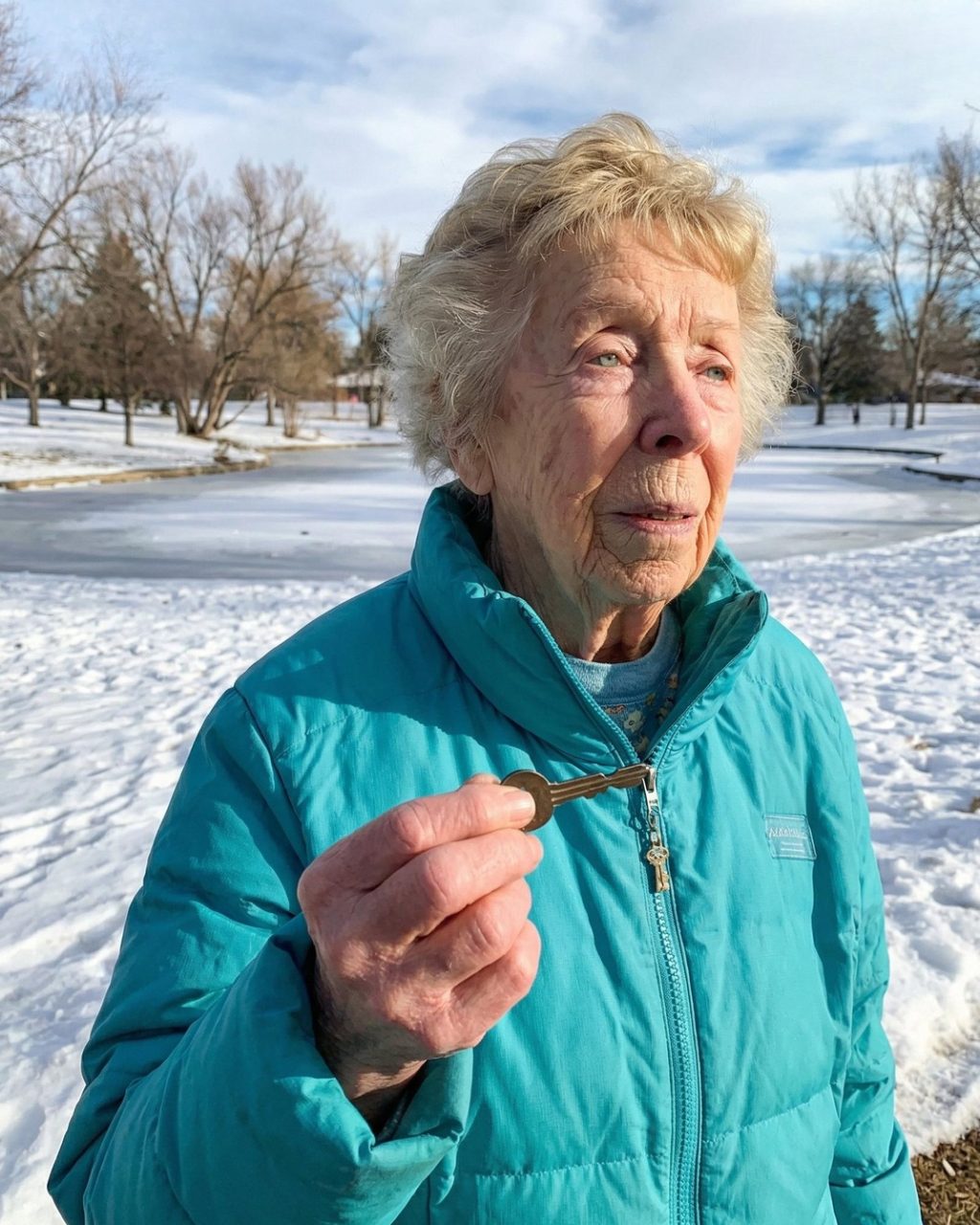
A small, old-fashioned key.
My stomach clenched. I knew that key.
The attic.
“What do you mean?” I asked. “And how do you have this?”
Mrs. Callahan hesitated. “Your grandmother gave it to me about a month before she passed. She made me promise to give it to you—only you—when the time came.”
Paul called my name from the car, impatient.
“I can’t explain,” Mrs. Callahan whispered. “But you need to look. Tonight.”
I thanked her, my head spinning. I turned to Paul and told him to go on without me—that I wanted to stay a little longer and would take a cab home.
He argued, of course. Said I was being dramatic. Emotional. Wasteful.
For the first time in a long while, I didn’t give in.
“I’ll be fine,” I said. “Please go.”
Once his car disappeared down the road, I went back inside.
The stairs groaned under my feet as I climbed to the attic. I’d avoided it for years. My grandmother always said it was “too full of things better remembered slowly.”
My hands shook as I unlocked the door.
The smell of dust and old paper rushed out.
A single lightbulb hung from the ceiling, casting long shadows over boxes stacked neatly against the walls. This wasn’t forgotten clutter. This was organized. Intentional.
I stepped inside.
Right away, I saw a box labeled with my name.
Inside were letters.
Dozens of them.
All addressed to me. All unopened.
They were dated over the last two years—the exact length of my grandmother’s illness.
My throat closed as I opened the first one.
Mira,
If you’re reading this, it means I’m gone, and I’m sorry you had to find these this way…
Her handwriting wavered but was unmistakable.
She wrote about small things at first—memories from my childhood, advice she didn’t want to burden me with while she was sick. Then the letters changed.
She wrote about Paul.
About how he’d started visiting her alone while I was at work.
How he’d pressured her to sign papers she didn’t understand at first. How he talked about selling the house, about “protecting my future,” about how I was too emotional to make smart decisions.
One letter made my hands go numb.
Mira, he asked me to change my will. To leave the house directly to him. I refused. After that, he came back angry. I didn’t tell you because I didn’t want to worry you.
I sank onto the attic floor.
There was more.
Copies of documents. Notes she’d written after his visits. A small envelope marked If something feels wrong.
Inside was a second key.
A safe deposit box.
I didn’t cry.
I felt clear.
The next morning, I went to the bank.
Everything my grandmother said was true.
Paul had tried—quietly, carefully—to position himself as the sole beneficiary of her estate. He hadn’t succeeded, but he’d gotten closer than I ever would have imagined.
When I confronted him that evening, he didn’t deny it.
He just sighed and said, “I was trying to secure our future.”
I told him to leave.
The divorce wasn’t easy. Nothing about untangling a life ever is. But the house stayed with me.
I didn’t sell it.
I fixed the porch. Repainted the kitchen. Planted lavender by the steps.
Sometimes I sit on the bed where my grandmother passed and read her letters again.
She knew.
She saw more than I gave her credit for.
And she protected me in the quietest, bravest way—by leaving me the truth, exactly when I was finally ready to hear it.