When I married Ethan, I knew his parents would never truly accept me.
They didn’t say it outright—not at first. But it lived in the pauses, the polite smiles that never reached their eyes, the careful way his mother would look me up and down as if mentally tallying everything I lacked.
They came from old money. Country clubs. Summer homes. Family traditions that stretched back farther than I could follow. Success, to them, had a very specific shape.
I was a public school teacher with student loans and a wardrobe made up mostly of secondhand finds and sensible shoes. I loved my job. I loved their son. I assumed that would eventually be enough.
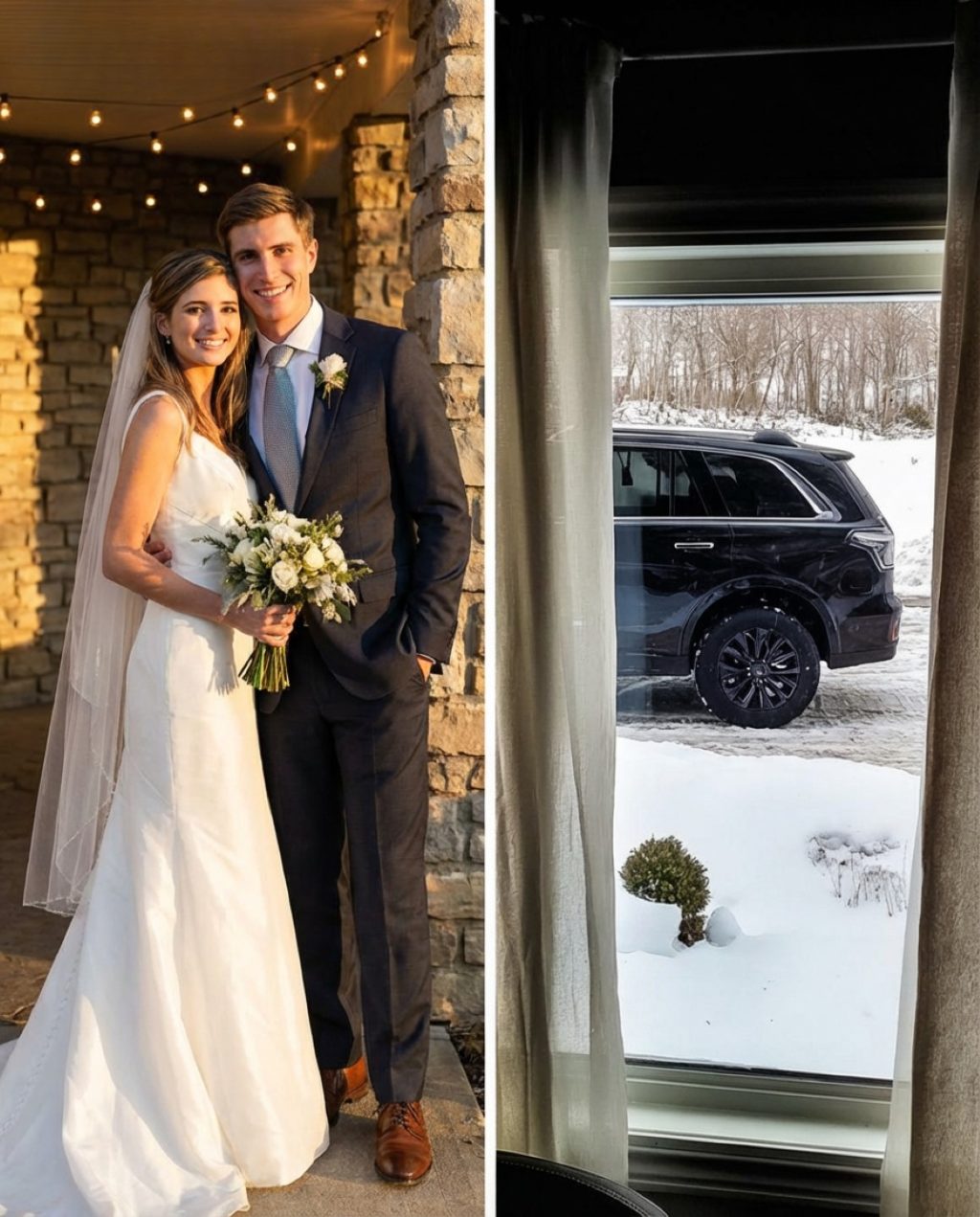
At our wedding, his mother hugged me stiffly, her perfume sharp and unfamiliar. As she pulled away, she leaned in and whispered, almost kindly, “We’ll see how long this lasts.”
I laughed it off. Pretended it didn’t land exactly where it landed.
A year later, everything changed.
Ethan had been offered a major promotion—one his parents had been grooming him for since college. The catch was relocation. A move across the country. Longer hours. Less flexibility.
By then, I was pregnant.
Ethan turned it down without hesitation.
When his parents found out, the fallout was immediate.
“You’re throwing your future away,” his father shouted over the phone. “You’re letting yourself be trapped in mediocrity.”
That word—trapped—hung in the air like an accusation aimed straight at me.
A few days later, the final message came. Short. Cold. Precise.
“As long as you choose this life, don’t expect us to be part of it.”
So we stopped trying.
No more phone calls. No more updates. No more hoping that one day they’d soften. We grieved the relationship we wished we had and then quietly built the one we did.
We moved to a smaller town. Bought a modest house with creaky floors and a backyard just big enough for a swing set. We owned fewer things, but nothing felt tight or strained anymore.
Ethan started his own business—something he’d always wanted to do but never felt allowed to. I stayed home with our daughter for a while, then eased back into teaching.
We weren’t flashy. We weren’t impressive by their standards.
But we were happy.
Quietly, stubbornly happy.
Five years passed.
Life filled itself in. Kindergarten drop-offs. Weekend pancakes. Late-night talks on the couch after our daughter fell asleep. The hurt from his parents never disappeared completely, but it faded into the background—something we carried, not something that defined us.
Then, two days ago, a black SUV pulled into our driveway.
I watched from the kitchen window, confused. No one we knew drove a car like that.
Ethan stepped outside. I followed.
His parents got out slowly, as if unsure they were in the right place.
“We just want to talk,” his mother said. Her voice sounded thinner than I remembered. “We deserve to see our granddaughter.”
That word—deserve—made my chest tighten. But Ethan stepped aside and let them in.
Inside, everything felt suddenly small. The house. The silence.
Our daughter peeked around the corner, curious. His father froze when he saw her.
He stared as if trying to reconcile something in his mind. This child—bright-eyed, confident, clutching a stuffed rabbit—didn’t match whatever picture he’d been carrying for years.
He opened his mouth. Closed it.
“This isn’t what we thought,” he whispered. His voice cracked on the last word.
Then he turned to Ethan and asked the question that shifted the room.
“Are you… are you actually happy?”
Not successful. Not comfortable. Not on track.
Happy.
Ethan didn’t answer right away. He looked around our living room—the mismatched furniture, the framed crayon drawings on the wall, the daughter now climbing into his lap.
“Yes,” he said finally. “I am.”
Something in his father’s face collapsed.
He sat down heavily on the couch. His mother followed, pressing a hand to her mouth. She was crying now, quietly, like she didn’t quite understand how it was happening.
“We thought you’d ruined your life,” she said. “We thought… you’d regret everything.”
Ethan nodded. “We know.”
They stayed for hours.
No yelling. No speeches. Just slow, painful honesty.
They admitted they’d believed success only counted if it looked a certain way. That when Ethan stepped outside that framework, they panicked—and chose pride over connection.
His mother apologized to me directly. Not perfectly. Not eloquently. But sincerely.
“I was wrong about you,” she said. “And I’m sorry it took me so long to see it.”
I didn’t rush to forgive. I didn’t need to.
Some wounds don’t close on command.
When they left that evening, they hugged our daughter tightly, like they were afraid she might disappear again.
They didn’t ask to stay longer. They didn’t ask to make up for lost time.
They just said, “Thank you for letting us in.”
After the door closed, Ethan and I stood in the hallway for a long moment.
“Do you think they’ve really changed?” I asked.
He thought about it. “I don’t know,” he said. “But I know we didn’t change for them.”
And that felt like the most important part.
Sometimes people don’t come around until they’re forced to face what they almost lost.
And sometimes, the life that looks small from the outside is the one that holds everything that actually matters.