I broke my arm slipping on our porch.
I’d gone out that morning, half-awake, thinking about coffee and the long day ahead. The snow from the night before had frozen into a slick, invisible sheet of ice. My feet went out from under me and I came down hard—so hard the sound of it echoed in my head before the pain even registered.
The pain came a second later. Sharp. Blinding. The kind that makes your stomach flip.
The night before, I’d begged my husband to shovel.
“Please,” I said. “It’s supposed to freeze overnight.”
He barely looked up. Just waved a hand and said, “I’ll do it later.”
He didn’t.
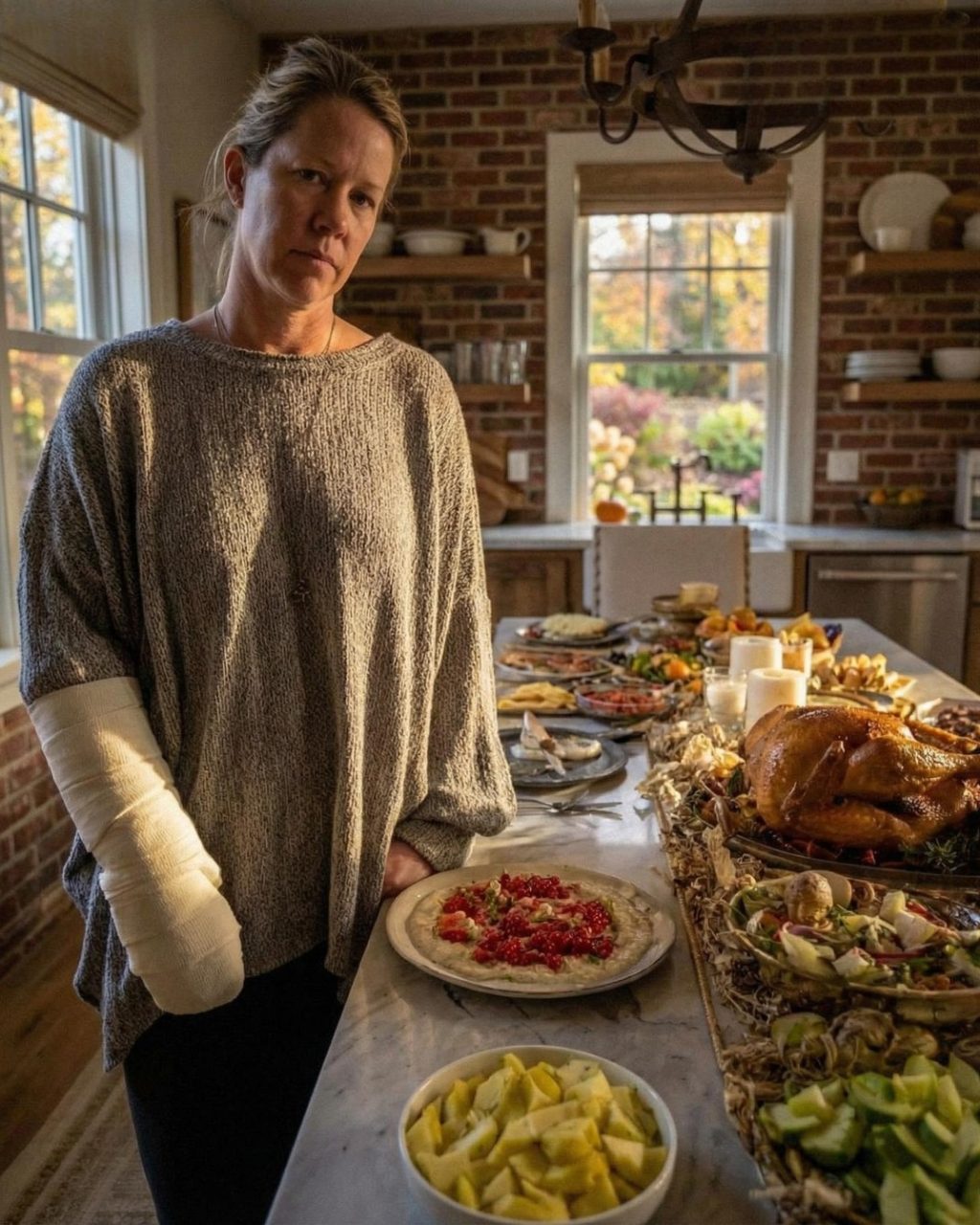
By midmorning, I was sitting in the ER with my right arm in a cast, replaying that conversation over and over while a nurse explained what I could and couldn’t do for the next six weeks.
When I got home, my husband was on the couch, scrolling on his phone. He glanced up once, saw the cast, and sighed.
“Well,” he said, irritated, “that’s unfortunate timing.”
Timing.
Because it was his birthday weekend. He’d invited twenty people. Friends, coworkers, family. A whole production.
I just stared at him. “I can’t cook,” I said slowly. “I can’t clean. I can barely get dressed by myself.”
He finally put the phone down, annoyed now. “That’s not my problem. This is your responsibility. If you don’t pull this off, you’ll ruin my birthday. Do you have any idea how embarrassing that would be for me?”
Something inside me cracked.
Not snapped. Not exploded.
Cracked.
For years, I’d been his wife in name and his maid in practice. I handled the meals, the cleaning, the planning, the remembering. I made his life smooth and comfortable while slowly shrinking my own.
And now, injured and in pain, I was still expected to perform.
That was my last straw.
I didn’t argue. I didn’t cry. I didn’t try to explain myself—because I’d done that for years and it never changed anything.
I smiled and said, “Okay. I’ll handle it.”
That afternoon, while he was out, I quietly booked a cleaning service. Then I ordered full catering—apps, entrees, dessert, everything. The total came to just over six hundred dollars, paid straight from my personal savings.
It stung. That money had been set aside for something else. Something for me.
But trust me—the lesson was worth every dollar.
The day of the party, the house looked immaculate. The counters gleamed. The floors shined. The food was arranged beautifully, like something out of a magazine.
Guests started arriving, impressed.
My husband soaked it in. Smiling. Accepting compliments like he’d personally orchestrated everything.
Then his mother arrived.
She took one look at my cast and clicked her tongue.
“If it were me,” she said, “I’d still cook. Broken arm or not. You know, if you don’t try harder, men tend to look elsewhere.”
I smiled politely.
Because she had no idea what was coming.
About thirty minutes later, the doorbell rang.
My husband barked from the living room, “Go get it.”
I looked at him sweetly. “Not this time, babe. You should open it. I got you a surprise. Trust me—you’ll want to see this.”
He frowned but went to the door.
The moment he opened it, his face drained of color.
Every guest turned to look.
He started shouting immediately. “No—no! How could you do this to me? Not today!”
Standing in the doorway was a woman in a blazer, holding a clipboard. Behind her, a uniformed officer.
“Good evening,” she said calmly. “Are you Mr. Thompson?”
He stammered. “This—this is a private party!”
“Yes,” she replied, unbothered. “And this is a legal matter.”
The room went silent.
I stood up slowly, my cast heavy at my side, my heart pounding but steady.
“This,” I said, my voice clear, “is the process server.”
Murmurs rippled through the room.
He turned toward me, eyes wild. “You wouldn’t.”
“I did,” I said. “Because while you were planning a birthday party, I was realizing I didn’t want to spend another year like this.”
The papers were handed to him. Divorce filing. Financial disclosure requests. Everything neat. Everything prepared.
His mother stood up. “This is cruel,” she snapped. “On his birthday?”
I met her gaze. “He didn’t seem to mind cruelty when I was on the ground with a broken arm.”
The guests shifted, uncomfortable now. Some stared at their drinks. Others watched openly, faces tight with shock.
The server finished her job and left. The officer followed.
No yelling. No drama.
Just consequences.
My husband looked around, humiliated. “You embarrassed me,” he hissed.
I laughed. Not loudly. Just once. Soft and tired.
“No,” I said. “I stopped protecting you from who you are.”
He asked the guests to leave. Some did quickly. A few hugged me on their way out. One woman whispered, “Good for you.”
That night, after the house was quiet, I sat alone at the kitchen table. My arm throbbed. My chest felt hollow and light at the same time.
I didn’t feel triumphant.
I felt free.
In the weeks that followed, I learned how much I’d been carrying. How much I’d been excusing. How long I’d been disappearing inside my own marriage.
Healing took time. My arm healed faster than my heart—but both healed.
And sometimes, when I look at the faint scar on my wrist from where the cast rubbed my skin raw, I think about that fall on the porch.
How something painful and unexpected finally stopped me long enough to see the truth.
I didn’t break my arm that morning.
I broke the cycle.
And that changed everything.