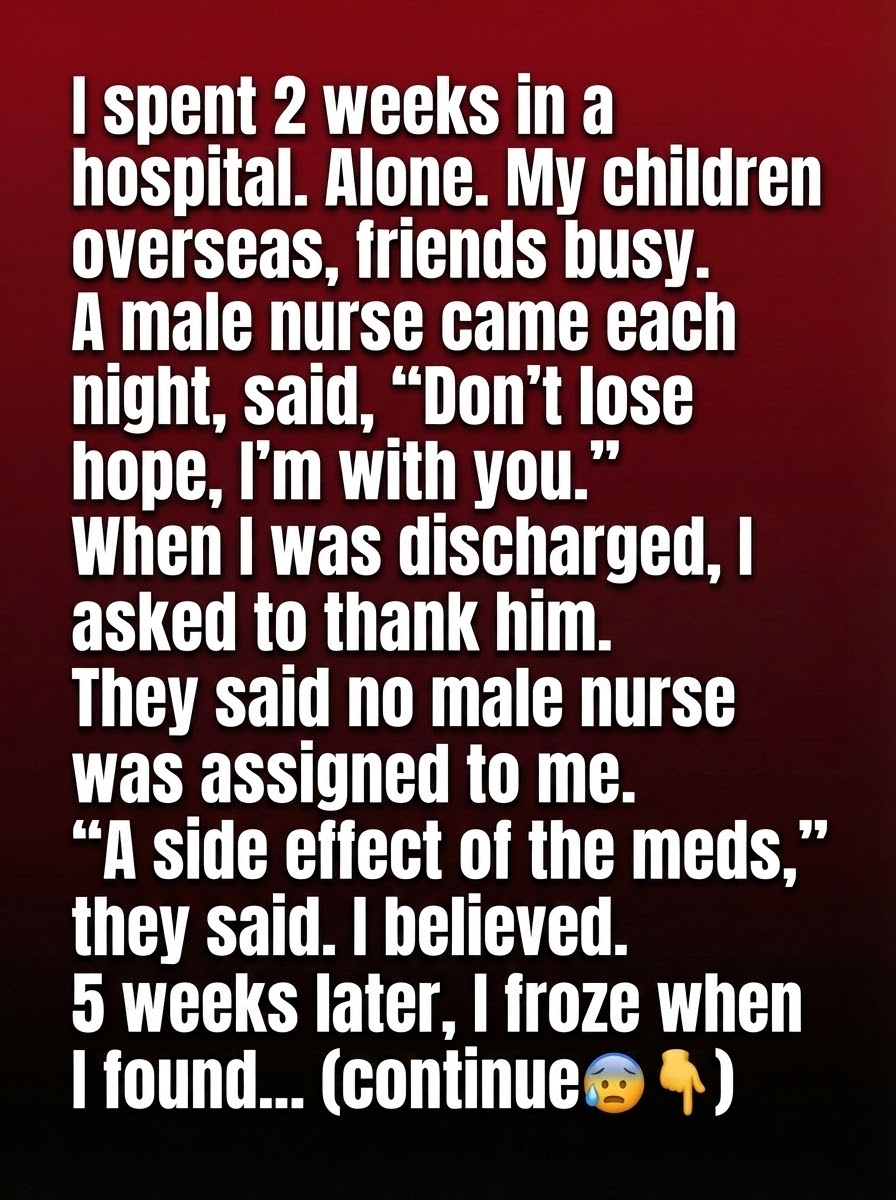
I spent two weeks in the hospital completely alone.
My children live overseas. My friends had jobs, families, obligations. Life didn’t pause just because mine had.
The days blurred together—medication schedules, vital checks, the low hum of machines, the endless waiting. Nights were the worst. The ward grew quiet, shadows stretching across the walls, loneliness settling heavy on my chest.
Every night, a male nurse came in.
He never rushed. Never spoke loudly. He’d check my IV, adjust my blanket, and before leaving, he’d look at me and say, “Don’t lose hope. I’m here with you.”
Sometimes he stayed an extra minute. Asked how I was really doing. Once, when I was crying quietly into my pillow, he handed me a tissue and said nothing at all. Just stood there until my breathing slowed.
Those moments mattered more than he probably knew.
When I was finally discharged, I asked the nurse at the desk if I could thank him. I described him—his voice, his calm way of speaking, the fact that he always worked nights.
The nurse frowned at her screen.
“There wasn’t a male nurse assigned to you,” she said gently.
I laughed, embarrassed. “Maybe you don’t see him here,” I said. “But he came every night.”
She checked again. Then looked up at me, her expression careful.
“I’m sorry,” she said. “It was likely a side effect of the medication. Hallucinations can happen.”
I nodded. What else could I do?
I told myself she was right. I accepted the explanation because it was easier than questioning my own mind.
And for a while, I forgot about him.
Five weeks later, I froze.
I was sorting through paperwork at home, organizing discharge summaries and prescription lists, when a folded piece of paper slipped out of an envelope I hadn’t opened before.
It wasn’t hospital letterhead. It wasn’t official.
It was a small, handwritten note.
The paper was creased, worn, like it had been folded and unfolded many times.
It read:
Don’t lose hope. You were never alone.
My hands started shaking.
The handwriting wasn’t mine.
I sat down slowly, heart pounding, replaying every detail I could remember. His voice. His words. The way he always seemed to arrive right when the loneliness felt unbearable.
I called the hospital.
I asked again. More firmly this time.
They reviewed my records. Staffing schedules. Security logs.
“There truly was no male nurse assigned to your care,” the administrator said. “I’m very sorry. I know this must feel unsettling.”
Unsettling wasn’t the word.
For days, I couldn’t stop thinking about it. I barely slept. I went over every possible explanation—forgotten staff, paperwork errors, misremembered details.
And then I remembered something I hadn’t thought about in years.
My husband.
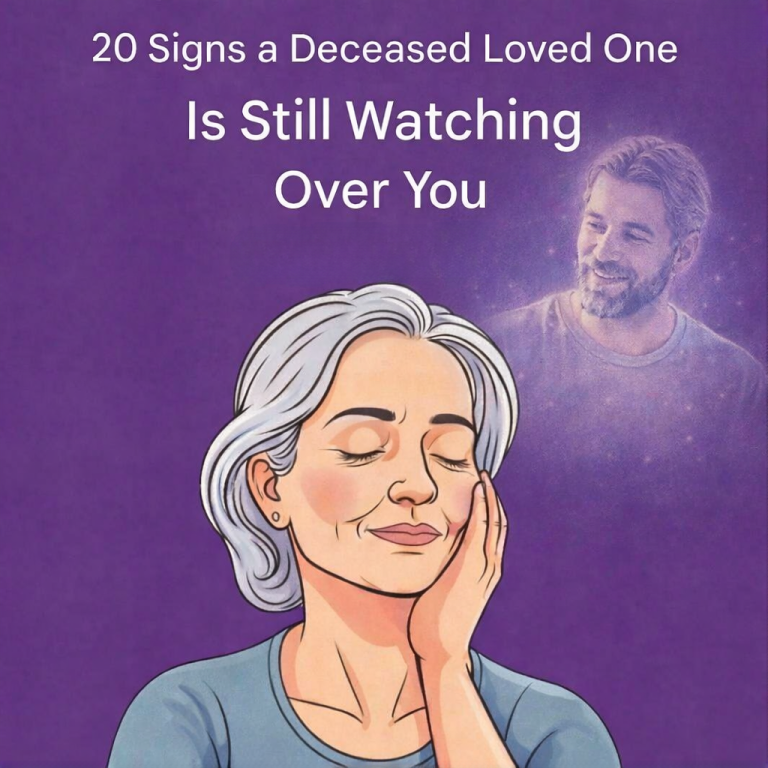
He’d passed away suddenly eight years earlier. Heart attack. No warning. No goodbye.
He had been a nurse.
Worked night shifts. Calm under pressure. Always told me, whenever life got heavy, “Don’t lose hope. I’m with you.”
The exact words.
I hadn’t thought of him consciously during my hospital stay. Grief has a way of settling quietly into your bones, no longer sharp, just… there.
But that night, sitting alone with that note in my hands, something inside me softened.
Maybe it was my mind protecting me. Maybe it was memory taking shape when I needed it most.
Or maybe—just maybe—it was love finding a way to show up when no one else could.
I don’t tell people this story because I expect them to believe anything supernatural. I tell it because it reminded me of something important.
Even in the loneliest moments, we are shaped by the love we’ve known. Sometimes it shows up as memory. Sometimes as comfort. Sometimes as a voice that says exactly what you need to hear.
I framed the note and placed it on my nightstand.
Not as proof.
But as a reminder.
I wasn’t alone then.
And I’m not alone now.