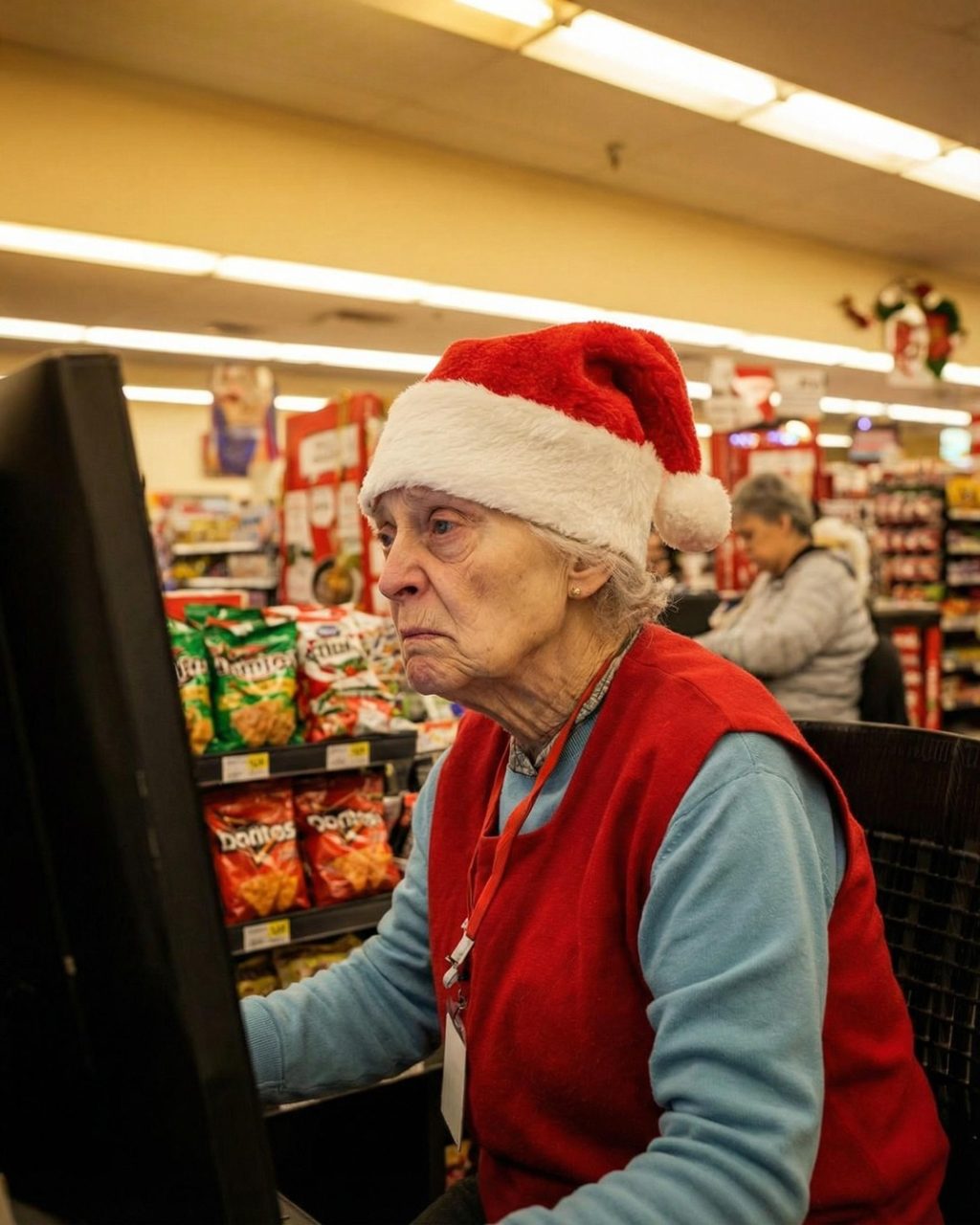
I stood up for an elderly cashier on Christmas Eve.
The next morning, I woke up to police sirens outside my door.
All I needed that night was milk. Just milk—for Santa’s cookies.
I’d just come off a brutal night shift, the kind that leaves your bones aching and your brain foggy. Every part of me wanted to skip the errand and go straight to bed. But my seven-year-old daughter, Sophie, had been very clear: Santa could not come without cookies, and cookies could not exist without milk.
So I pulled on my coat, kissed her sleepy forehead, and made a quick run to the supermarket.
The store was calm when I walked in. Almost peaceful. Soft Christmas music hummed overhead, and the aisles were mostly empty—just a few last-minute shoppers moving slowly, like they were conserving energy for the next day.
Then a voice shattered the calm.
“ARE YOU KIDDING ME? YOU’RE TOO SLOW!”
Everyone froze.
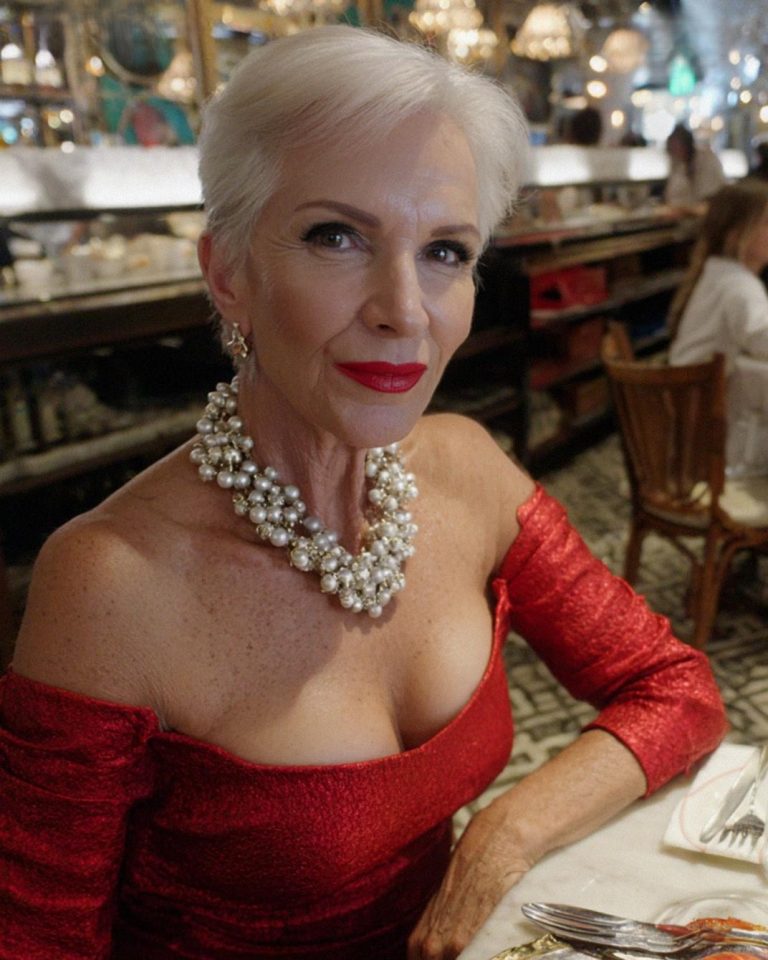
The shouting was coming from the checkout lane. A woman draped in a pristine white fur coat was leaning over the counter, her face tight with rage. Across from her stood the cashier—an elderly woman with thin gray hair and hands that shook as she tried to scan items.
“LOADING?” the woman snapped. “IT’S CHRISTMAS EVE, NOT ROCKET SCIENCE!”
The cashier’s fingers trembled more. Her eyes stayed fixed on the register, like she was trying to disappear into it.
Something in my chest snapped.
I don’t usually speak up. I’m not the confrontational type. But watching someone bully a woman who looked like she could barely make it through the shift—it flipped a switch in me.
“Ma’am,” I said, keeping my voice calm but firm, “it’s Christmas Eve. Maybe take a breath.”
She turned slowly, eyes narrowing as if I’d personally offended her existence.
“You have NO idea who I am,” she sneered.
I didn’t even think before answering. “Then maybe start acting like someone worth knowing.”
For a split second, the store was silent.
Then someone clapped. Another joined in. A few quiet “yeah”s floated through the air.
The woman scoffed, muttered something under her breath, grabbed her bags, and stormed out, her heels clicking angrily against the tile.
The cashier stood there blinking, clearly fighting back tears.
“You didn’t have to do that, dear,” she said softly.
“I did,” I replied. I grabbed a chocolate bar from the display and set it on the counter. “Merry Christmas.”
Her hands paused. She looked up at me, really looked at me, and her voice dropped to a whisper.
“You’re the only person who’s been kind to me today. My husband passed a few years ago. No children. No family left.” She swallowed. “I’ll be alone tonight.”
That hit me harder than the shouting ever had.
No one should be alone on Christmas Eve. No one.
“Well,” I said, before my tired brain could stop my mouth, “then come have dinner with us.”
She looked stunned. “Oh, I couldn’t—”
“I mean it,” I said. “We’re not fancy. Just food, a warm house, and a very excited kid waiting for Santa.”
Her eyes filled again, this time spilling over. She nodded. “I’d like that very much.”
We told her our address. She promised she’d come by around seven.
I went home lighter than I’d felt all day. Sophie was already asleep, cookies lined up perfectly on the table. I poured the milk, smiled to myself, and went to bed thinking maybe—just maybe—I’d done one good thing in the middle of the chaos.
Seven o’clock came.
Then eight.
Then nine.
The table was still set. The food untouched.
She never showed.
I told myself maybe she got busy. Maybe she changed her mind. Maybe she just didn’t feel up to it. Still, the disappointment sat heavy in my chest.
Christmas morning arrived quietly.
Until it didn’t.
A loud knock shook the front door. Then another. Then the unmistakable wail of a police siren outside.
I jolted upright, heart pounding.
“What’s happening?” Sophie asked from her room, panic already creeping into her voice.
I told her to stay put and walked to the door on shaky legs.
Through the peephole, I saw a uniformed police officer standing on my porch. In his hands was a small box, wrapped neatly in brown paper.
I opened the door.
“Ma’am,” he said gently, “were you the one who spoke to an elderly cashier at the supermarket last night?”
My stomach dropped.
“Yes,” I said slowly. “Is… is something wrong?”
He glanced down at the box, then back at me. “May I come in?”
My pulse roared in my ears as I stepped aside.
The officer explained that earlier that morning, the cashier—her name was Margaret—had suffered a mild stroke shortly after finishing her shift. A coworker found her in the break room and called for help. She was stable now, resting in the hospital.
Before she was taken away, she asked the nurse to call the police station.
“She insisted,” the officer said. “Said we’d know where to find you.”
My eyes burned. “Why?”
He held out the box.
“She wanted you to have this.”
Inside was the chocolate bar I’d given her—unopened—along with a handwritten card.
The writing was shaky but careful.
Thank you for seeing me. Thank you for making me feel like I still mattered. I didn’t make it to dinner, but I didn’t feel alone last night. I fell asleep thinking about kindness instead of silence.
I covered my mouth and cried right there in my living room.
The officer cleared his throat. “She also wanted me to tell you something else.”
I looked up.
“She said that woman in the fur coat? Turns out she filed a complaint against the store—for ‘verbal harassment.’ When management reviewed the footage, they saw everything. Margaret was defended. The woman was banned.”
I laughed through tears. “Good.”
“She also asked if you might visit her,” he added. “Only if you want to.”
I didn’t hesitate. “Of course.”
Later that day, Sophie and I went to the hospital. We brought cookies, milk, and a little stuffed reindeer Sophie insisted Margaret needed.
Margaret smiled when she saw us. Really smiled.
From that day on, we never missed a holiday together.
Sometimes standing up feels small in the moment. Like a single word in a loud world.
But you never know whose entire night—or life—it might change.