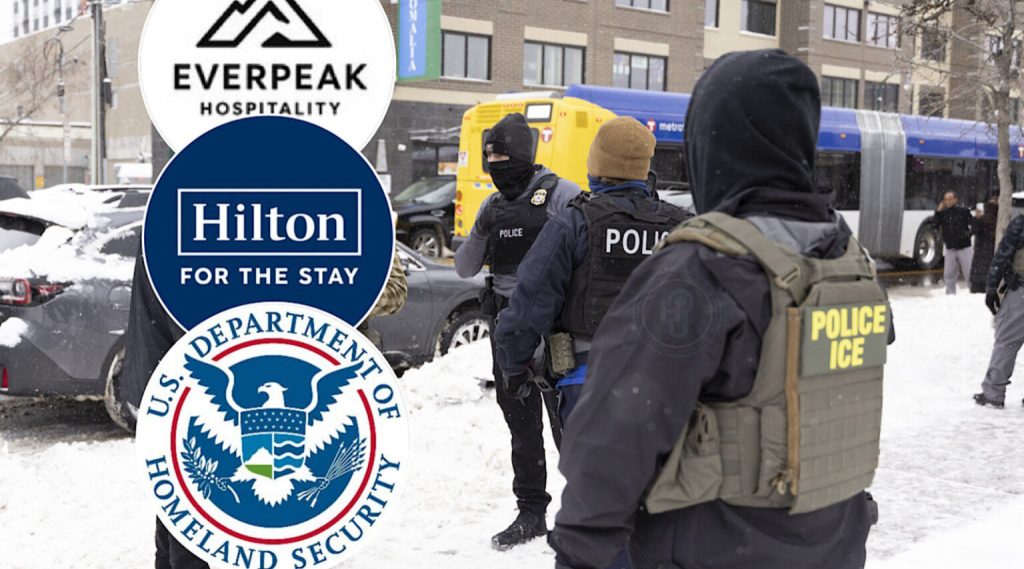
The Department of Homeland Security said Monday that a hotel affiliated with Hilton canceled reservations for U.S. Immigration and Customs Enforcement agents in Minnesota. In a post on X, DHS shared a screenshot indicating that a Hampton Inn in Lakeville, south of Minneapolis, informed federal officials that it was “not allowing any ICE or immigration agents to stay at our property.”
Hilton clarified that it does not own or operate the hotel in question. As a result, the company’s shares fell by nearly 2.5% on Monday.
“This hotel is independently owned and operated, and these actions were not reflective of Hilton values,” Hilton said in a statement to Business Insider. “We have been in direct contact with the hotel, and they have apologized for the actions of their team, which was not in keeping with their policies.”
“Hilton’s position is clear: Our properties are open to everyone and we do not tolerate any form of discrimination,” the statement added, per Business Insider.
Everpeak Hospitality, the hotel’s owner, noted in a statement Tuesday that the incident was “inconsistent with our policy of being a welcoming place for all.”
“We are in touch with the impacted guests to ensure they are accommodated,” the statement went on to say, per BI. “We do not discriminate against any individuals or agencies and apologize to those impacted.”
Hilton’s largest known shareholders are Vanguard and BlackRock, which own approximately 10.6 percent and 8.5 percent of the company’s common stock, respectively, according to Hilton’s 2025 proxy statement.
Like many global hotel chains, Hilton does not own most of the properties that operate under its brand name, instead licensing the brand to independently owned and operated hotels.
President Donald Trump has pursued an aggressive immigration enforcement agenda centered on expanded deportations, tighter border controls, and the rollback of Biden-era protections for migrants.
Since returning to office, Trump has directed the Department of Homeland Security to significantly increase arrests and removals of noncitizens with criminal records. Administration officials say enforcement efforts have prioritized individuals convicted of violent crimes, those with pending criminal charges, and migrants who reentered the country illegally after prior removals. Homeland Security Secretary Kristi Noem has said hundreds of thousands of “criminal noncitizens” have been arrested during the first nine months of the administration.
Trump has also moved to scale back Temporary Protected Status (TPS), a program that allows migrants from certain countries experiencing conflict or disasters to remain in the United States. His administration has sought to terminate TPS designations for multiple countries, including South Sudan, Haiti, Venezuela, and Afghanistan, arguing that conditions no longer justify continued protections. Several of those actions are currently tied up in federal court.
At the southwestern border, the administration has reinstated stricter enforcement measures, expanded the use of expedited removals, and curtailed parole programs created under President Joe Biden, including the CBP One app process. Trump officials have argued those programs encouraged illegal migration and overwhelmed federal resources.
Trump has also authorized expanded cooperation between federal immigration authorities and local law enforcement, while deploying National Guard units and additional federal agents to assist with enforcement in major cities. These moves have drawn criticism from Democratic lawmakers and immigrant advocacy groups, who argue the policies risk civil liberties and target nonviolent migrants.
The administration maintains that the crackdown is necessary to restore border security, deter illegal immigration, reduce fraud in public benefit programs, and protect public safety. Trump has framed deportation efforts as a core component of his broader law-and-order agenda heading into the 2026 midterm elections.
Last month, DHS finalized new immigration enforcement measures that expand biometric screening at U.S. borders and increase scrutiny of certain visa and permanent resident applicants.
The changes center on a DHS regulation titled “Collection of Biometric Data from Aliens Upon Entry to and Departure from the United States,” which authorizes U.S. Customs and Border Protection (CBP) to collect facial biometric data from all non-U.S. citizens entering or leaving the country.