When my son died, the world seemed to stop for all of us—but especially for his wife.
Grief hollowed her out in ways I still don’t fully understand. She stayed in the house they once shared, alone now, trying to hold on to a version of life that no longer existed. I check on her often. I worry. That’s what mothers do—even when the child you’re worried about married into your family.
So when I noticed something strange on her front door, my heart sank.
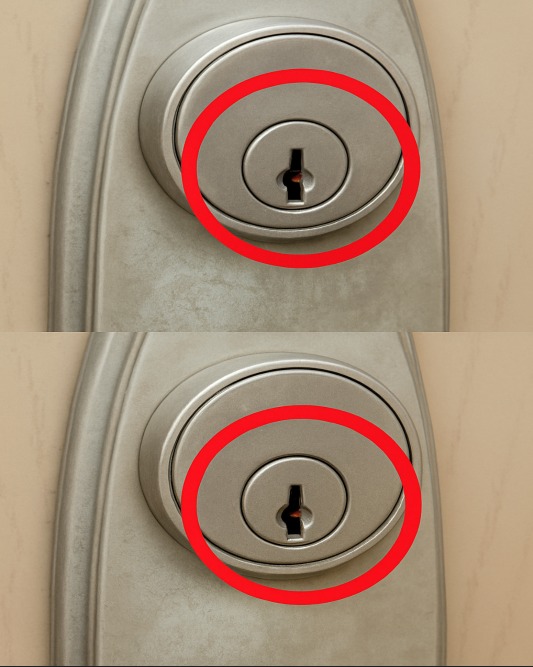
There was red wax smeared around the lock.
At first glance, it looked insignificant. A drip. A stain. Something you might miss if you weren’t paying attention. But it was deliberate—pressed into the keyhole and faintly circling the metal, as if someone had been there on purpose.
I asked her about it gently.
She shrugged and said, “Oh, that? I scraped it off once. I don’t know how it got there.”
But the next time I visited, it was back.
Why This Felt Wrong Immediately
It wasn’t just the wax.
It was the placement.
Right in the lock. Not on the handle. Not splashed randomly. Targeted. Intentional. As if someone wanted to mark the door—not decorate it.
And it was red.
Red isn’t a neutral color. It signals warning, intent, attention. It’s not something that appears accidentally and certainly not something that returns after being removed.
That’s when unease settled in my chest.
My daughter-in-law lives alone. People know that. Neighbors, delivery drivers, passersby—anyone paying attention would know that the man of the house is gone.
And that’s when a terrifying thought crossed my mind:
Was someone watching her?
Possible Explanations — From Harmless to Dangerous
I started researching, asking questions quietly, not wanting to alarm her before I understood what this could mean.
Here’s what I learned.
1. Burglary or Target Marking
In some areas, criminals use subtle markings—chalk, tape, wax, symbols—to:
- Track whether someone is home
- See if markings are disturbed
- Identify houses with single occupants
- Communicate with accomplices
Wax in a lock can show whether a door has been opened recently. If it’s intact, no one’s been in or out.
If that’s the case, this is very concerning.
2. Someone Testing Access
Wax can also be used to:
- Feel resistance in a lock
- Test whether a keyhole has been tampered with
- Mask damage after an attempted entry
The fact that it reappeared suggests someone came back.
3. Ritualistic or Superstitious Reasons
In some cultures, red wax is used for:
- Protection rituals
- Binding spells
- Warding off perceived threats
- Obsessive behavior tied to grief, fixation, or delusion
This possibility made my stomach twist. Because if this wasn’t random—but personal—it meant someone had chosen her specifically.
4. A Disturbing Coincidence
Of course, there’s always the chance it’s nothing:
- A candle drip
- A prank
- A strange accident
But coincidences don’t usually return.
What Worried Me Most Was Her Reaction
When I brought it up again, she dismissed it quickly.
Too quickly.
She laughed it off. Changed the subject. Said I was “reading too much into it.”
But I know grief. I know when someone is trying not to think about something because thinking about it would mean acknowledging fear.
She’s exhausted. Vulnerable. Alone.
And people like that don’t always notice when something is wrong—or they notice and don’t want to believe it.
Should You Be Concerned? Honestly? Yes.
Not panicked. But concerned enough to act.
Because when something unfamiliar appears on the door of a woman living alone—and reappears after removal—it’s no longer just odd. It’s a pattern.
Patterns deserve attention.
What You Should Do Next
If you’re in this situation—or anything similar—here are practical steps that don’t require confrontation or fear:
- Photograph the wax
Take clear photos every time you see it. Dates matter. - Ask neighbors discreetly
Has anyone seen someone near her door? At odd hours? - Install a door camera or peephole camera
Even a basic one can change everything. - Check the lock
Have a locksmith inspect it for tampering. This alone can bring peace of mind—or reveal a problem early. - Do not ignore repeated signs
If it appears again after removal, escalate—security, building management, or local non-emergency police. - Trust your instincts
Worry doesn’t come from nowhere. It comes from noticing what others overlook.
A Mother’s Instinct Doesn’t End With Loss
My son is gone.
But my responsibility to care—to protect—didn’t die with him.
If something feels off, it usually is.
Red wax on a lock isn’t just a stain. It’s a message—intentional or not. And when someone you love is alone in their grief, the smallest warning signs matter more than ever.
If you’re asking, “Should I be concerned?”
The answer is simple:
Yes. Enough to pay attention. Enough to act. Not enough to wait.
Because safety isn’t about fear.
It’s about listening before something worse forces you to.