I was a pediatric surgeon.
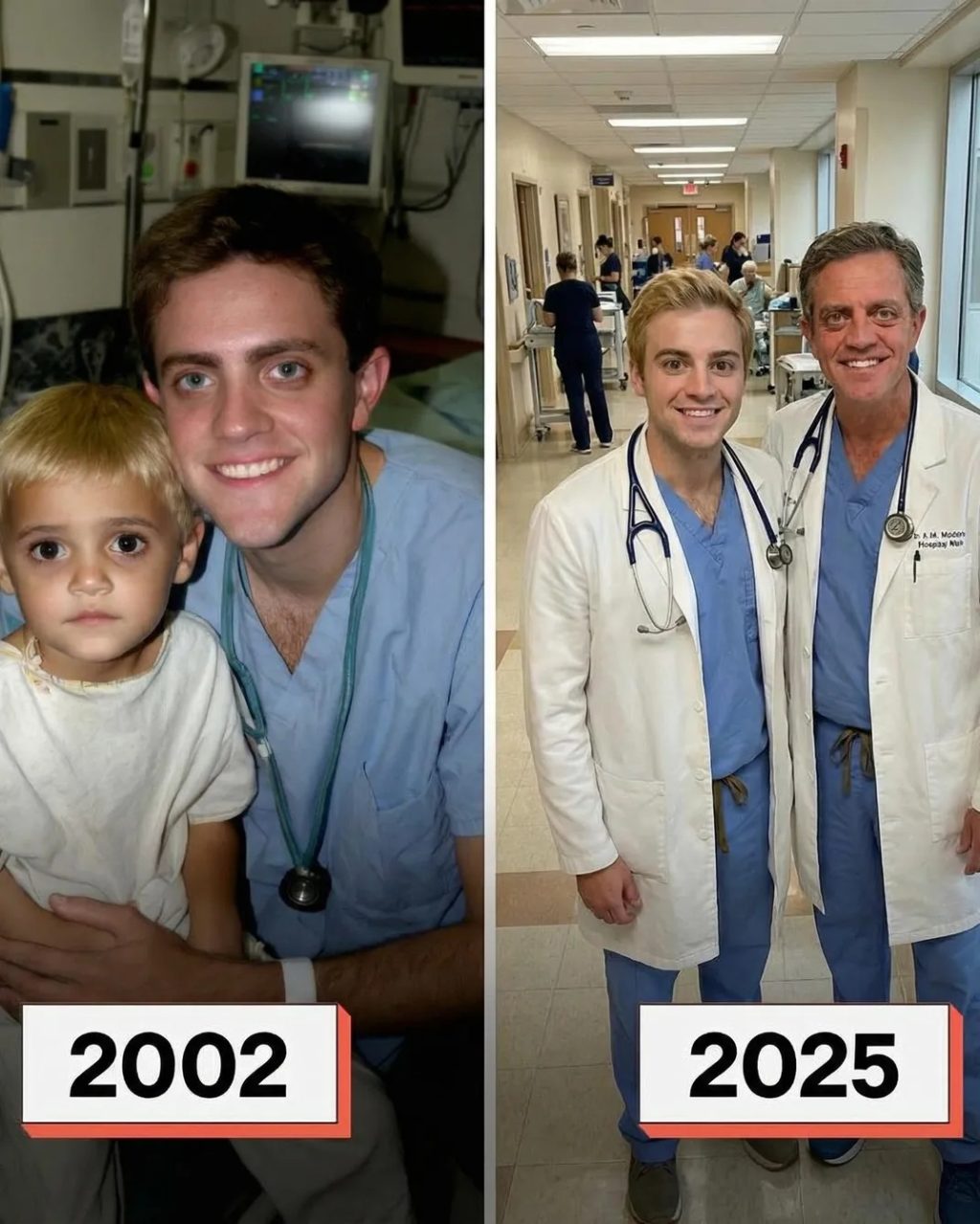
That morning, I was scheduled to perform a risky heart surgery on a six-year-old boy named Owen.
He was painfully thin—just bones and skin—with enormous, fearful eyes that followed every movement in the operating room. His chart detailed a severe congenital defect, one that had stolen his childhood before it ever really began.
I held his parents’ hands before the procedure and reassured them.
“We’ll do everything we can,” I said. “I believe he’ll be okay.”
The surgery was long. Complicated. Exhausting.
But it was successful.
When I finally stepped out of the operating room, I told his parents the words every surgeon hopes to say:
“He made it.”
The Empty Room
The next morning, I went to Owen’s room expecting relief. Smiles. Maybe tears of gratitude.
Instead, Owen was alone.
No mother.
No father.
Just his dinosaur toy tucked under one arm… and a half-empty paper cup abandoned on the bedside table.
“Where are your parents, buddy?” I asked gently.
He shrugged.
“They had to leave.”
Something inside my chest cracked.
I checked his vitals, adjusted his blanket, and forced myself to stay calm. But when I stepped into the hallway and reviewed his file, the truth hit me like a blow.
They had signed all discharge papers.
Then vanished.
The phone number was disconnected.
The address was fake.
They were broke. Terrified. Overwhelmed.
And they had made the worst decision of their lives.
A Choice Made at Home
That night, I came home later than usual.
My wife, Nora, took one look at my face and said quietly, “Tell me.”
I told her about the boy with the scar. About the empty room. About how he asked for his parents like it was a casual thing—like he’d already learned not to expect people to stay.
We had tried to conceive for years. Every attempt ended in silence.
Nora listened without interrupting.
Then she said something that changed everything.
“If he has no one,” she said softly, “we can be his somebody.”
Becoming a Family
We adopted Owen.
He struggled at first—nightmares, fear of being left behind, a constant need to make sure we were still there.
But slowly, he bloomed.
He grew strong. Curious. Determined.
He devoured books. Asked endless questions. Loved science. Loved helping others.
And when the time came to choose a career, he surprised no one.
He chose pediatrics.
Years later, he stood beside me in the same hospital where his life had once been saved.
My son.
My colleague.
The Pager
Twenty-five years passed.
Then one Tuesday, everything stopped.
We were mid-surgery when my pager vibrated with a message that froze my blood:
PERSONAL EMERGENCY — NORA — ER — CAR ACCIDENT
I ripped off my gloves and ran.
Owen saw my face and didn’t ask questions. He followed without hesitation.
We found Nora in the emergency room—bruised, shaken, but alive.
Owen rushed to her side and gripped her hand.
“Mom,” he said, his voice breaking. “Are you okay?”
She smiled weakly.
“I’m okay, sweetheart.”
The Woman in the Worn Coat
Then Owen looked up.
I watched my son’s face change completely.
Standing beside Nora was a woman in a worn coat, her hands scraped raw, her eyes wide and frantic.
Her gaze dropped to Owen’s chest—to the faint scar visible where his scrubs parted slightly.
Her lips trembled.
“Owen,” she whispered.
The room went silent.
Owen swallowed.
“How do you know my name?”
The Past Returns
The woman collapsed into a chair.
“I never stopped thinking about you,” she sobbed. “Not a single day.”
I felt the air leave my lungs.
She was one of them.
One of the parents who had walked away.
She explained through tears how fear had consumed them—medical bills, debt, hopelessness. How they convinced themselves Owen would be better off without them.
She’d followed Nora’s ambulance by coincidence—she worked nearby. And when she saw Owen…
She knew.
“I was wrong,” she said, looking at him. “I was a coward.”
Owen’s Answer
Owen listened quietly.
Then he straightened.
“I survived,” he said. “Because someone chose me.”
He turned to Nora and squeezed her hand.
“These are my parents.”
Silence fell heavy.
The woman nodded slowly, tears streaming.
“I understand,” she whispered.
What Family Really Means
Later that night, Owen stood beside me in the hallway.
“I’m glad I know,” he said. “But I’m even more grateful for who raised me.”
I put a hand on his shoulder.
“So am I.”
Family isn’t always who gives you life.
Sometimes, it’s who refuses to let you face it alone.
Epilogue
Nora recovered fully.
Owen went on to save countless children.
And every time I walk past that ward, I remember the boy who was left behind…
And the man who chose to stay.