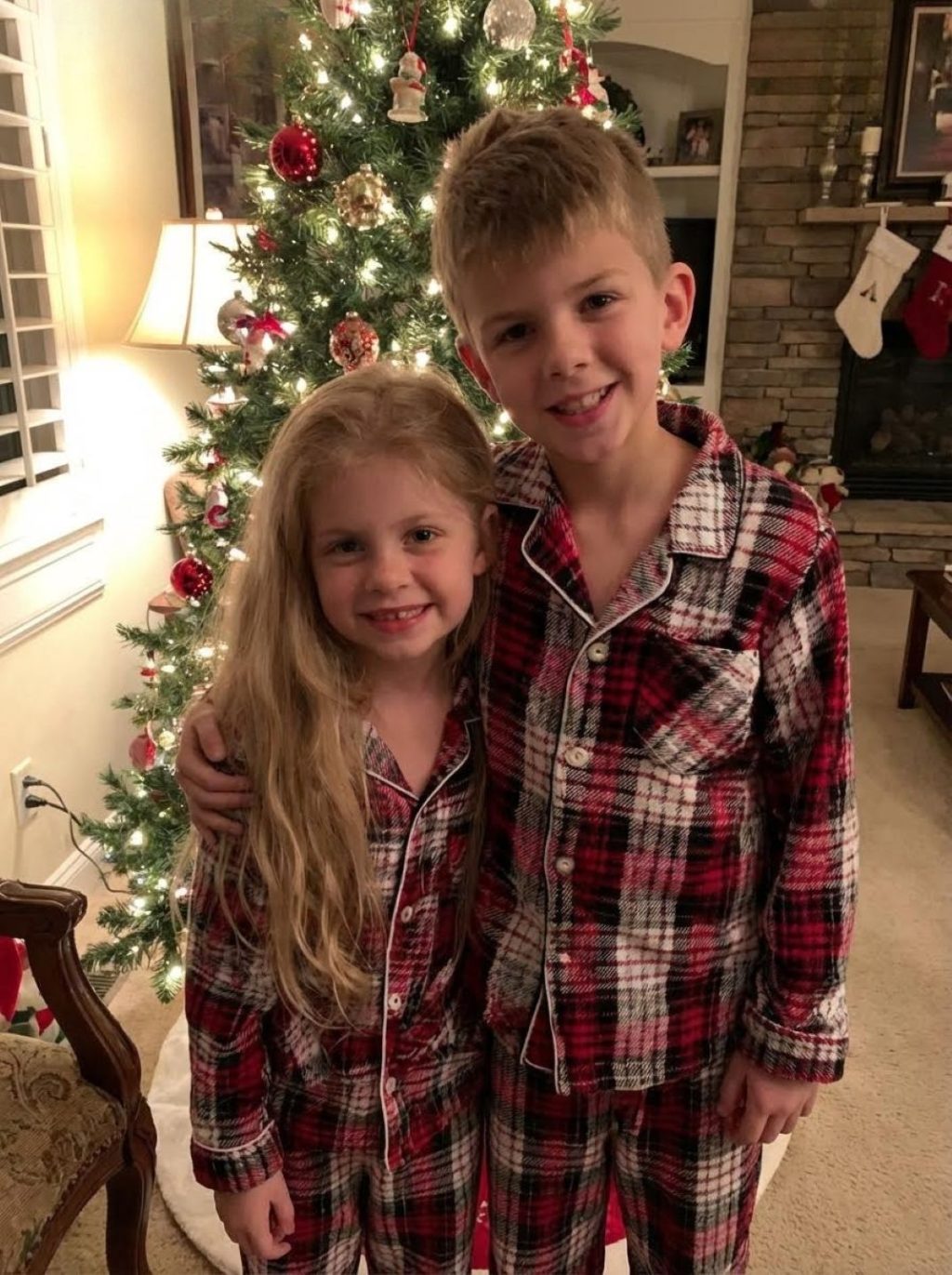
A month ago, we lost our son, Lucas.
He was eight years old—bright-eyed, curious, always asking questions. He was hit by a car while riding his bike home from school. The doctors said it was instant. That he didn’t feel pain.
I cling to that sentence on the worst days.
Since then, everything in our life has felt muted, like someone turned the color down on the world. Our home is still standing, still warm, but it feels hollow. His shoes sit by the door. His backpack still hangs on the hook. His laughter exists only in memory.
There’s me.
My husband, Mark.
And our five-year-old daughter, Ella.
That’s what’s left.
One quiet afternoon, Ella sat at the kitchen table, coloring silently. She used to hum while she drew. Now she didn’t.
Out of nowhere, she spoke.
“Mommy… I saw Lucas in the window.”
I froze, my hands gripping the edge of the counter.
“What window, sweetheart?” I asked carefully.
“The house across the street,” she said without looking up. “Sometimes he’s there. He waves at me.”
My heart clenched painfully.
I walked over, knelt beside her, and brushed her hair behind her ear. “Baby… Lucas is in heaven.”
She frowned slightly. “No. He’s in the window.”
I forced a smile. Children grieve differently. They imagine. They create comfort where they can.
That’s what I told myself.
Later that evening, as I cleaned the table, I noticed Ella’s drawing.
My breath caught.
It wasn’t abstract. It wasn’t scribbles.
It was a house. A window. And inside it—a boy with brown hair and a familiar crooked smile, waving.
Lucas.
My stomach churned.
I folded the paper and placed it in a drawer, my hands trembling.
That night, after Ella was asleep, I stood by the living room window, staring at the house across the street.
The place had been empty for years. I knew that. The previous owners moved away long before Lucas was born.
No lights turned on.
No shadows moved.
Just darkness.
Still, I didn’t sleep.
The next morning, I took our dog for a walk, hoping the fresh air would calm my nerves.
I hadn’t planned to look.
But as I passed the house, my eyes lifted instinctively toward the front window.
And I stopped cold.
There was a boy standing there.
Same height.
Same hair.
Same face.
Identical to Lucas.
My knees nearly gave out.
The boy looked straight at me.
Then—swiftly—the curtains were pulled shut.
I dropped the leash and ran.
My heart was pounding so hard I thought it would burst through my chest as I crossed the street and stood in front of the house.
I raised my hand.
Knocked.
The door opened.
And I gasped so loudly it echoed down the block.
“Oh my God…” I whispered. “Lucas?”
The boy stared back at me—wide-eyed, confused, terrified.
Then a woman rushed forward, pulling him behind her.
“What are you doing?” she demanded, gripping the doorframe. “Why are you screaming at my child?”
Your child.
I staggered back, shaking. “I—I’m sorry. He just… he looks exactly like my son.”
Her face changed.
She hesitated, then sighed deeply. “I was afraid this would happen.”
She opened the door wider.
“Please,” she said quietly. “Come inside.”
Inside the house, I sat on the edge of a chair, my hands clenched together as if that was the only way to keep myself from breaking apart.
The boy peeked at me from behind the hallway corner.
The woman introduced herself as Karen.
“This is Noah,” she said softly. “He’s eight.”
My chest tightened.
Karen swallowed. “He’s your son’s twin.”
The room spun.
“I—what?” I whispered.
She nodded, tears welling. “Lucas and Noah were born together. Twins. We adopted Noah at birth.”
My ears rang. “That’s impossible. We were told—”
“You were told Lucas didn’t survive,” she finished quietly. “That there were complications.”
I stood abruptly. “No. I saw him grow. I raised him. I buried him.”
Karen’s voice cracked. “I know.”
She sat down heavily.
“The hospital made a terrible mistake. Records were mixed. We didn’t know until years later. By then… it felt too late to rip lives apart.”
I felt like I couldn’t breathe.
“And now?” I demanded. “Now my son is dead.”
Karen looked at the floor. “Noah has been asking about the boy across the street. The one who looks like him.”
My legs buckled, and I collapsed back into the chair.
Two boys.
Two lives.
One truth buried under paperwork and fear.
That night, I told my husband everything.
We cried until there were no tears left.
Legal battles followed. Investigations. Headlines. Apologies that meant nothing.
But something else happened too.
Slowly… painfully… we began to know Noah.
He wasn’t Lucas.
But he wasn’t a stranger either.
He laughed the same way. Tilted his head when he was curious. Loved dinosaurs and hated broccoli.
And Ella?
She took his hand the first time they met and said, “I told Mommy you were in the window.”
We lost our son.
Nothing will ever change that.
But grief has strange paths.
Sometimes it doesn’t lead you back to what you lost.
Sometimes it leads you to something you never knew existed.
And every time I look across the street now, I see lights in that window.
Not a ghost.
Not a miracle.
But a reminder that love can exist in the most unexpected forms—even after unbearable loss.