When my mom died, it wasn’t dramatic. It wasn’t like the movies where someone whispers one final, perfect sentence and everyone gets closure.
It was slow.
Cancer doesn’t just take a person. It shrinks them. Piece by piece. I watched it happen. I watched my strong, sharp, stubborn mother grow smaller in her own clothes. Some days she cracked jokes and told the nurses they needed better coffee. Other days she stared at the wall for hours and apologized for “being difficult.”
As if dying was an inconvenience.
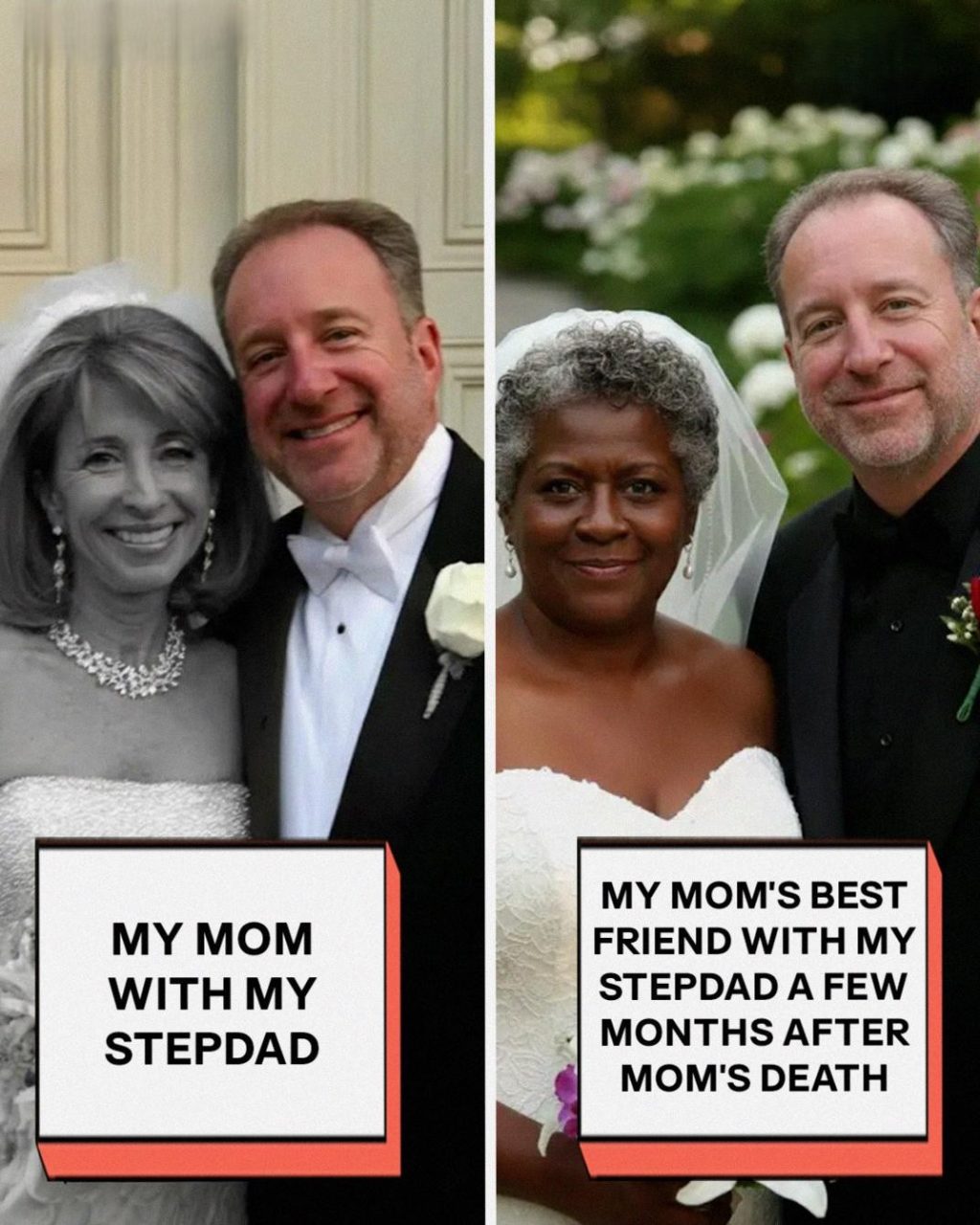
Two people were always there beside me: my stepdad, Paul, and my mom’s best friend, Linda. Linda brought casseroles. Paul handled the paperwork. They sat on either side of her hospital bed, holding her hands.
I trusted them.
I really did.
Three weeks after the funeral, Paul asked if we could talk. We sat at the kitchen table — the same one where my mom used to roll out pie dough every Thanksgiving. Her favorite mug was still in the cabinet. Her scarf still hung on the hook by the door. I hadn’t moved a single thing.
Paul kept rubbing his palms on his jeans. He wouldn’t look at me.
“I think it’s better you hear this from me,” he said.
My stomach dropped before he even continued.
“I’m getting married.”
The words just… hung there.
“To who?” I asked, even though something cold had already settled in my chest.
“Linda,” he said quietly. “Your mom would’ve wanted us to be happy.”
I actually laughed. It wasn’t funny, but I laughed anyway. It felt like my brain had short-circuited.
A week later — a week — they had a full wedding. White roses. String lights. Champagne flutes raised in golden sunset photos.
I wasn’t invited.
But social media doesn’t require invitations.
Linda wore my mom’s favorite color.
That part broke something in me.
Then I found out they’d pawned my mom’s gold necklace — the one she’d held in her hands one afternoon and told me, “This will be yours someday.”
When I confronted them, Linda didn’t even flinch.
“Sentimentality doesn’t pay for honeymoons,” she said with a little shrug.
That’s when a longtime family friend pulled me aside after a grocery store run. She looked uncomfortable.
“They were together before your mom passed,” she whispered. “They complained about how exhausting it all was. Talked about ‘after.’”
After.
Like my mom was an appointment on a calendar.
One sentence stuck in my head like a splinter.
“I can’t wait until we don’t have to pretend anymore,” Linda had laughed.
So I decided to pretend instead.
I apologized. Said grief was making me irrational. Said I wanted peace. I told Paul I didn’t want to lose him too. I even hugged Linda and congratulated her properly.
They believed every word.
A week later, I invited them over for dinner. I cooked my mom’s chicken recipe. Lit the same vanilla candles she used to burn. I smiled through the entire meal.
And at the end, I handed them a beautifully wrapped box.
“A wedding gift,” I said softly. “Something meaningful. From Mom.”
They exchanged pleased looks. Linda actually squeezed my hand.
They opened it.
Paul’s face drained of color so fast I thought he might faint. Linda let out a sharp scream and dropped the box onto the table.
Paul looked up at me, shaking.
“What did you do?”
Inside the box wasn’t anything dangerous. Nothing illegal. Nothing dramatic.
It was paperwork.
Copies of bank statements.
Property records.
Text messages.
Emails.
And a neatly typed timeline.
You see, while I was sitting beside my mother’s hospital bed, while Linda was pretending to dab her eyes and Paul was pretending to be the devoted husband — I had access to my mom’s laptop. She’d asked me to help manage her online accounts when she got too weak.
I wasn’t snooping.
At first.
But one afternoon, an email notification popped up on her screen. It was from Linda.
Not the sweet, supportive kind.
It was intimate.
Too intimate.
I wish I could say I closed it immediately. I didn’t.
And once you see one thing like that, you start noticing everything.
Hotel confirmations sent to a joint email address Paul had created. Transfers from a shared account I didn’t even know existed. Messages about “counting down” and “soon we won’t have to hide.”
They’d been careful.
Just not careful enough.
I didn’t confront them back then. My mom was still alive. She didn’t need that heartbreak layered on top of everything else.
Instead, I saved copies.
Every receipt. Every message. Every transaction that showed money quietly moving out of my parents’ joint savings into accounts that had only Paul’s name on them.
Including the funds from my mom’s life insurance policy.
The necklace wasn’t the only thing they’d pawned.
The house — my mom’s house — was legally half hers. And in my state, marital assets don’t just vanish because one spouse remarries quickly.
When Paul asked, “What did you do?” I leaned back calmly.
“I spoke to an attorney,” I said.
Linda started shaking her head. “You’re bluffing.”
“I’m not.”
The documents in that box were copies of what my lawyer had already filed.
A civil claim for financial misconduct.
A challenge to the life insurance distribution based on fraudulent transfer of assets.
And screenshots of their relationship timeline — overlapping directly with the months my mother was undergoing chemotherapy.
I hadn’t called the police. I hadn’t made a scene.
I’d simply brought truth into the light.
“You can’t prove—” Linda began.
“I don’t need to prove everything,” I interrupted. “Just enough.”
The affair? That was cruel. But not illegal.
The financial deception? That was another story.
Paul tried to stand, but he looked dizzy. “You’re trying to ruin us.”
I met his eyes for the first time that night.
“No,” I said quietly. “You did that yourselves.”
The necklace was gone. The wedding had already happened. My mom was still gone.
Nothing I did would bring her back.
But I wasn’t going to let them build their happily-ever-after on the money she earned, the savings she helped build, and the dignity they stripped from her while she was still breathing.
The lawsuit didn’t make headlines. There was no dramatic courtroom confession.
But it didn’t need one.
They settled.
The house was sold. A significant portion of the life insurance payout was returned to my mom’s estate. I received what should’ve been mine in the first place — including enough to buy back my mother’s necklace from the pawn shop.
I remember holding it in my palm when I got it back.
It felt heavier than I remembered.
Grief doesn’t go away because justice happens. If anything, it makes the loss feel sharper for a while. You realize all over again who your person was — and who the others weren’t.
Paul and Linda moved out of state. I haven’t spoken to them since.
Sometimes people ask me if I regret it. If it was worth the stress, the lawyers, the tension.
I always give the same answer.
My mom spent her final months apologizing for being “difficult.”
She wasn’t difficult.
She was dying.
The least I could do was make sure she wasn’t erased.
That wedding gift wasn’t revenge.
It was accountability.
And if there’s one thing I’ve learned through all of this, it’s this:
Grief doesn’t make you weak.
But it does show you exactly who people are when they think you’re too broken to fight back.