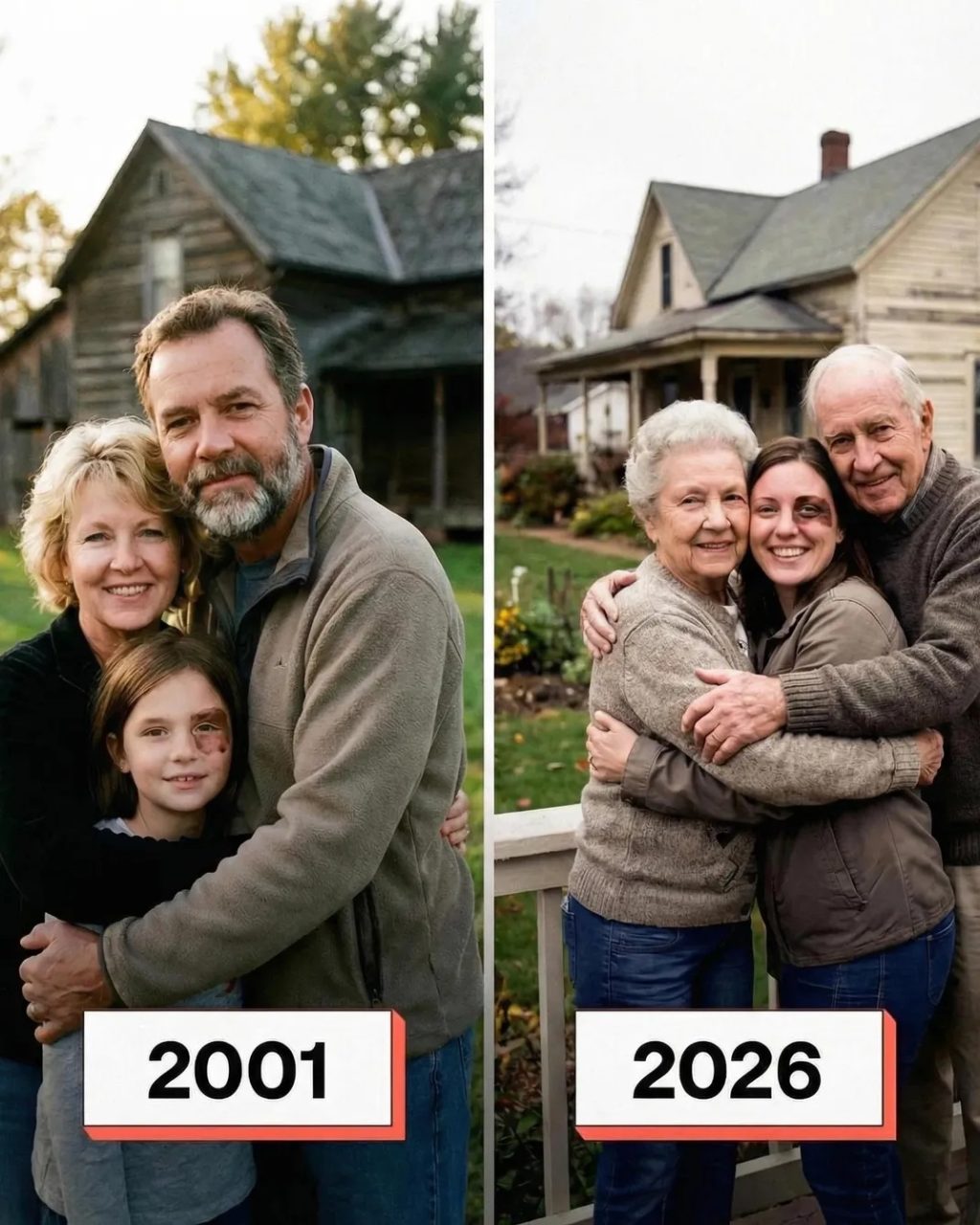
I’m seventy-five years old now, and when I look back on my life, I can see how quietly it unfolded—until one unexpected choice changed everything.
My husband, Thomas, and I never had children. Not for lack of wanting them. When I was younger, I was diagnosed with infertility, and after years of treatments, appointments, and carefully guarded hope, we were told it simply wasn’t going to happen. We mourned that loss in our own quiet way. Over time, we learned how to live with it.
For nearly thirty years, it was just the two of us.
We built a good life. A steady one. We filled our days with routines, neighbors, shared jokes, and long walks after dinner. Still, there was always a small, empty space in our hearts—a space we didn’t talk about much, but both of us felt.
Then one morning, everything shifted.
We were sitting outside with a few neighbors, sipping coffee and talking about nothing in particular, when one woman mentioned her job at the local orphanage. Almost casually, she said there was a little girl there—five years old—who no one wanted to adopt.
“She’s been there since she was a baby,” the woman said. “Abandoned at birth. And people won’t take her because of a birthmark.”
The words landed heavier than she probably intended.
She explained that the birthmark was large and noticeable, running across the girl’s face and neck. Families would meet her, smile politely, and then quietly choose someone else. Year after year, the girl was passed over.
I remember looking at Thomas. He was already looking at me.
We didn’t speak right away. We didn’t need to.
Later that afternoon, we talked about it properly. About our age. About what people might say. About whether it was fair to bring a child into our lives when we were already in our fifties.
But beneath all those practical concerns was one simple truth: neither of us could stop thinking about that little girl.
Within weeks, we contacted the orphanage.
When we went to meet her, I knew before she even spoke that our lives were about to change.
Her name was Lily.
She stood slightly behind the caregiver, clutching the edge of her sweater, clearly used to adults coming and going. Her birthmark was exactly as described—large, dark, impossible to miss. But the moment she looked at me, none of that mattered. What I saw were her eyes. They were cautious, curious, and somehow older than they should have been.
She studied my face as if trying to decide whether I would disappear too.
Something in my chest cracked open.
I didn’t fall in love with her because I felt sorry for her. I fell in love with her because she felt like mine.
The adoption process wasn’t easy. Some people questioned our decision. Others outright criticized it. We were told we were “too old” and warned about how hard it would be.
But once Lily came home, none of that mattered.
She was a wonderful child—gentle, observant, deeply empathetic. She asked thoughtful questions and had a way of noticing when someone else was hurting. The birthmark that others had judged so harshly never slowed her down. If anything, it made her stronger.
She grew up surrounded by love, and she gave it back tenfold.
Years passed faster than I ever imagined. Lily excelled in school. She volunteered. She studied late into the night. When she told us she wanted to go to medical school, I wasn’t surprised in the slightest.
“I want to help people,” she said. “The way people helped me.”
Thomas and I were so proud it hurt.
She became our entire world.
By the time she was twenty-five, she was in medical school, working toward becoming a doctor. She was confident, intelligent, and kind—the kind of person who made the room feel safer just by being in it.
We thought we knew her whole story.
We were wrong.
One quiet morning, I walked out to the mailbox and began sorting through the usual bills and flyers. That’s when I noticed an envelope that didn’t belong.
There was no stamp. No return address. Just my name written in careful handwriting.
Something about it made my stomach tighten.
I brought it inside and opened it at the kitchen table. Inside was a single sheet of paper, handwritten.
The first line stopped my breath.
“Hello. I’m Lily’s biological mother.”
I read it again, just to make sure I hadn’t imagined it.
The letter went on.
“I know this may seem strange, but you need to know the truth about her. I can’t stay silent anymore. I’ve carried this secret for over twenty years.”
By the end of the first paragraph, my hands were shaking.
She wrote about being young, frightened, and alone. About giving birth in secret. About being pressured to give Lily up. But what froze my blood was the next part.
“The birthmark,” she wrote, “is not just a birthmark. It’s hereditary. It runs in my family. And Lily’s biological father was someone powerful—someone who could not afford a scandal.”
I had to stop reading. I felt dizzy.
The letter explained that Lily’s birth father had insisted the child be hidden away. The birthmark made it impossible to pretend she didn’t exist. The woman had been threatened, silenced, and warned never to come forward.
Until now.
“She deserves to know where she comes from,” the letter said. “And you deserve to know the truth about the child you raised.”
I sat there for a long time, staring at the paper.
That evening, I showed the letter to Thomas. We read it together in silence. Neither of us spoke until the very end.
“She’s still our daughter,” he said finally. “Nothing changes that.”
The hardest part was deciding what to do next.
Lily was an adult. She had a right to know—but also a right not to, if the truth would only bring pain.
In the end, we chose honesty.
We sat her down and told her everything. We showed her the letter. We answered every question we could.
She listened quietly, her expression unreadable.
When she finally spoke, her voice was steady.
“I don’t need to meet them,” she said. “I already know who my parents are.”
She reached for our hands.
“You chose me when no one else would,” she said. “That’s the only truth that matters.”
I realized then that love, real love, isn’t erased by biology or secrets or time. It’s built—in everyday moments, shared meals, late-night talks, and quiet sacrifices.
We adopted a girl no one wanted because of a birthmark.
Twenty-five years later, we learned the truth about her past.
And it didn’t change who she was.
It only confirmed what we had known all along: she was always meant to be ours.