I’m seventy years old now, and there are days when my life feels neatly divided into two parts: everything before the accident, and everything that came after.
Twenty years ago, just a few days before Christmas, my son, his wife, and their two children were driving home from my house. We’d done an early holiday visit because the weather report was already worrying everyone. I remember standing on the porch, waving as their taillights disappeared down the rural road. Snow was starting to fall, light at first, the kind that looks harmless until it isn’t.
Their car never made it home.
It slid off the road, hit a stand of trees, and crumpled in a way no car ever should. The police told me later it was quick. That the storm had come in faster than expected. That these things happen on country roads.
The only one who survived was my granddaughter, Emily. She was five years old.
The doctors called it a miracle. So did the police. So did the pastor, standing at the front of the church in front of three closed caskets. I remember staring at the wood grain, thinking how wrong it was that a family could disappear so completely in one night.
Emily had a concussion, broken ribs, and deep bruises from the seatbelt. The doctors said she was lucky—if you can use that word in a situation like that. They told me she didn’t remember much. Just confusion. Fragments. They were very clear about one thing: don’t ask questions. Don’t push. Let her mind protect itself.
So I didn’t.
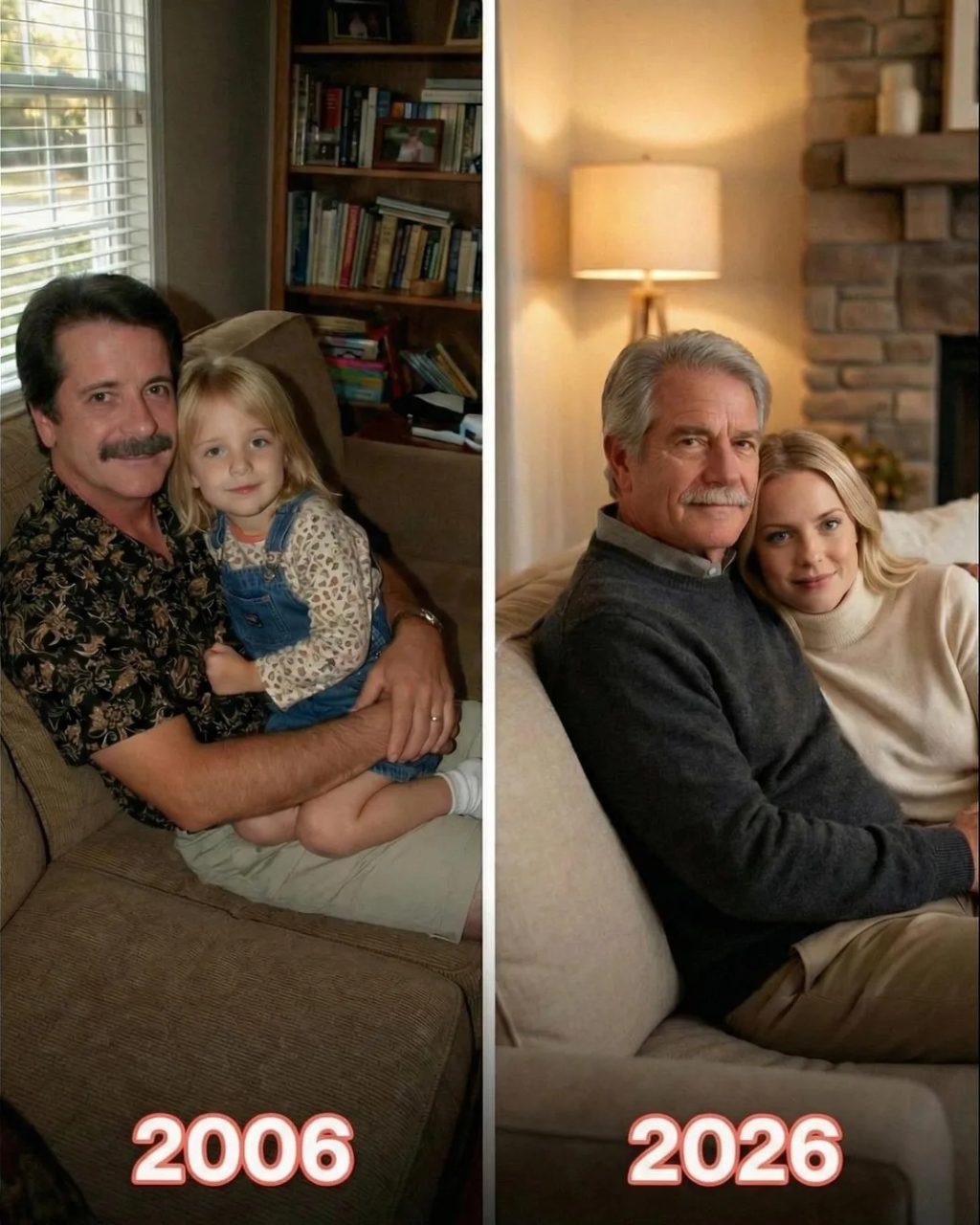
I buried my son, my daughter-in-law, and my grandson. Then I brought Emily home and tried to figure out how to be a parent again when I was already pushing fifty. I learned how to pack lunches, help with homework, braid hair badly, and sit through school plays with a lump permanently lodged in my throat.
We didn’t talk about the crash. Not really.
When Emily asked why her parents and brother weren’t coming back, I told her the truth in the gentlest way I knew how. I said it was an accident. I said there was a bad storm. I said it wasn’t anyone’s fault.
She nodded and accepted it quietly, the way children sometimes do when the answer hurts too much to argue with.
Years went by.
Emily grew into a kind, thoughtful young woman. She did well in school. Never caused trouble. Teachers always told me how polite she was, how mature. After college, she moved back in with me to save money and found a job at a small legal research firm downtown. She was twenty-five—independent, smart, capable—and still, somehow, the little girl who used to fall asleep on my shoulder during winter storms.
Our life was peaceful. Predictable. Safe.
Then, a few weeks ago, right before the anniversary of the crash, I started noticing changes.
Emily got quieter. She picked at her food. She stared off during conversations. And every now and then, she’d ask a question that stopped me cold.
“Grandpa,” she asked one night over dinner, “do you remember what time they left your house that night?”
Another evening: “Did the police ever talk to you more than once?”
I told myself it was curiosity. Grief anniversaries can do strange things to people. Even after twenty years.
Then last Sunday, she came home earlier than usual.
She didn’t take off her coat. She didn’t sit down. She just stood in the entryway, holding a folded piece of paper like it weighed a hundred pounds.
“Grandpa,” she said. Her voice was calm, but her hands were shaking. “Can we sit down?”
We sat at the kitchen table—the same table where she’d colored pictures as a child, where we’d eaten countless quiet meals together.
She slid the paper toward me.
“I need you to read this,” she said. “And I need you to let me finish before you say anything.”
Then she took a breath, deep and uneven.
“I have to make a confession,” she said. “It wasn’t an accident.”
My heart actually skipped.
The paper was a report. Old, yellowed at the edges. A copy of a police supplemental statement I had never seen. Highlighted in several places.
I looked up at her, but she just nodded. “Please,” she said. “Read it.”
According to the report, the weather had been bad—but not unmanageable. The road conditions were slick, yes, but not severe enough to explain the loss of control on their own. There was mention of speed. Of an argument heard by a passing driver who had stopped briefly earlier down the road. Raised voices inside the car.
My hands started to shake.
Emily swallowed hard. “Grandpa,” she said quietly, “I remember more than they thought I did.”
She told me she’d remembered pieces for years. Not all at once. Just flashes that didn’t make sense when she was little. Her parents arguing. Her mother crying. Her father yelling that he was turning back. The car accelerating. The sound of her brother screaming.
She said she’d tried to tell people when she was younger, but adults smiled sadly and told her it was just a bad dream. Trauma. Imagination.
So she stopped talking.
But memories don’t disappear just because you ignore them. They wait.
When she started working at the legal firm, she learned how to read reports. How to ask questions. How to look for what wasn’t said. And slowly, carefully, she requested records connected to the crash—records she had every legal right to access as a survivor.
“There was another report,” she said, tears finally spilling over. “They didn’t give it to you because they didn’t want to complicate things. They thought it would be better if you believed it was just the storm.”
She looked at me then, really looked at me.
“They were fighting, Grandpa. My parents were fighting badly. And my dad lost control. I don’t think he meant to hurt anyone. But it wasn’t just the weather.”
I sat there for a long time, staring at the table. At my hands. At the life I thought I understood.
All those years I’d told myself there was nothing more to know. That the truth wouldn’t change anything. And maybe I was right.
But as I looked at Emily—strong, honest, still carrying something no child should—I realized the truth mattered. Not to assign blame. Not to reopen wounds. But to finally let her put the weight down.
I reached across the table and took her hands.
“I’m so sorry,” I said. “I should have listened harder when you were little.”
She shook her head. “You protected me,” she said. “But I needed to tell you. I didn’t want to carry it alone anymore.”
That night, we talked for hours. About grief. About memory. About how love and mistakes can exist in the same moment.
And for the first time in twenty years, we talked about the crash—not as a mystery, not as a myth, but as a painful, human truth.
It didn’t bring anyone back.
But it finally let both of us breathe.