She came home tired but satisfied, arms aching from bags, mind still ticking through prices and errands. The house was quiet—too quiet—but she didn’t think much of it at first. Until she walked into the bedroom.
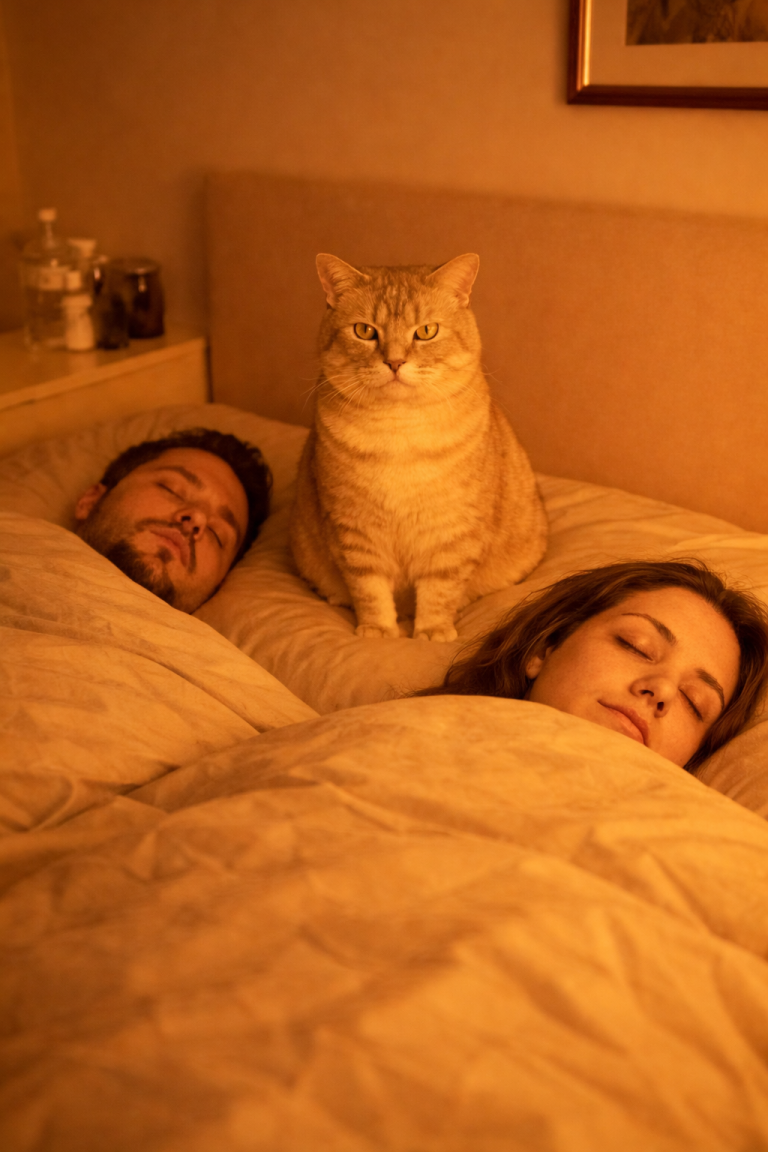
There, in her bed, was her husband. And beside him was a young woman—pretty, soft-looking, the kind of beauty that makes your stomach drop before your brain catches up.
For a split second, she couldn’t even breathe. Shock gave way to fury. She turned on her heel, ready to storm right back out the door and keep walking until the anger burned itself out.
“Wait,” her husband said quickly. “Before you go, please. Just listen. Let me explain how this even happened.”
She froze, one hand still on the doorframe, every instinct screaming not to believe a word of it. But curiosity—and maybe years of shared history—made her pause.
“It started on my drive home,” he said. “I saw her on the side of the road. She looked exhausted. Poor. Like someone life had been rough to for a while. I stopped and offered her a ride.”
His wife crossed her arms, saying nothing.
“She told me she hadn’t eaten all day,” he went on. “So when we got here, I warmed up that roast in the fridge. The one you said you’d get to, but never did.”
Her jaw tightened.
“Then I noticed her shoes,” he said. “They were falling apart. So I gave her that pair of yours in the closet—the ones you stopped wearing because they were ‘out of style.’”
Still no interruption.
“She was shivering,” he continued, voice almost gentle now. “So I gave her that birthday sweater. You remember—the one you never wore because you didn’t like the color.”
Her expression didn’t change, but her eyes narrowed.
“And her pants,” he added. “They were torn at the knees. So I offered her a pair of yours you haven’t fit into in years.”
He took a breath. The room felt heavy with everything unsaid.
“She thanked me,” he said. “She was about to leave when she stopped at the door, turned back, and asked me something.”
The wife finally spoke. “What did she ask?”
His voice dropped just a little.
“She asked, ‘Is there anything else your wife doesn’t use anymore?’”
There was a long silence.
The wife stared at him. Then, slowly—very slowly—the corners of her mouth lifted.
“Oh,” she said softly. “I see.”
That was the moment it clicked. The young woman hadn’t been asking about clothes. Or shoes. Or sweaters.
She’d been asking about him.
The husband swallowed. “That’s… that’s when I realized what she meant.”
For a beat, neither of them moved.
Then his wife did something unexpected.
She laughed.
Not a sharp, angry laugh. Not the kind that comes before throwing a lamp. It was quiet at first, then fuller, shaking loose years of unspoken truth. She sat down on the edge of the bed, still laughing, wiping at her eyes.
“You know,” she said finally, “for a second there, I thought this was going to be a tragedy.”
He blinked. “And now?”
“Now?” She stood, smoothing her coat. “Now I realize it’s a mirror.”
He didn’t understand.
She gestured around the room. “The clothes. The sweater. The shoes. All the things you say I don’t use anymore.” She looked at him steadily. “Funny how easy it is to notice what someone else has set aside… while forgetting why.”
She walked to the door, paused, and looked back at him one last time.
“If you feel unused,” she said calmly, “that’s a conversation we should’ve had years ago. But charity begins with honesty—not assumptions.”
Then she left the room, not in rage, not in tears, but with clarity.
Later that night, long after the house had settled back into silence, the husband sat alone and replayed every word. He thought about how comfort can quietly turn into distance. How people stop wearing things—not because they’re worthless, but because they no longer feel seen in them.
The young woman had been a stranger. But the moment had been a message.
And sometimes, the most uncomfortable question—Is there anything else you don’t use anymore?—is really asking something deeper:
Have you noticed what you’ve been taking for granted?
That question lingered long after the door closed.