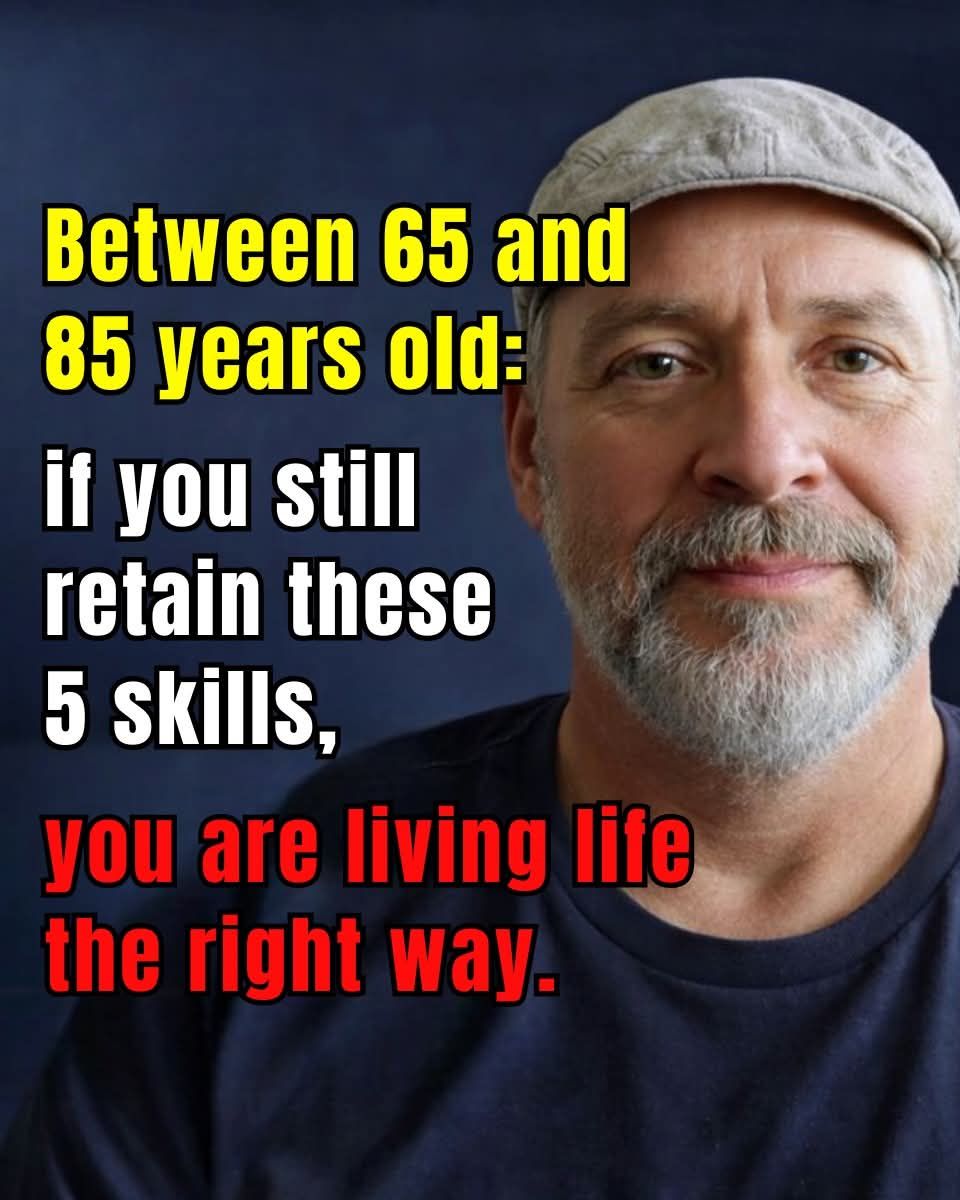
Aging well isn’t about looking younger or pretending time hasn’t passed. It’s about how you live inside the years you’ve earned. Between 65 and 85, life tends to narrow in some ways—routines settle, circles get smaller, bodies slow down. But for people who age especially well, something else quietly expands: perspective, resilience, and a deep sense of self.
If you’re in this stage of life and still have the following five skills, you’re not just doing okay—you’re aging better than most.
1. You Can Adapt When Life Changes (Even If You Don’t Love It)
One of the biggest myths about aging is that older adults are “set in their ways.” In reality, the people who age best aren’t the most rigid—they’re the most adaptable.
If you can adjust when plans fall apart, when technology changes, when routines are disrupted, or when life forces you to do things differently than you imagined, that’s a powerful skill. It doesn’t mean you enjoy change. It means you don’t let it break you.
Adaptability at this age often looks quiet:
- Learning a new way to do things after decades of doing them another way
- Accepting physical limits without letting them define your identity
- Finding new meaning when old roles shift or disappear
That flexibility keeps your mind active and your spirit resilient.
2. You Can Still Learn New Things (Even Small Ones)
You don’t need to master a new language or pick up a degree to prove you’re aging well. Sometimes learning looks like:
- Figuring out a new phone feature
- Trying a new recipe
- Understanding a different point of view
- Asking questions instead of saying, “That’s just how it is”
Curiosity is a huge marker of healthy aging. When you’re still interested in how things work—or why people think differently—you’re keeping your brain engaged and your world open.
The moment someone stops learning entirely isn’t about age. It’s about mindset.
3. You Regulate Your Emotions Better Than You Used To
This one doesn’t get talked about enough.
Many people between 65 and 85 report something surprising: they’re calmer than they were in midlife. Less reactive. Less rattled by small things. Less desperate to win every argument.
If you’ve learned how to:
- Let things go
- Pause before reacting
- Choose peace over being right
- Accept that not everything needs your energy
That’s emotional intelligence—and it’s one of the strongest signs of aging well.
Life has already taught you what matters. You don’t need to prove it anymore.
4. You Maintain Meaningful Connections (Even If the Circle Is Smaller)
Aging well doesn’t mean having a large social life. It means having real connections.
If you still:
- Reach out to others
- Maintain a few close relationships
- Enjoy conversations that go beyond surface level
- Feel seen or understood by at least one person
You’re doing better than many.
Loneliness isn’t about being alone—it’s about feeling disconnected. People who age well invest in relationships that nourish them, even if there are fewer than before. Quality replaces quantity, and that’s not a loss—it’s refinement.
5. You Can Find Meaning Beyond Productivity
This may be the most important skill of all.
For much of life, worth is tied to output: work, achievement, usefulness. But between 65 and 85, aging well often means learning how to value yourself without constantly producing.
If you can:
- Enjoy simple moments without guilt
- Find meaning in presence, not just performance
- Feel worthy even when you’re resting
- Appreciate life as it is, not just what it gives
That’s a sign of deep psychological health.
You’re no longer measuring life only by what you do—but by what you experience, what you give emotionally, and how you show up as a human being.
The Quiet Truth About Aging Well
Aging well is rarely loud. It doesn’t always show on the outside. It shows up in how you handle disappointment, how you treat others, how curious you remain, and how gently you treat yourself.
If you recognize yourself in these five skills, you’re not just surviving the years—you’re inhabiting them fully.
And that’s something many people never learn, at any age.