I’m 47 years old and cannot believe I didn’t know this sooner. These eggs came out unbelievably soft, creamy, and fluffy. The kids devoured them—and immediately asked for the same breakfast tomorrow.
There are some kitchen lessons you assume you’ve already mastered by adulthood. Scrambled eggs usually fall into that category. You crack, whisk, cook, stir, done. Right?
That’s what I thought too—until I learned this simple shift in technique that completely changed the texture of my eggs. Not a fancy gadget. Not an exotic ingredient. Just a better understanding of heat, timing, and patience.
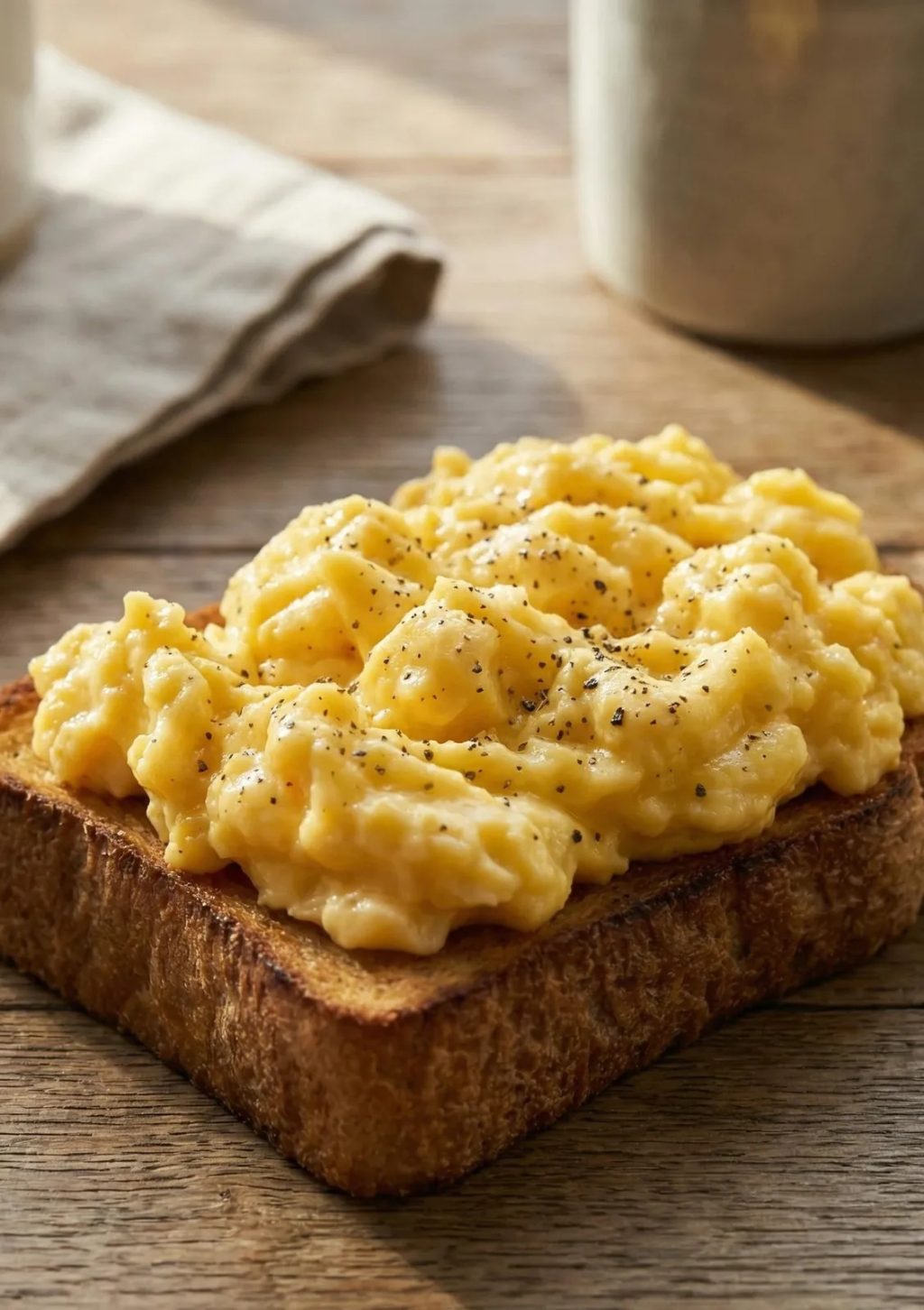
The result? Scrambled eggs that are tender instead of rubbery, creamy instead of dry, and rich without being heavy. The kind of eggs you’d expect at a great café, not rushed together on a weekday morning.
Once you make them this way, it’s very hard to go back.
The Biggest Mistake Most of Us Make
The problem with most scrambled eggs isn’t the eggs themselves—it’s too much heat and not enough patience.
Eggs cook quickly. Push them too hard, and the proteins tighten, squeezing out moisture. That’s how you end up with dry, crumbly curds instead of soft, custardy ones.
The secret to perfect scrambled eggs is gentle heat and pulling them off the stove before they look done.
The Simple “Hack” That Changes Everything
Here it is, plain and simple:
Low heat + constant stirring + finishing off the heat.
That’s it.
No milk bath. No complicated steps. Just treating eggs with the same care you’d give a delicate sauce.
Why This Method Works
- Low heat keeps the eggs from seizing up
- Constant stirring creates small, tender curds
- Residual heat finishes cooking without overdoing it
- Fat added at the right time boosts creaminess
It’s more about restraint than effort.
Soft & Creamy Scrambled Eggs Recipe
Ingredients (Serves 2–3)
- 6 large eggs
- 1–2 tablespoons butter
- Salt, to taste
- Freshly ground black pepper
- Optional: a splash of cream, crème fraîche, or a small knob of cream cheese
Step-by-Step Instructions
1. Crack, but don’t over-whisk
Crack the eggs into a bowl and gently whisk just until the whites and yolks are combined. You don’t want them frothy—less air means creamier eggs.
2. Start with a cold pan
Place a nonstick pan on the stove before turning on the heat. Add the butter and let it melt slowly as the pan warms.
3. Low heat is non-negotiable
Set the burner to low or medium-low. This is where patience matters.
4. Add eggs and stir constantly
Pour the eggs into the pan and immediately begin stirring with a silicone spatula or wooden spoon. Scrape the bottom and edges continuously.
5. Watch for soft curds
After a minute or two, small, creamy curds will begin to form. Keep stirring gently. Don’t walk away.
6. Pull them early
When the eggs look slightly underdone and glossy, remove the pan from the heat. They’ll finish cooking from residual warmth.
7. Season at the end
Add salt and pepper after cooking. If you like extra creaminess, fold in a spoon of crème fraîche or cream cheese now.
What They Should Look Like
Perfect scrambled eggs should be:
- Soft and pillowy
- Slightly glossy
- Moist, not wet
- Creamy without being runny
If they look fully set in the pan, they’re already too far gone.
Small Add-Ons That Make Them Even Better
Once you master the base, try:
- Fresh chives or parsley
- A sprinkle of grated cheese (added off heat)
- Toasted sourdough or buttery brioche
- A pinch of flaky sea salt right before serving
Why Kids Love Them Too
There’s something about soft scrambled eggs that feels comforting. They’re easier to eat, richer in flavor, and far less dry than the typical version. No surprise the kids asked for them again the next morning.
Honestly? I did too.
One of Those “Why Didn’t I Know This?” Moments
Some kitchen discoveries feel almost personal—like you’ve been doing something wrong for years without realizing it. This was one of those moments.
Perfect scrambled eggs don’t require talent or expensive ingredients. Just slowing down and letting the eggs do what they’re meant to do.
Once you try them this way, you’ll understand why so many people say the same thing:
I can’t believe I didn’t know this sooner. 🍳✨