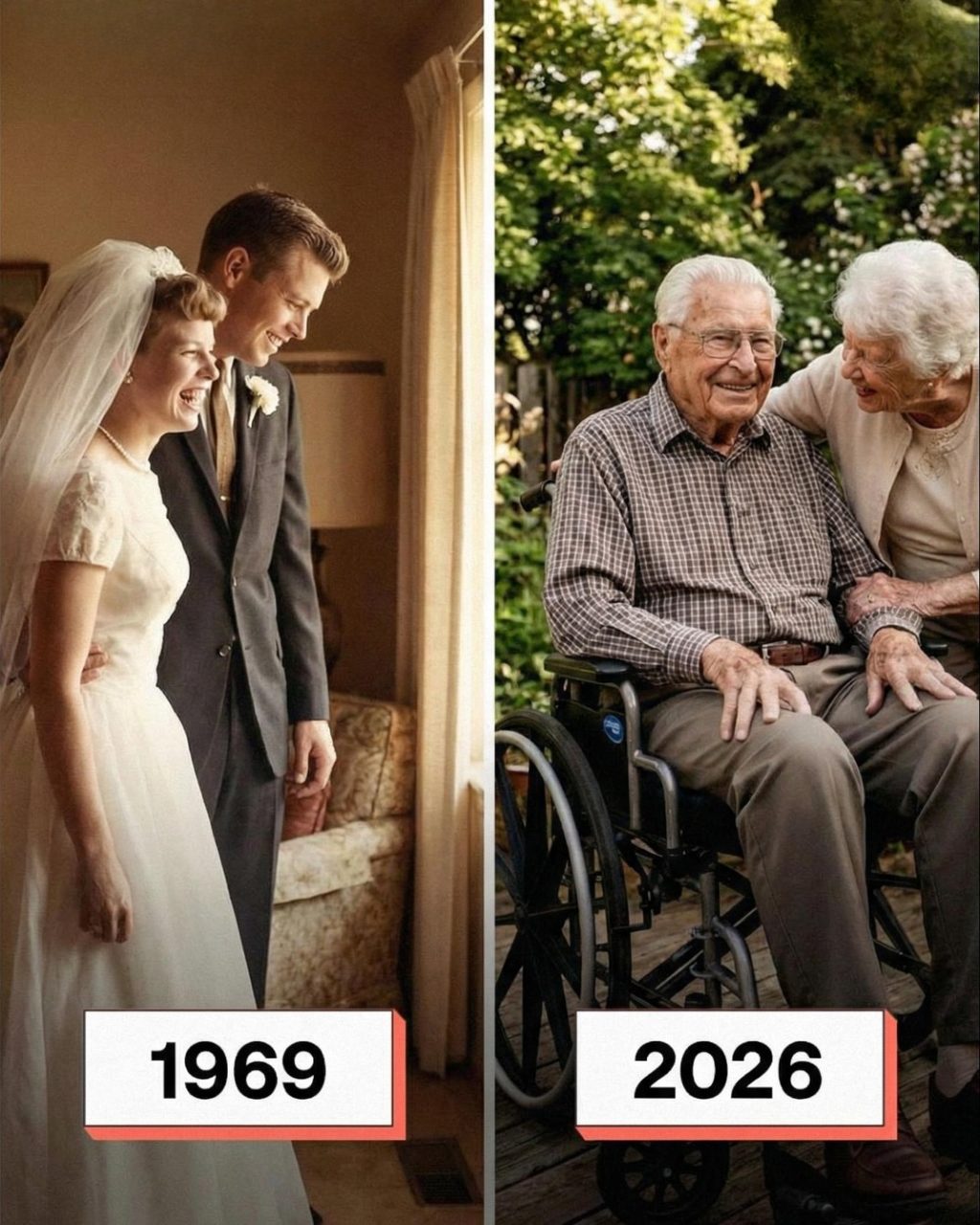
My grandparents were married for fifty-seven years. Not the flashy, dramatic kind of love you see in movies—but the quiet, steady kind that sneaks up on you and stays.
Every Saturday morning, without fail, my grandfather Thomas brought my grandmother flowers.
Sometimes they were wildflowers he picked himself. Sometimes tulips, daffodils, or whatever was in season. He always woke up before her, moved gently through the house, and placed the bouquet into a vase on the kitchen table like it was the most natural thing in the world.
No birthdays. No apologies. No special occasions.
Just because it was Saturday.
Just because he loved her.
A week ago, my grandfather passed away.
My grandmother held his hand the entire time. She didn’t cry at first—just stroked his fingers and whispered his name over and over like she could anchor him here if she said it enough.
After he was gone, the house felt hollow. Like the walls themselves were grieving.
I stayed with her that week to help sort through his things and, mostly, to make sure she wasn’t alone. We folded his sweaters. Found old receipts in his pockets. Laughed at the absurd amount of rubber bands he’d saved in a drawer “just in case.”
Saturday morning came quietly.
No footsteps.
No clink of glass.
No flowers.
Instead, there was a knock at the door.
I opened it.
A man stood on the porch wearing a dark coat. He looked to be in his late fifties, maybe early sixties. Serious, but not unkind.
He didn’t introduce himself.
He cleared his throat and said, “Good morning. I’m here for Thomas. He asked me to deliver this to his wife after his death.”
My hands started shaking before I even understood why.
My grandmother appeared behind me, drawn by the sound.
The man handed her a bouquet—simple, elegant—and a sealed envelope. Then, without another word, he nodded once and walked back down the path.
My grandmother closed the door slowly.
Her fingers trembled as she opened the envelope.
Inside was a letter. My grandfather’s handwriting. The same careful slant I’d seen on grocery lists and birthday cards my entire life.
She read silently at first. Then out loud, her voice barely holding together.
“My love,
If you’re reading this, then I’m already gone. I’m sorry I didn’t tell you this earlier. There’s something I hid from you for most of my life—but you deserve the truth now. Please forgive me for waiting so long. You need to go to this address.”
An address was written at the bottom.
My grandmother stared at it like it might disappear.
“How far is it?” she asked quietly.
I checked my phone. “About an hour.”
She folded the letter, placed it back in the envelope, and stood up. “Get your jacket.”
Neither of us knew what we were driving toward. My mind raced through awful possibilities. A second family. A secret child. A mistake so big it could crack even fifty-seven years of love.
The house at the address was small. Neat. White with a blue door. A wind chime rang softly as we stepped onto the porch.
We knocked.
A woman opened the door.
She froze when she saw my grandmother.
Then her face softened, and her eyes filled with tears.
“I know who you are,” she said gently. “I’ve been waiting for you for a very long time. Please—come in.”
The living room was modest but warm. Photos lined the walls. Landscapes. Old family pictures.
And one familiar face.
My grandfather.
Younger. Smiling. Standing beside this woman.
My grandmother’s knees buckled. I caught her just in time.
The woman guided us to the couch and sat across from us, hands folded tightly in her lap.
“My name is Margaret,” she said. “Thomas saved my life.”
She explained slowly, carefully.
Decades ago—before my grandparents were married—Thomas had been driving home late one night when he came across a terrible accident. A car wrapped around a tree. A young woman inside. Barely breathing.
That woman was Margaret.
Thomas stayed with her until help arrived. Held her hand. Kept her awake. Told her she would live.
She did.
But her injuries left her unable to have children. Her fiancé left her. Her life unraveled.
And Thomas—already engaged to my grandmother—kept checking in.
At first with letters. Then visits. Then quiet support.
He helped her pay medical bills. Encouraged her to go back to school. Helped her buy this house when she had nowhere else to go.
He never crossed a line.
Never betrayed his marriage.
But he carried guilt—for surviving. For moving on. For building a family while someone else rebuilt from ashes.
“I begged him to tell her,” Margaret said softly. “But he was afraid. Afraid it would hurt her. Afraid it would change how she saw him.”
So instead, he made a promise.
Every Saturday, when he brought flowers to my grandmother, he sent another bouquet here. Anonymous. For years.
And when his health declined, he asked Margaret’s brother—the man at the door—to make sure my grandmother received flowers even after he was gone.
“He loved her more than anything,” Margaret said. “But he never forgot the life he touched that night.”
My grandmother sat very still.
Then she stood.
She walked to the photo on the wall, touched the glass gently, and whispered, “You idiot.”
But she was smiling through tears.
On the way home, she held the bouquet on her lap.
“He didn’t keep a secret because he didn’t love me,” she said quietly. “He kept it because he loved too many people.”
The next Saturday, there were two vases on the table.
And somehow, the house didn’t feel empty anymore.