I was sitting beside Mark, my hands still trembling slightly from the ceremony, convinced I was living one of the happiest moments of my life.
Everything felt right.
The soft music floating through the room.
The low hum of laughter and clinking glasses.
The warmth of being surrounded by people we loved.
For a brief moment, it felt like nothing could touch us.
I was wrong.
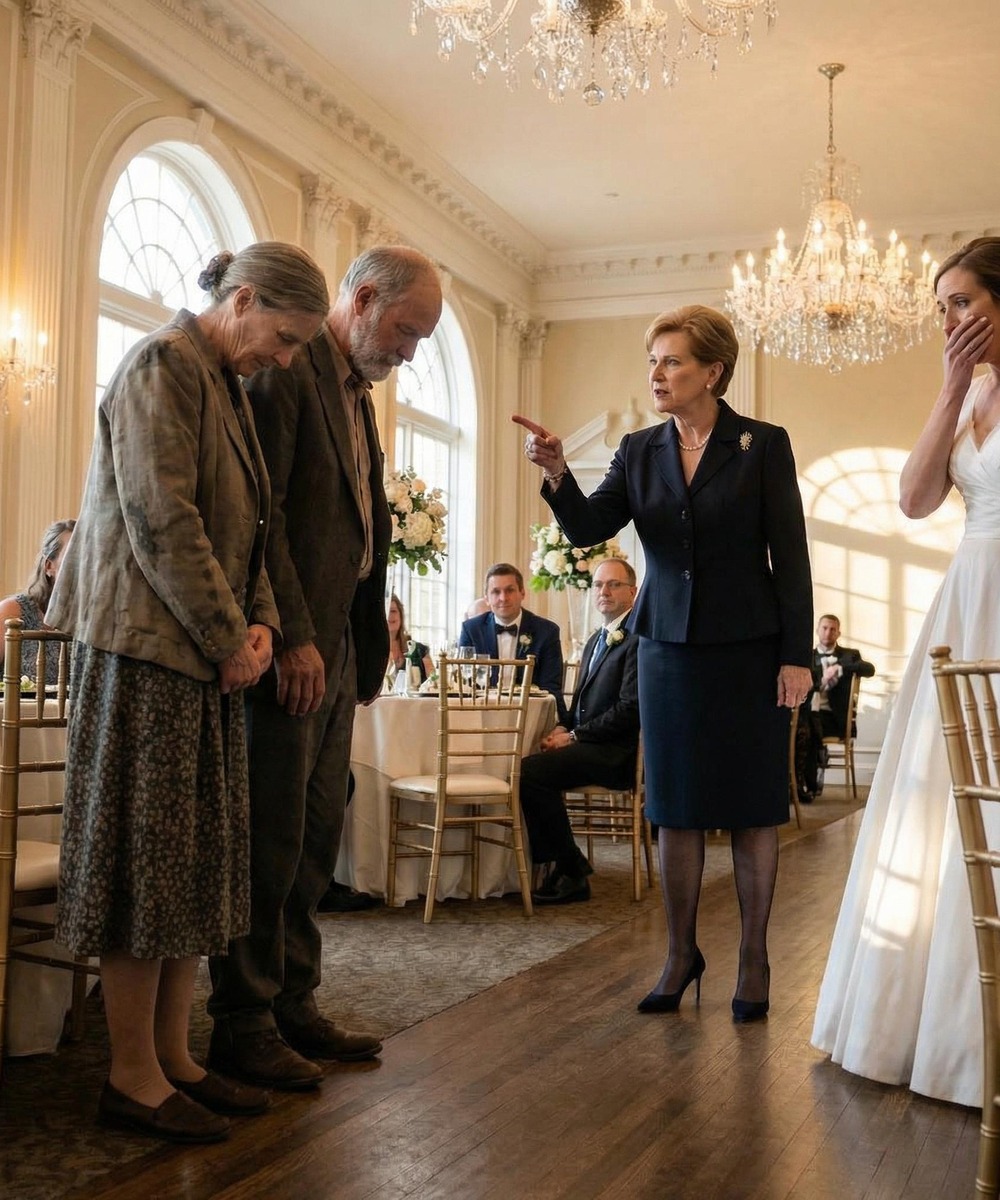
My mother-in-law, Evelyn, stood up suddenly.
She lifted her glass and tapped it with a spoon, the sound sharp and deliberate. Conversations faded. Chairs shifted. Heads turned. A polite smile stretched across her face, the kind that never quite reaches the eyes.
“I’d like to say a few words,” she announced.
My stomach tightened.
Her gaze drifted across the room and settled—firmly—on my parents.
“I have to be honest,” she said, her tone crisp and cutting. “I find it embarrassing when the bride’s parents come to their own daughter’s wedding and don’t contribute a single dollar.”
The room went completely silent.
It felt like the air had been sucked out all at once.
I turned toward my parents. My mother’s smile vanished instantly, replaced by a look of shock so raw it made my chest ache. My father lowered his eyes, slowly folding his hands together, as if physically holding himself still.
They didn’t deserve this.
My parents had never been wealthy. They worked long hours, stretched every paycheck, and gave us everything they could—sometimes at the expense of themselves. They taught us kindness, humility, and gratitude. And never once did they complain.
And now, in front of everyone, they were being shamed like this.
I felt heat rush to my face. My heart pounded so loudly I could barely hear my own thoughts. I opened my mouth to speak, but before I could say a word, my father stood up.
The movement was slow. Measured.
His voice, when he spoke, was calm. Steady. Almost gentle.
“If our presence here is such a burden,” he said, “then we will leave.”
A few people gasped softly. Someone dropped a fork.
My mother reached for his arm, but he gave her a reassuring glance before continuing.
“But before we go,” he added, “we would like to give the gift we prepared for the newlyweds.”
You could feel the tension ripple through the room.
Evelyn’s lips pressed together. I caught the faintest smirk on her face—like she expected an envelope with a modest check, something she could quietly dismiss later.
My father reached into his jacket pocket and pulled out a small, folded envelope.
He handed it to me first.
My hands shook as I opened it.
Inside wasn’t a check.
It was a handwritten letter.
I recognized his handwriting immediately—neat, careful, deliberate. I skimmed the first line, and my vision blurred instantly.
“Read it out loud,” my father said softly. “If you’re comfortable.”
I nodded, swallowing hard.
He had written about the day I was born. About the promises he and my mother made to always protect me, even when they couldn’t give me everything they wished they could. About watching me grow into someone strong and kind.
And then I reached the last paragraph.
“This gift is not just for today,” I read aloud, my voice trembling. “It is for your future.”
My father reached into his pocket again.
This time, he pulled out a set of keys—and a folded document.
He handed them to Mark.
“We’ve been saving for years,” my father said, finally looking directly at Evelyn. “Quietly. Privately. We didn’t announce it because we didn’t do it for praise.”
The document was the deed.
To a small house.
Our house.
The one Mark and I had admired months earlier but never dreamed we could afford. The one we had quietly walked past, talking about “maybe someday.”
Gasps filled the room.
Someone whispered, “Oh my God.”
My mother stood up beside my father then, her voice shaking but proud.
“We wanted them to start their marriage without debt,” she said. “With stability. With peace.”
I couldn’t breathe.
Mark stared at the papers, his mouth slightly open, tears streaming freely down his face. He pulled my parents into a hug so tight I thought he might never let go.
And Evelyn?
She looked frozen.
Her face had gone pale, her mouth opening and closing as if searching for words that refused to come. The smug confidence she’d worn moments earlier was gone—replaced by something raw and unmistakable.
Rage.
Embarrassment.
And something that looked a lot like regret.
People started clapping. Slowly at first, then louder, until the room filled with applause.
Not for the house.
But for my parents.
For their grace. Their dignity. Their quiet strength.
Evelyn sat down without another word.
She didn’t look at us again for the rest of the night.
Later, as the music resumed and guests pulled us into hugs and congratulations, my father leaned in and whispered something I’ll never forget.
“Money makes noise,” he said. “Love moves in silence.”
And in that moment, I realized something important.
True generosity doesn’t need an audience.
True class never demands recognition.
And sometimes, the most powerful response… is quiet dignity at exactly the right time.