For decades, gray hair was treated as something to hide — a flaw to be covered, a signal to fight, a reminder of time passing that needed immediate correction. Hair dye promised youth in a box, and society quietly agreed that going gray meant “letting yourself go.”
But something has changed.
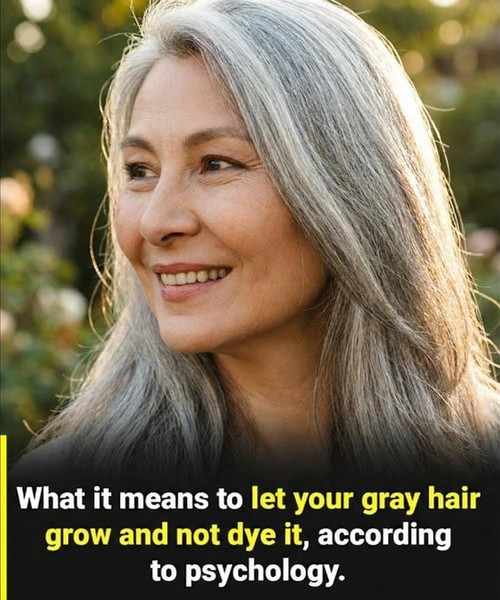
More people are choosing to stop coloring their hair and allow their gray to grow in naturally. What looks like a beauty decision on the surface is often something much deeper — a psychological shift tied to identity, confidence, and self-acceptance.
A Quiet Rebellion Against Expectations
Letting gray hair grow out is rarely impulsive. Psychologically, it often represents a conscious decision to step away from external pressure.
Many people who go natural describe a moment of realization: I’m maintaining this for everyone else, not for me.
Choosing gray can feel like reclaiming autonomy — a refusal to keep performing youthfulness for social approval. It’s a subtle but powerful form of rebellion, especially in cultures that tie worth to appearance, youth, and productivity.
Acceptance Over Control
Dyeing hair is an act of control. Going gray is an act of acceptance.
From a psychological standpoint, this shift reflects emotional maturity. It signals a willingness to acknowledge change rather than fight it. People who embrace their gray often report a growing comfort with uncertainty and imperfection — not just in appearance, but in life itself.
This doesn’t mean they’ve “given up.” It means they’ve stopped wasting energy resisting what’s inevitable.
A Stronger Sense of Identity
Gray hair can strengthen identity rather than diminish it.
When someone stops coloring their hair, they’re often choosing authenticity over conformity. This aligns with research in self-concept psychology, which shows that people feel more grounded and confident when their outer appearance matches their inner sense of self.
Gray hair becomes a visible marker of lived experience — not decline, but depth.
Letting Go of Fear-Based Motivation
Many beauty habits are driven by fear: fear of aging, fear of invisibility, fear of judgment.
Letting gray hair grow in often marks the release of those fears. Psychologically, this shift reduces anxiety and cognitive load. There’s no more constant maintenance, no countdown to the next dye job, no panic over roots showing.
That mental freedom is one of the most commonly reported benefits.
Redefining Beauty on Your Own Terms
Choosing gray doesn’t mean rejecting beauty — it means redefining it.
People who embrace their natural gray often begin to value elegance, presence, and self-respect over trend-based attractiveness. This reflects a deeper internal validation process, where self-worth is no longer outsourced to mirrors or opinions.
Psychologically, this transition is associated with increased self-esteem and emotional resilience.
Visibility Without Apology
There’s a myth that gray hair makes people invisible. In reality, it often does the opposite.
Those who go gray tend to stand out precisely because they aren’t trying to blend in. This unapologetic visibility signals confidence — and confidence changes how others respond.
Psychologists note that authenticity tends to command respect, even when it challenges social norms.
It’s Not About Age — It’s About Agency
Young people go gray. Older people dye their hair. The psychological meaning isn’t tied to age — it’s tied to agency.
Letting gray hair go natural is often about choosing yourself over expectation, comfort over performance, truth over illusion.
The Deeper Meaning
At its core, embracing gray hair is a declaration:
I am allowed to change. I don’t need to apologize for it.
It’s not about surrendering to time — it’s about making peace with it. And for many, that peace is one of the most powerful forms of confidence there is.
Gray hair doesn’t signal the end of something. Psychologically, it often marks the beginning of living more honestly — and more freely — than ever before.