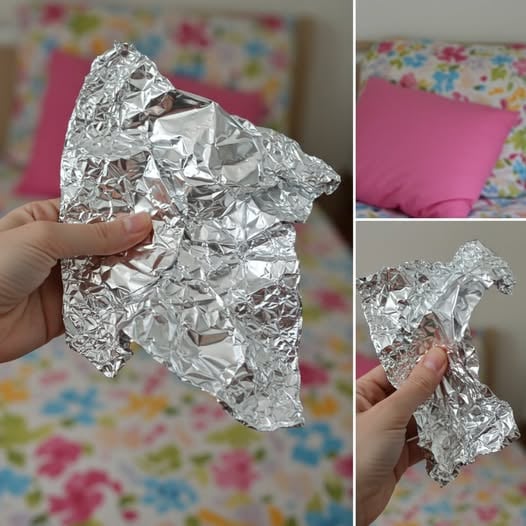
It sounds strange, maybe even a little silly at first. Aluminum foil… under a pillow? Yet this unusual bedtime trick has been quietly circulating online, with people swearing it improves their sleep, reduces discomfort, and even leaves them feeling more refreshed in the morning.
So what’s really going on when someone slips a sheet of aluminum foil beneath their pillow before going to bed? Let’s break down the claims — and the reality behind them.
Where Did This Idea Come From?
The aluminum foil under the pillow trick has roots in old folk remedies and home hacks, especially those tied to pain relief and energy balance. In recent years, it’s been revived by social media, where simple, low-cost “overnight fixes” tend to spread fast.
The appeal is obvious: aluminum foil is cheap, easy to find, and harmless enough to try — or so it seems.
What People Say Happens
Those who swear by the method claim a range of benefits, including:
- Better sleep quality
- Reduced headaches or sinus pressure
- Less neck or shoulder discomfort
- A feeling of calm or mental clarity
Some even say they wake up feeling “lighter,” as if tension melted away overnight.
But are these effects real?
The Science (and Lack of It)
There’s no solid scientific evidence proving that aluminum foil under a pillow directly improves sleep or health. Aluminum foil doesn’t emit energy, absorb pain, or interact with the body in a meaningful physiological way during sleep.
So why do some people feel better?
Experts point to the placebo effect. When someone believes a ritual will help them sleep, the mind often responds accordingly. That expectation alone can reduce stress, help the body relax, and make falling asleep easier.
In other words, it’s not the foil doing the work — it’s the brain.
The Comfort Factor People Overlook
There’s another practical explanation. Adding foil under a pillow slightly changes its firmness and shape. For some sleepers, that subtle shift may provide better neck alignment or pressure distribution, which can affect comfort.
It’s minor, but comfort changes — even small ones — can influence how well someone sleeps.
Is It Safe to Try?
Generally, yes — as long as it’s done sensibly.
- Use a smooth, flat sheet
- Avoid sharp folds or crinkles
- Keep it away from exposed wiring or heated bedding
That said, it’s not a substitute for proper sleep habits, medical treatment, or ergonomic pillows.
What It Won’t Do
Despite bold claims online, aluminum foil under your pillow will not:
- Detox your body
- Block harmful radiation
- Cure chronic pain or illness
- Replace medical advice
Those ideas drift into myth territory rather than reality.
The Real Takeaway
The aluminum foil pillow trick is less about magic and more about mindfulness. When people intentionally try to improve their sleep — even with a quirky ritual — they often end up relaxing more, worrying less, and resting better.
If it makes you feel calmer and helps you wind down, that alone can be enough to improve sleep quality.
Just don’t expect aluminum foil to perform miracles.
Sometimes, the biggest sleep upgrade isn’t what’s under your pillow — it’s the belief that tonight might finally be a good night’s rest.