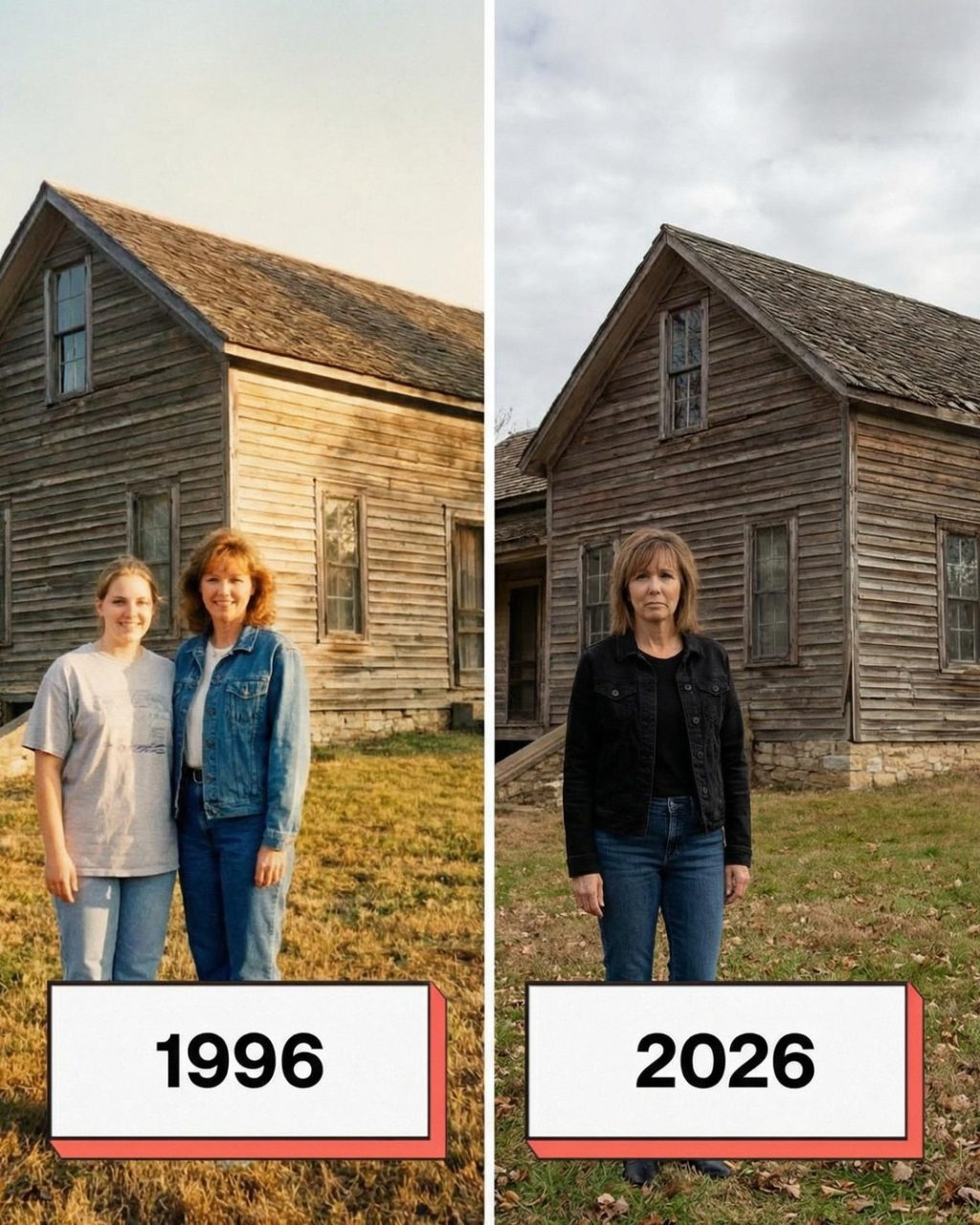
I’m 41 now, and I still dream about the cellar.
It shows up in my sleep the same way it did in real life — at the end of a narrow hallway, half hidden in shadow, its door always closed. Even now, decades later, my body tenses when I think about it.
Growing up, there was one rule in our house that was never questioned.
No one went into the cellar.
Not me. Not my friends. Not relatives. Not even my dad.
Our house sat on a wooded hill in rural Pennsylvania, the kind of place that always felt a little older than it really was. Thick stone foundation. Low ceilings. Floors that groaned no matter how softly you walked. Winters were long, and the house held the cold like a memory.
The cellar door sat at the end of a narrow hallway off the kitchen. It was small, wooden, and heavy, with a rusted handle that always felt icy, even in summer. And my mom — Lorraine — treated that door like it was dangerous.
“Don’t touch that,” she’d snap if she ever caught me lingering nearby.
Not yell. Not explain. Just sharp enough to end the conversation.
When I was twelve, curiosity finally got the better of me. I asked her what was down there.
She didn’t raise her voice.
That was worse.
She just looked at me and said, very calmly, “Some doors are not meant to be opened.”
That was it.
My mom wasn’t the dramatic type. She was a medical transcriptionist. A bland cook. A church volunteer who showed up early and left quietly. She didn’t believe in ghosts or superstition or omens. Everything about her was practical and grounded.
Which made her fear of the cellar feel deliberate. Intentional.
My dad backed her without question.
“Your mother says it’s off-limits,” he told me once. “That’s enough.”
And it was. At least on the surface.
Years went by. Every housekeeper got the same warning on day one.
“The cellar is locked. Don’t go near it.”
One woman laughed it off and said, “What, is there a monster down there?”
My mom didn’t smile.
The housekeeper was gone a month later.
Life moved on. I left for college. Moved to another state. Got married. Got divorced. Came home for holidays and short visits. The cellar stayed locked. Untouched. Like a secret the house itself was keeping.
Then came the call.
Pancreatic cancer.
Fast. Aggressive. Unforgiving.
By the time I got back to Pennsylvania, my mom looked like someone else entirely. Smaller. Fragile. Gray at the edges. Her hands shook when she reached for mine.
One night, when the house was quiet and my dad had gone home to rest, she squeezed my fingers and whispered, “Sit beside me.”
I leaned closer.
“There’s something I need you to do,” she said. “Open the cellar.”
I laughed, a nervous little sound. “Mom… now?”
“Only you,” she said. “Only now. Before I go.”
My stomach tightened. “Why? What’s down there?”
She swallowed hard. “The truth,” she said. “And the man who raised you must never see it.”
That was the first time she’d ever spoken about my father like that.
The next morning, she pressed something cold into my palm.
A small brass key.
“You deserve to know why,” she whispered.
The hallway felt longer than I remembered. The door darker. Heavier.
The lock clicked open with a sound that echoed through my chest.
The door groaned as I pulled it back.
Cold, dry air rushed out — not damp or moldy like I expected, but preserved. Still. Untouched by time.
The light switch worked.
I took the stairs down slowly.
What I saw stopped me cold.
The cellar wasn’t storage.
It was a room.
Clean. Organized. Intentional.
Shelves lined the walls, stacked with neatly labeled boxes. Dates. Names. Photographs taped to the front of some of them. A small desk in the corner with a chair pushed in, like someone had just stood up and left.
And on the far wall —
A corkboard.
Covered in documents.
Birth certificates.
Court filings.
Newspaper clippings.
And photos of a man I’d never seen before… holding a baby.
Holding me.
My legs went weak.
I flipped through one of the boxes with shaking hands. Inside were letters. Dozens of them. All written in the same careful handwriting.
They were from my mother.
To him.
I read until my eyes burned.
The man on the board wasn’t a stranger.
He was my biological father.
My real one.
He hadn’t abandoned us. He hadn’t died. He’d fought for visitation. For custody. For contact.
My mother had hidden everything.
My dad — the man who raised me — had never known. He thought the cellar held junk. Old tools. Nothing important.
The truth was, my mother had been protecting me the only way she knew how.
The letters told the rest.
My biological father had become unstable. Paranoid. Obsessive. He’d shown up unannounced. Followed us. Threatened to take me.
The court granted a restraining order.
The cellar became her archive. Her proof. Her insurance policy in case he ever came back.
He never did.
But she never stopped preparing.
I sat on the cellar floor and cried until my chest hurt.
When I went back upstairs, my mom was asleep.
She passed two days later.
I never told my dad what was down there.
I locked the door again.
Some truths aren’t meant to destroy — they’re meant to explain.
And every once in a while, when I dream of that cellar, I don’t feel fear anymore.
I feel gratitude.
Because my mother didn’t just raise me.
She protected me — even when it meant carrying a secret alone for her entire life.