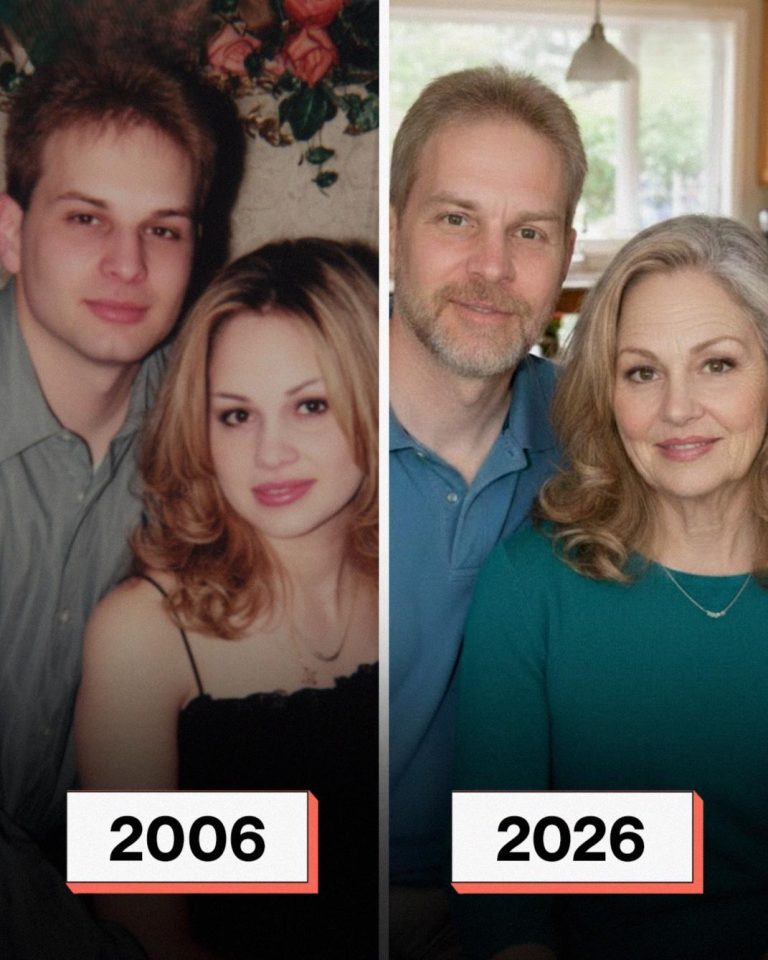
When I left for college in another city, my mom married her coworker.
At the time, I felt nothing but relief.
She’d been alone for years after my dad passed. She worked long hours, came home to a quiet house, and pretended she liked it that way. When she told me she’d met someone, that he was “steady” and “reliable,” I let myself believe this was finally her turn to be happy.
She wasn’t alone anymore.
She had company.
She had support.
Or so I thought.
For the first couple of years, everything seemed… fine. When we talked on the phone, she sounded normal enough. She laughed at the right moments. Asked about my classes. Told me what she’d cooked for dinner.
But slowly, something shifted.
Her voice grew flatter. Shorter. Tired in a way sleep doesn’t fix. She stopped volunteering stories. When I asked how things were going, she’d brush it off with the same line every time.
“I’m fine,” she’d say quickly. “Just busy with work.”
I didn’t believe her.
There was something in the pauses between her words. Something she wasn’t saying.
So one Friday, I took a day off, packed a bag, and drove to her house without telling anyone. I wanted to surprise her. To make her smile. To reassure myself that I’d been imagining things.
The moment I pulled into the driveway, my stomach dropped.
The walkway hadn’t been shoveled. Snow was packed down into hard, uneven ice. The porch light flickered. The house looked… tired.
When I opened the door and stepped inside, I froze.
My mom was limping across the living room.
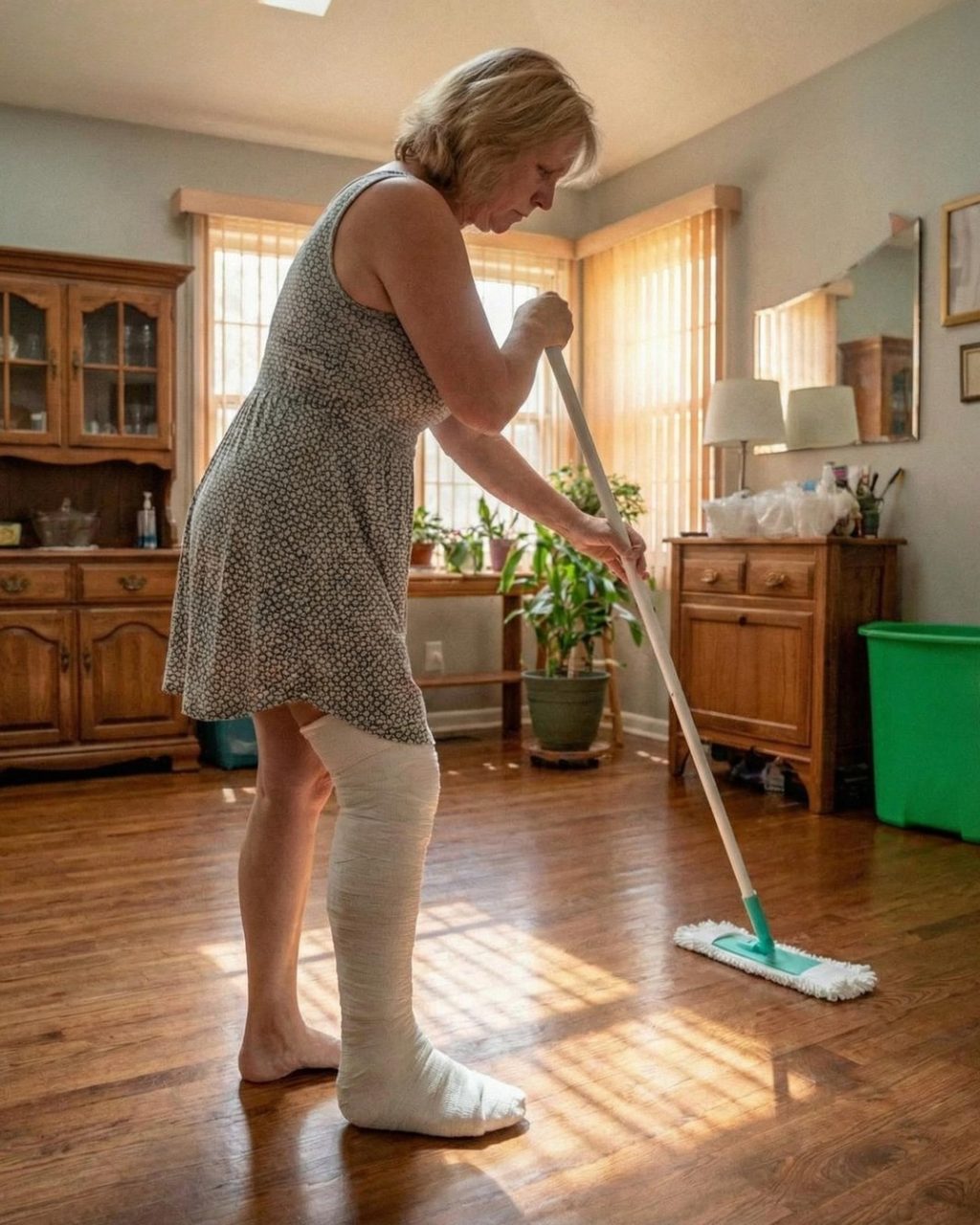
Her leg was wrapped in a thick white cast that ran from ankle to knee.
And she was cleaning.
She was scrubbing the floor on her hands and knees. Carrying a laundry basket. Moving slowly from room to room in a two-story house, bracing herself against furniture just to stay upright.
“Mom!” I shouted. “What happened?!”
She flinched like she’d been caught doing something wrong.
“Oh—honey,” she said weakly. “You’re… you’re here.”
I rushed toward her, my heart pounding. “Your leg—what did you do?”
She swallowed. “I slipped a few days ago. I broke it.”
My head started spinning. “Why didn’t you call me?”
She wouldn’t meet my eyes. “I didn’t want to worry you.”
Then, almost as an afterthought, she added quietly, “His daughter is coming tonight.”
That’s when everything finally spilled out.
My stepfather’s daughter, it turned out, was wealthy, entitled, and obsessed with appearances. She lived in another city, drove a brand-new Range Rover, and had very clear expectations about how her father’s house should look when she visited.
He didn’t want to be “embarrassed.”
So he ordered my mom to clean the entire house from top to bottom.
Bathrooms. Floors. Laundry. Kitchen. Stairs.
And then shovel the snow all the way to the garage so his daughter could park comfortably.
“With a broken leg?” I whispered.
My mom nodded. Tears filled her eyes, sliding down her cheeks like she’d finally run out of strength to hold them back.
I felt something hot and sharp rise in my chest. Rage. The kind that makes your hands shake.
“Where is he?” I asked.
She hesitated.
“Mom,” I said, my voice steady in a way I didn’t feel. “Tell me the truth. I’ll find out anyway.”
Her voice cracked. “He told me to handle everything. He went ice fishing with his friends.”
Something inside me snapped.
I wanted to scream. I wanted to break something. I wanted to drag him back to that house by his collar and make him look at what he’d done.
But I knew men like him don’t learn from shouting.
They learn from consequences.
So I helped my mom into a chair. I wrapped her in a blanket. I made her tea. And then, quietly, I stepped into the hallway and made one phone call.
Just one.
I didn’t raise my voice. I didn’t threaten anyone. I simply told the truth to the right person.
My stepfather had no idea he was returning to a trap.
A few hours later, I heard his truck pull into the driveway. The front door opened.
He froze in the doorway.
His face drained of color.
“What the hell is this?!” he shouted. “What happened to my house?! Call the police!”
The living room was full of people.
Not police — not yet — but professionals. A social worker. A nurse. A representative from Adult Protective Services. And a lawyer sitting calmly at the dining table with a folder open in front of her.
I stepped forward.
“No need to call anyone,” I said. “They’re already here.”
He stared at me like I’d grown another head. “What did you do?”
“I told them my mother has been forced to perform physical labor with a broken leg,” I said evenly. “I told them you abandoned her. And I told them she’s afraid of you.”
My mom hadn’t wanted to say it out loud.
But she didn’t have to.
The nurse gently examined her leg. The social worker asked quiet, careful questions. The lawyer explained, very clearly, what constituted neglect and coercion under the law.
My stepfather tried to argue. Tried to laugh it off. Tried to say my mom “insisted” on cleaning.
No one believed him.
By the time his daughter arrived in her luxury SUV, the atmosphere in the house had shifted completely. She walked in, took one look at the scene, and slowly backed toward the door.
“I don’t want any part of this,” she muttered.
Good.
Within weeks, my mom filed for separation. She moved into a small, cozy apartment closer to my campus so I could help her while she healed. Physical therapy came next. Counseling after that.
She’s different now.
Stronger. Quieter in a peaceful way. She laughs more. Sleeps better. Walks without pain.
And me?
I learned something important.
Love isn’t about appearances.
Support isn’t words — it’s action.
And if someone hurts the person who raised you?
You don’t scream.
You make sure they never get the chance to do it again.