When my mother-in-law asked me to pick up green onions at the grocery store, I didn’t hesitate. I grabbed a fresh-looking bunch from the produce section, drove home, and thought the errand was done.
It wasn’t.
She glanced into the bag, frowned, and said—quite sharply—that these were scallions, not green onions, and she wouldn’t be using them. The tone stung more than the comment. I stood there confused, wondering how something I’d used interchangeably for years had suddenly become wrong.
So… are green onions and scallions actually different? Or was this one of those kitchen arguments fueled more by habit than fact?
The Short Answer: They’re the Same Thing (Mostly)
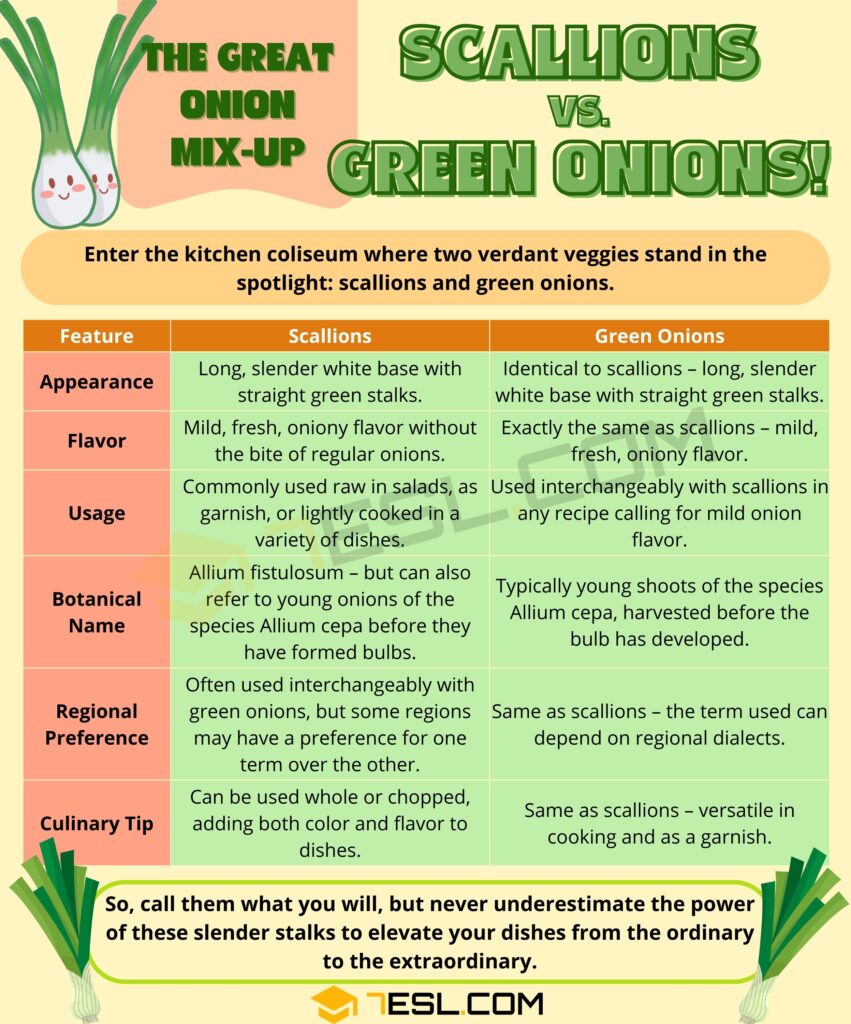
In everyday cooking, green onions and scallions are essentially the same vegetable. In fact, in most grocery stores—especially in the U.S.—the terms are used interchangeably.
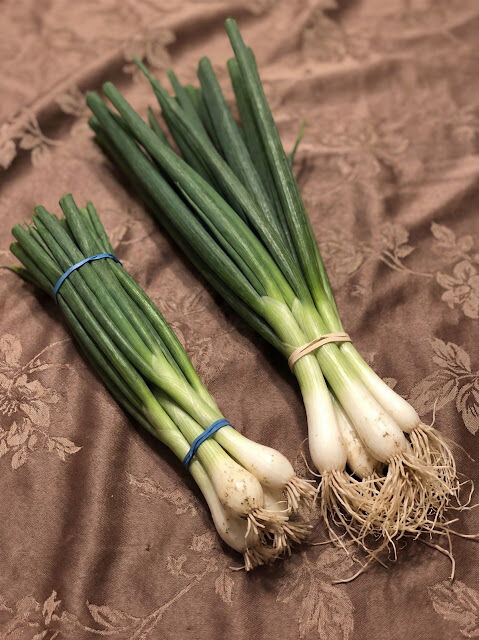
They’re both young onions harvested before the bulb fully develops. They have long green tops, slender white bottoms, and a mild onion flavor that works just as well raw as it does cooked.
If you’ve chopped them into salads, sprinkled them over soups, or tossed them into stir-fries, you’ve already been using them exactly as intended—no matter what name was on the sign.
So Why the Confusion?
The confusion usually comes from regional language and culinary tradition, not botany.
Some people grow up calling them green onions. Others only ever hear scallions. In many recipes, cookbooks, and restaurants, the words are used as perfect substitutes for one another.
That said, there is one close cousin that sometimes muddies the waters.
What About Spring Onions?
Here’s where things get slightly more specific.
Spring onions are similar, but not identical. They’re still young onions, but they’re harvested a bit later. That means they often have a small, round bulb at the base, rather than the straight, slender white end you see on green onions or scallions.
Flavor-wise, spring onions are a touch stronger, especially near the bulb, but they’re still much milder than fully grown onions.
If your mother-in-law was expecting spring onions and you brought home scallions/green onions, that might explain the disappointment—but not the rudeness.
The Grocery Store Reality
To make things even more confusing, grocery stores don’t help.
Some label them “green onions.”
Some label them “scallions.”
Some use both names on the same shelf.
And many stores don’t sell spring onions at all, especially outside peak season.
So unless someone is being extremely precise—or cooking a dish where that tiny bulb truly matters—most home cooks would never notice a difference.
The Bottom Line
You weren’t wrong.
Green onions and scallions are, for all practical home-cooking purposes, the same thing. They can be used interchangeably in nearly every recipe, and millions of people do exactly that every day without a second thought.
If there was a misunderstanding, it was about expectations—not produce.
And while kitchen preferences are personal, kindness is universal. Correcting someone doesn’t require cutting them down—especially over an onion with two perfectly acceptable names.
Sometimes, the sharpest thing in the room isn’t the vegetable.