Every morning on my way to work, I passed the same man.
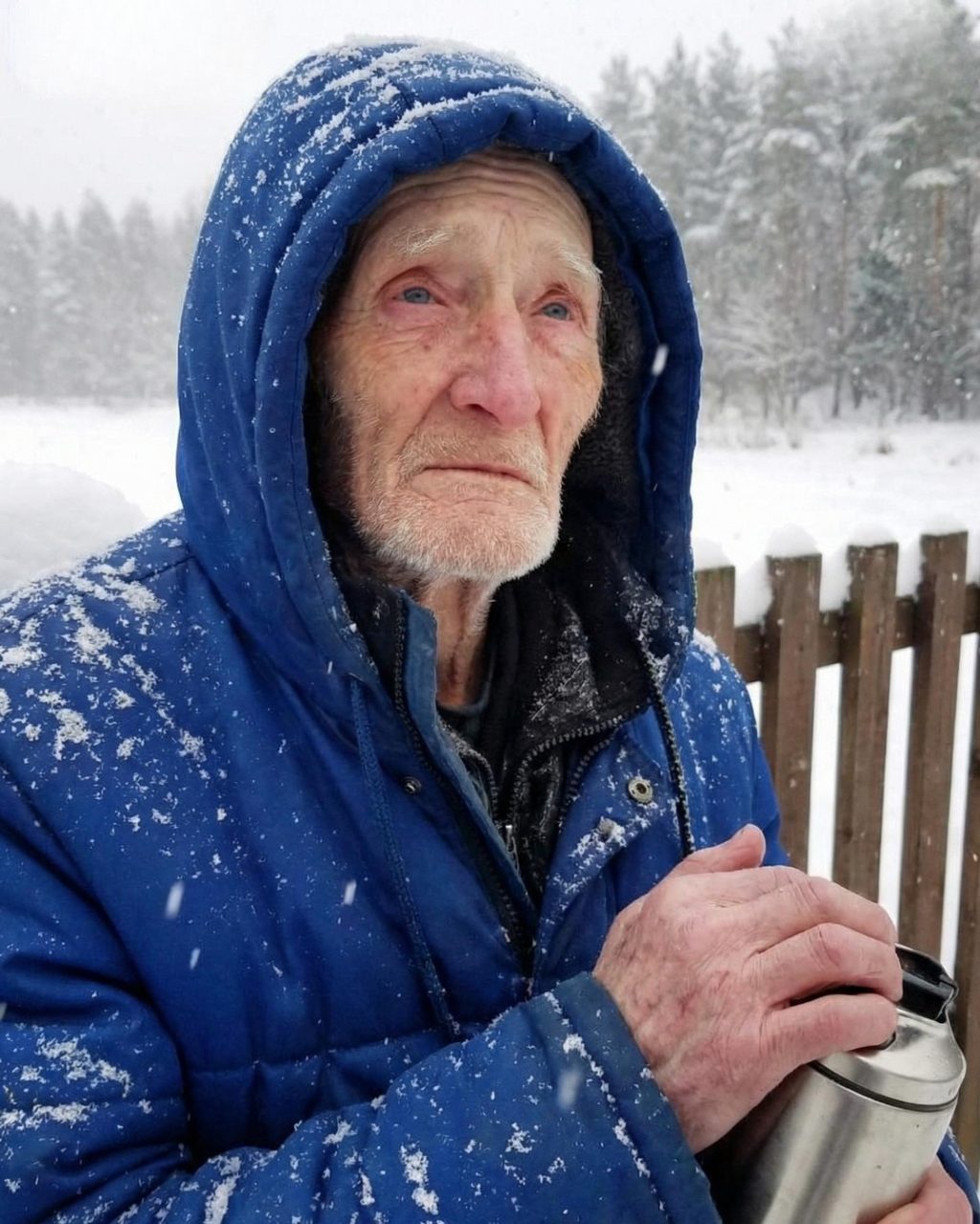
He sat just outside the library doors, tucked against the brick wall as if it offered some protection from the world. His hair was white and untrimmed, his coat frayed at the cuffs, and he always held an old newspaper folded neatly in his hands, reading it with the kind of focus you’d expect from someone studying sacred text.
I’d been widowed only a few months earlier.
My husband had spent two years fighting cancer, and when he finally lost, everything else seemed to unravel with him. I took a job as an assistant librarian—not because it paid well, but because it was quiet. Predictable. Safe.
At first, I gave the man a dollar when I passed. Then two. Eventually, I started bringing him a sandwich or a cup of coffee when the mornings turned cold.
He never asked for anything.
He’d just smile, meet my eyes, and say, “Take care of yourself, dear.”
There was something steady about him. Something grounding.
One morning, the wind cut straight through my coat. Snow drifted sideways, stinging my cheeks. I couldn’t stop thinking about how he’d been sitting there day after day, enduring weather I could barely tolerate for ten minutes.
So I brought a blanket. A thermos of hot tea. A small bag with a few dollars tucked inside.
When I handed it to him, his hands shook—not from the cold.
He looked up at me, and something in his expression made my stomach drop.
It was fear. Raw and urgent.
He leaned closer and whispered, “Please… don’t go home tonight.”
I blinked. “What?”
“Stay somewhere else,” he said quickly. “A hotel. A friend’s place. Anywhere. I can explain tomorrow—just please, don’t go home.”
Before I could ask a single question, he stood up and disappeared into the falling snow, moving faster than I would’ve thought possible for someone his age.
I stood there for a long time, my heart racing.
I told myself it was nothing. Grief does strange things. So does kindness mixed with imagination. I barely knew him—how could I trust a warning like that?
But I couldn’t shake the look in his eyes.
That evening, instead of driving home, I went to my sister’s house.
“Just in case,” I kept telling myself, over and over, like a charm against fear.
That night, I slept badly. Every sound jolted me awake. My mind filled in dark possibilities I tried to push away.
The next morning, I went to work early, hoping—half afraid—to see him again.
He was there.
As soon as he saw me, he stood up.
“Thank you for trusting me,” he said quietly. “I owe you an explanation.”
My chest tightened.
“It’s about your husband,” he said. “There’s something you don’t know.”
We sat on a bench nearby, steam rising from the cups of coffee I’d brought.
He took a long breath.
“I knew him,” he said.
I shook my head. “That’s not possible.”
He nodded slowly. “I worked security at the warehouse where he volunteered before he got sick. We talked. Late nights. Quiet conversations.”
My husband had volunteered there, but he’d never mentioned becoming close to anyone.
“He told me things,” the man continued. “Things he didn’t want to burden you with.”
I felt dizzy.
“What kind of things?”
“He was scared,” he said gently. “Not of dying. Of leaving you unprotected.”
My throat closed.
“He suspected someone had been accessing your house while you were at the hospital with him,” the man said. “Small things. Drawers moved. Papers out of place. He thought it was nothing—until it kept happening.”
My hands clenched in my coat.
“He asked me to keep an eye out,” the man went on. “After he passed, I stayed near the library because it’s close to your street. I didn’t want to frighten you. But yesterday, I saw a man go into your house with a spare key.”
My heart stopped.
“Who?”
He shook his head. “I don’t know. But I followed him out later. He didn’t look like a friend.”
That night, I called the police.
They came to my house and found signs of forced entry that had been carefully concealed. Someone had been using my husband’s old spare key—one he’d once lent to a distant relative we’d lost touch with years ago.
The man was located two days later. He’d been stealing small valuables, waiting until he thought no one would notice.
If I’d gone home that night, I would’ve walked in while he was still there.
The police officer told me quietly, “You were very lucky.”
I knew who I owed that luck to.
When I went back to the library, the man was gone.
No newspaper. No coat. No trace.
I asked around. No one knew his name. No one knew where he stayed.
But sometimes, when I unlock the library doors in the morning, I find a folded newspaper on the steps. Always the same page circled.
The obituaries.
I think my husband found a way to look out for me after all.
And maybe kindness—given freely, without expectation—has a way of coming back exactly when you need it most.