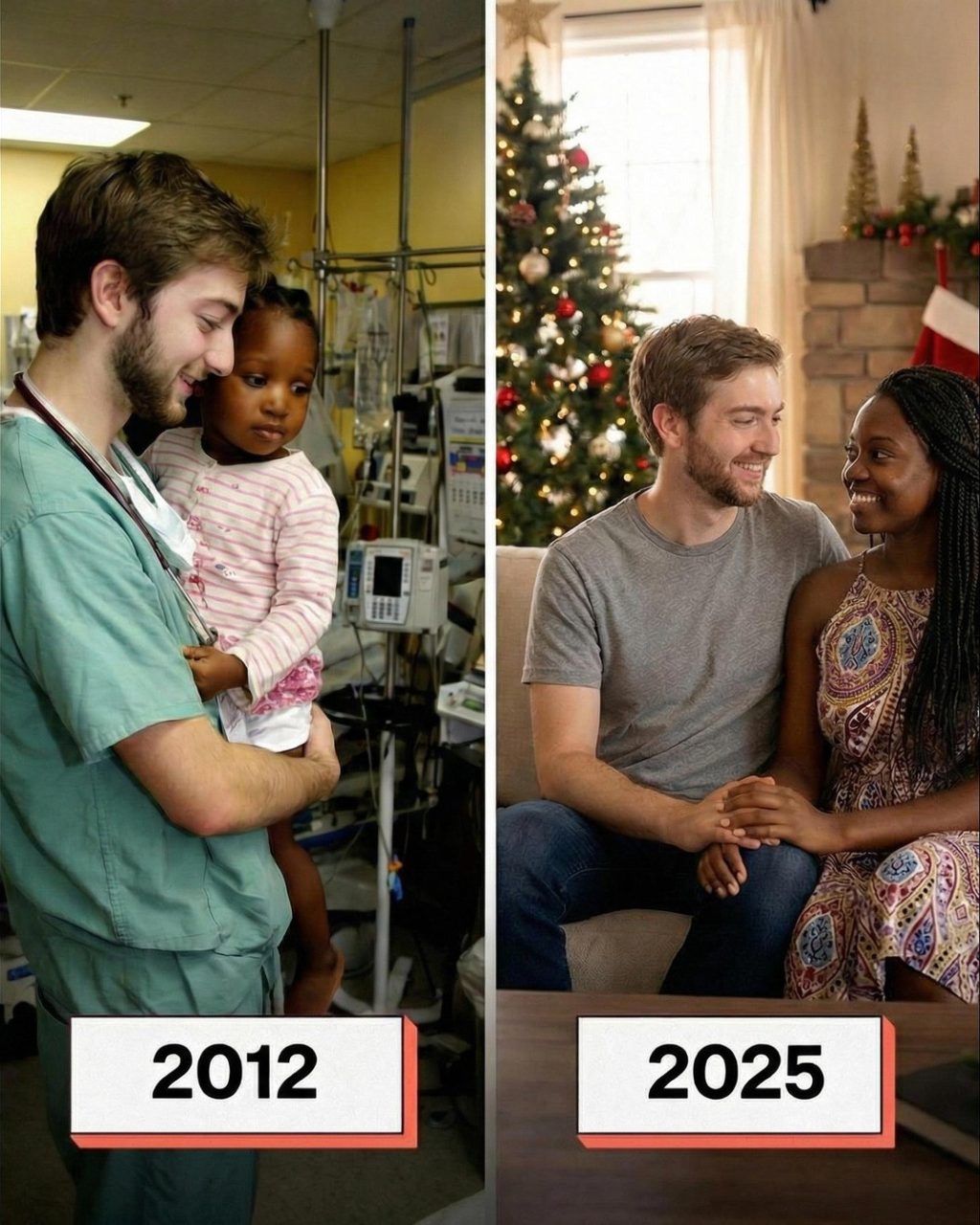
Thirteen years ago, I was barely a month into my job as an ER nurse, still learning how to keep my hands steady and my emotions locked down. I thought I’d seen chaos already—blood, shouting, sirens—but that night rewired something in me forever.
A family had been rushed in after a brutal car accident. By the time they reached us, the parents were already gone. There was nothing we could do. No miracle. No last-minute save.
The only survivor was their three-year-old daughter.
Her name was Avery.
She sat on the gurney, impossibly small in that oversized hospital gown, staring at the ceiling like she was waiting for someone to explain what had just happened. When I stepped closer, she looked straight at me and reached out with both hands.
And she didn’t let go.
She clung to my scrub top like I was the last solid thing in the world. So I stayed. I grabbed her apple juice from the pediatric fridge. Found a beat-up picture book from the waiting room. Read it once. Then again. Then a third time because she kept whispering, “Again,” like she was afraid the story might disappear too.
At one point, she tapped my name badge, studied it carefully, and said—completely serious—
“You’re the good one.”
I had to turn away for a second after that.
Later, a caseworker pulled me aside. She was kind, but exhausted in that way people get when they’ve delivered bad news too many times.
“She’ll go into temporary placement,” she said. “No next of kin. We’ll figure something out.”
I heard myself speak before I’d even decided.
“Can I take her tonight? Just until you figure it out.”
She frowned. “You’re single. You work rotating shifts. You’re young.”
“I know,” I said. “But I can’t let her be carried off by strangers tonight.”
That one night turned into a week.
The week turned into months of home visits, parenting classes squeezed between twelve-hour shifts, learning how to pack lunches and buy the right cereal and calm nightmares I didn’t know how to fix.
The first time she called me “Dad,” it wasn’t some dramatic moment.
We were in the freezer aisle at the grocery store.
She dropped a box of popsicles and said, “Dad—oops, sorry.”
Then she froze, eyes wide.
I knelt down and said, “You don’t have to say that.”
She nodded slowly. “But… can I?”
That was it.
I adopted her.
I switched to a steadier schedule. Started a college fund the moment my paycheck allowed it. Made sure she never, ever questioned whether she was wanted. Because I knew what it felt like to grow up unsure of that.
Avery grew into this sharp, funny, stubborn kid. She had my sarcasm and her biological mother’s eyes—something I only knew from a single photograph in her file. She loved science, hated math, and had a habit of pretending she didn’t care when she cared the most.
I didn’t date much. Life felt full already.
Then last year, I met Marisa at work.
She was polished, confident, quick with jokes. Avery was polite but cautious—which I respected. After eight months, things felt stable enough that I bought a ring.
Then one night, Marisa came over acting… off.
She didn’t sit down. Didn’t take off her coat. She just stood there, jaw tight, and shoved her phone toward me.
“Your daughter is hiding something terrible from you,” she said. “You need to see this.”
My mouth went dry as the screen loaded.
It was a video.
Avery, sitting on the edge of her bed, crying. Talking into the camera. Saying things like, “I don’t know how much longer I can pretend.” And “I don’t want him to hate me.”
My heart dropped into my stomach.
“What is this?” I whispered.
Marisa crossed her arms. “She’s been lying. I found this on her tablet. She’s clearly unstable.”
I stood up so fast my chair scraped loudly across the floor.
“Where is she?” I asked.
“Upstairs,” Marisa said sharply. “And before you rush in there, you need to understand—this isn’t normal behavior.”
I didn’t respond.
I went upstairs and knocked once before opening Avery’s door.
She looked terrified.
“I was going to tell you,” she said immediately, voice shaking. “I swear. I just didn’t know how.”
I sat down in front of her and took her hands.
“You never have to be scared to tell me anything,” I said. “Never.”
She took a deep breath.
“I’ve been seeing the school counselor,” she said. “Because I’ve been having panic attacks. About losing you. About messing everything up. About people leaving.”
I felt something inside my chest crack open.
“I made those videos to practice saying it out loud,” she whispered. “I didn’t want you to think I was broken.”
I pulled her into my arms.
“You are not broken,” I said. “You’re human.”
Downstairs, Marisa was waiting, arms crossed.
“She needs serious help,” she said. “And I didn’t sign up to raise someone this damaged.”
That word.
Damaged.
I took off the ring.
“I think it’s time you leave,” I said calmly.
She stared at me like she didn’t recognize me anymore.
Avery came down behind me and slipped her hand into mine.
That was the moment I knew—without question—that I had already chosen my family thirteen years ago.
And I’d choose her again. Every single time.