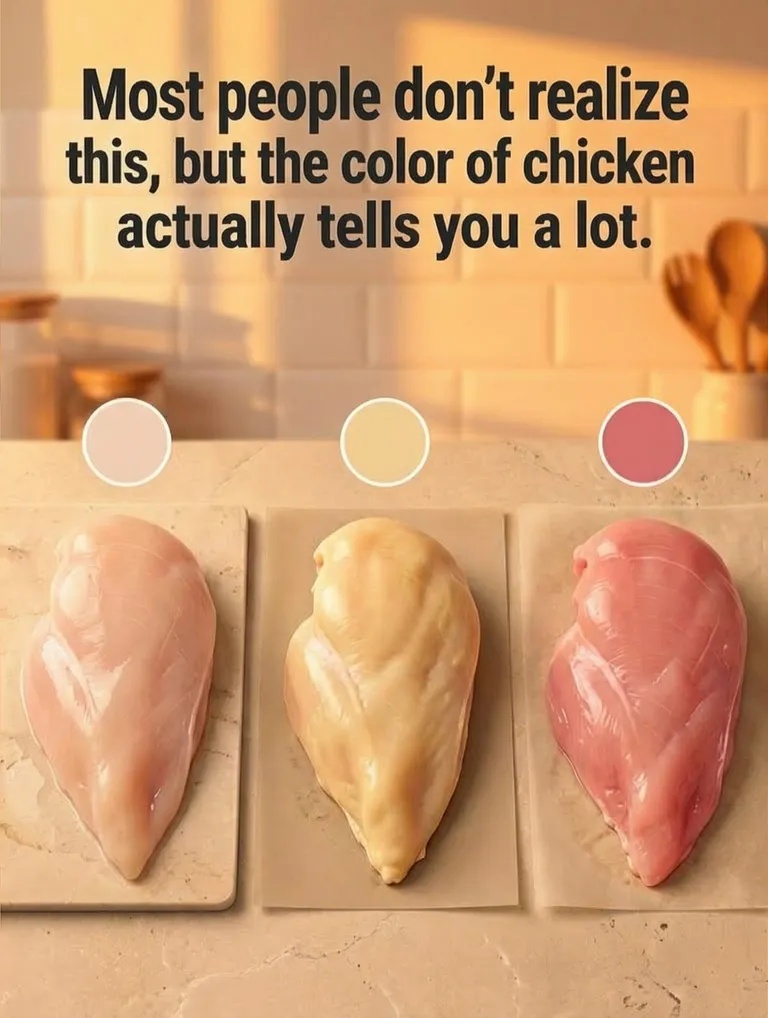
It’s kind of surprising how many people still don’t realize this, but the color of chicken actually says a lot about its quality, freshness, and even how it’s going to taste once it’s cooked.
Most of us grab chicken at the grocery store on autopilot. We glance at the price, check the date, maybe look for a sale sticker — and that’s about it. But if you slow down for just a moment and really look at the meat, its color can tell you important things long before it ever hits your pan.
Once you know what to look for, you’ll never shop for chicken the same way again.
Why Chicken Color Isn’t Random
Chicken doesn’t come in one universal shade. Depending on how the bird was raised, processed, stored, and packaged, the meat can range from pale pink to yellowish to deep rosy red.
That color difference isn’t about seasoning, marinades, or filters. It’s about fat content, muscle use, oxygen exposure, and overall handling.
And no — different colors don’t automatically mean “bad.” But they do mean different things.
Pale Pink Chicken: The Most Common (and Usually the Safest Bet)
When most people picture raw chicken breast, this is what they’re imagining: a soft, light pink color with a slightly glossy surface.
This is generally what you want to see.
Pale pink chicken usually indicates:
- Proper refrigeration
- Minimal processing stress
- Balanced moisture levels
- Normal oxygen exposure
It’s the standard look of fresh, well-handled chicken. When paired with a neutral smell and firm texture, this color is a good sign that the meat is fresh and safe to cook.
If you’re unsure which pack to choose at the store, pale pink is usually the safest option.
Yellowish Chicken: Not Always Bad, But Worth Understanding
Yellow-tinted chicken often causes confusion. Some people assume it’s spoiled, while others think it’s higher quality.
The truth is somewhere in the middle.
A yellow hue usually comes from:
- The chicken’s diet (corn-heavy feed)
- Higher natural fat content
- Skin pigmentation passing into the meat
In many countries, yellow chicken is actually preferred because it’s associated with richer flavor. That extra fat can translate into juicier meat once cooked.
However, yellowing can also come from oxidation if the chicken has been sitting too long or improperly stored. That’s why smell and texture matter just as much as color.
If the meat smells clean and feels firm, a yellow tint is generally fine.
Deep Pink or Reddish Chicken: When You Should Pause
Chicken that looks darker — almost red or purplish — tends to raise eyebrows, and for good reason.
This color can mean:
- The meat is closer to the bone or from a more active muscle
- Less oxygen exposure inside tight packaging
- Blood pooling from processing
Sometimes it’s completely harmless, especially near joints or thighs. Other times, it can signal that the chicken is older or has been stored in conditions that limited airflow.
If dark chicken also has:
- A sour or sulfur-like smell
- A slimy or sticky surface
- Excess liquid in the package
…it’s best to put it back.
Color alone doesn’t condemn chicken, but color combined with other warning signs absolutely should.
The Role of Packaging (And Why It Can Trick You)
Vacuum-sealed chicken often looks darker than tray-packed chicken. That’s because oxygen hasn’t had a chance to interact with the meat yet.
Once opened and exposed to air, the color often lightens within 10–15 minutes. This is normal and not a sign of spoilage.
So if you open a package and panic at the color, give it a few minutes — then reassess.
Texture and Smell Matter More Than Color Alone
Here’s the part many people miss: color is just one piece of the puzzle.
Always check:
- Smell: Fresh chicken should smell neutral or slightly clean — never sour, rotten, or “eggy.”
- Texture: It should feel firm and slightly moist, not slimy or sticky.
- Liquid: Excessive cloudy liquid is a red flag.
If the chicken looks fine but fails these tests, trust your instincts and toss it.
Does Color Affect Taste?
Yes — but subtly.
- Paler chicken tends to be leaner and milder
- Yellow-tinted chicken is often juicier and richer
- Darker cuts usually have deeper flavor but need careful handling
This is why thighs and drumsticks often taste better than breasts — they’re darker, fattier, and more forgiving when cooked.
A Quick Grocery Store Checklist
Next time you’re standing in front of the meat case, remember this:
- Pale pink = safest and most common
- Yellow tint = usually diet-related, often flavorful
- Dark red/purple = inspect carefully
- Bad smell or slime = always a no
Take ten extra seconds. It can save you from disappointment — or worse.
The Bottom Line
Chicken color isn’t something to fear — it’s something to understand.
Once you know what those subtle differences mean, you’re no longer guessing. You’re choosing better quality meat, cooking with more confidence, and keeping your kitchen safer in the process.
So the next time someone tells you “chicken is chicken,” you’ll know better.
Because sometimes, the smallest details tell the biggest story.