I gave my coat to a chilly, hungry mother and her infant.
A week later, two men in suits appeared at my door and said, “YOU’RE NOT GETTING AWAY WITH THIS.”
I’m seventy-three years old, and since my wife passed away eight months ago, the house has felt unbearably quiet. We never had children—it was always just the two of us. Forty-three years of shared routines, shared jokes, shared silence that never felt lonely.
Now, the silence echoes.
That Thursday afternoon, I’d gone to Walmart to pick up groceries. The wind cut straight through my coat, sharp and biting, and as I loaded bags into my trunk, I noticed her.
She stood near the cart return.
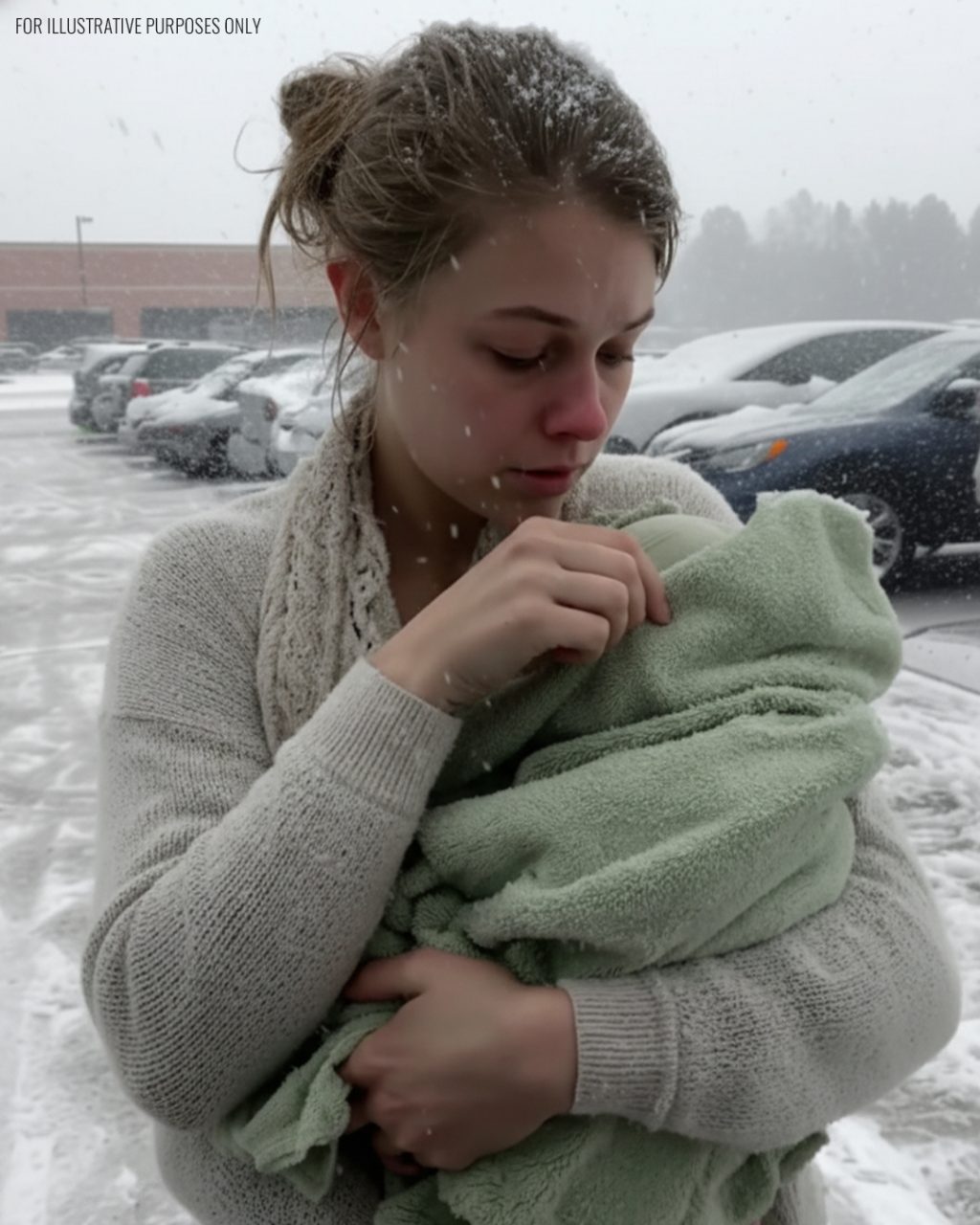
A young woman, no more than twenty-five, holding a baby bundled in nothing more than a thin towel. She wore a light sweater, far too light for the weather, and her whole body shook so hard her knees looked ready to buckle.
“Ma’am?” I said gently. “Are you all right?”
She tried to smile, but her lips were blue.
“He’s cold,” she whispered, looking down at the baby. “I’m… doing my best.”
That was all it took.
I didn’t hesitate. I slipped off my heavy winter coat—the last one my wife had bought me before she got sick—and wrapped it around her shoulders, pulling it close so it covered the baby too.
“Take my coat,” I said. “Your child needs it more than I do.”
Her eyes filled instantly with tears.
“Sir, I—I can’t—”
“You can,” I said firmly. “And you will. Come on. Let’s get you warm.”
Inside the store café, I bought her a bowl of soup and a coffee. She cradled the cup like it was something sacred, steam rising between her hands. The baby finally stopped fussing, his tiny face relaxing against her chest.
“We haven’t eaten since yesterday,” she admitted quietly, staring into the soup.
Something twisted in my chest.
“Is there someone you can call?” I asked. “Family? Friends?”
She shook her head. “It’s complicated.”
Her eyes kept darting around the café, like she expected someone to appear at any moment. I realized then she wasn’t just cold—she was scared.
So I didn’t push.
I made sure she ate, that the baby stayed warm, and I slipped a little cash into her coat pocket when she wasn’t looking. Before we parted, she hugged me so tightly I felt her heartbeat racing.
“Thank you,” she whispered. “You have no idea.”
I watched her leave, my wife’s coat hanging off her shoulders, and I told myself I’d done the right thing.
I truly believed that was the end of it.
A week later, just as I finished dinner, someone pounded on my front door.
Not knocked—pounded.
When I opened it, two men stood on my porch. Black suits. Polished shoes. Faces tight and unreadable.
“Can I help you?” I asked.
“Mr. Harris,” one of them said, his voice cold and professional, “are you aware of what you did last Thursday?”
My stomach sank.
“What I did?” I repeated.
“The woman and the baby you interfered with,” the other man snapped. “Do you have any idea who they are?”
Before I could respond, he leaned forward and said sharply,
“YOU’RE NOT GETTING AWAY WITH THIS.”
For a moment, I genuinely thought I was about to be arrested.
“I gave a coat to someone who was freezing,” I said slowly. “If that’s a crime, then I suppose I’m guilty.”
They exchanged a glance.
“You invited her inside,” one said.
“No,” I corrected. “We sat in a public café.”
“You fed her.”
“Yes.”
“You gave her money.”
“I helped a hungry mother.”
The first man exhaled through his nose. “Sir… she’s been missing.”
My heart skipped.
“Missing?” I echoed.
“She left an abusive household,” he continued. “Her husband is… influential. Dangerous. When she disappeared with the baby, he hired people to find her.”
Cold crawled up my spine.
“And my coat?” I asked quietly.
The second man finally softened—just a little.
“It made her visible. Someone reported seeing a woman in a distinctive coat with a child. That report reached us.”
I felt sick. “Did you find her?”
“Yes,” the first man said. “Safe. At a women’s shelter. Because of that report.”
I stared at them, trying to understand.
“So… what is this?” I asked. “A threat? A warning?”
The man shook his head.
“No,” he said. “An apology.”
He reached into his briefcase and pulled out a familiar bundle of fabric.
My coat.
Folded neatly.
“She wanted you to have it back,” he said. “She said it wasn’t hers to keep. But she also asked us to tell you something.”
He cleared his throat.
“She said, ‘Tell the old man his kindness bought me time. And time saved my baby.’”
My eyes burned.
“And her husband?” I asked.
The men exchanged another look.
“He won’t be bothering her again,” one said carefully. “Authorities are involved now.”
They turned to leave, then paused.
“Mr. Harris,” the first man added, “most people would’ve walked past her.”
After they left, I stood there holding the coat, my wife’s coat, and for the first time since she’d died, the house didn’t feel quite so empty.
A few weeks later, a letter arrived.
No return address.
Inside was a photo: a baby wrapped warmly, sleeping peacefully. On the back, written in shaky handwriting, were just three words:
“Still warm. Thank you.”
I folded the letter, placed it beside my wife’s picture, and smiled.
That coat had kept me warm for years.
But that winter, it did something far more important.
It reminded me that kindness doesn’t disappear into the cold.
Sometimes, it comes back—quietly—just to let you know it mattered.