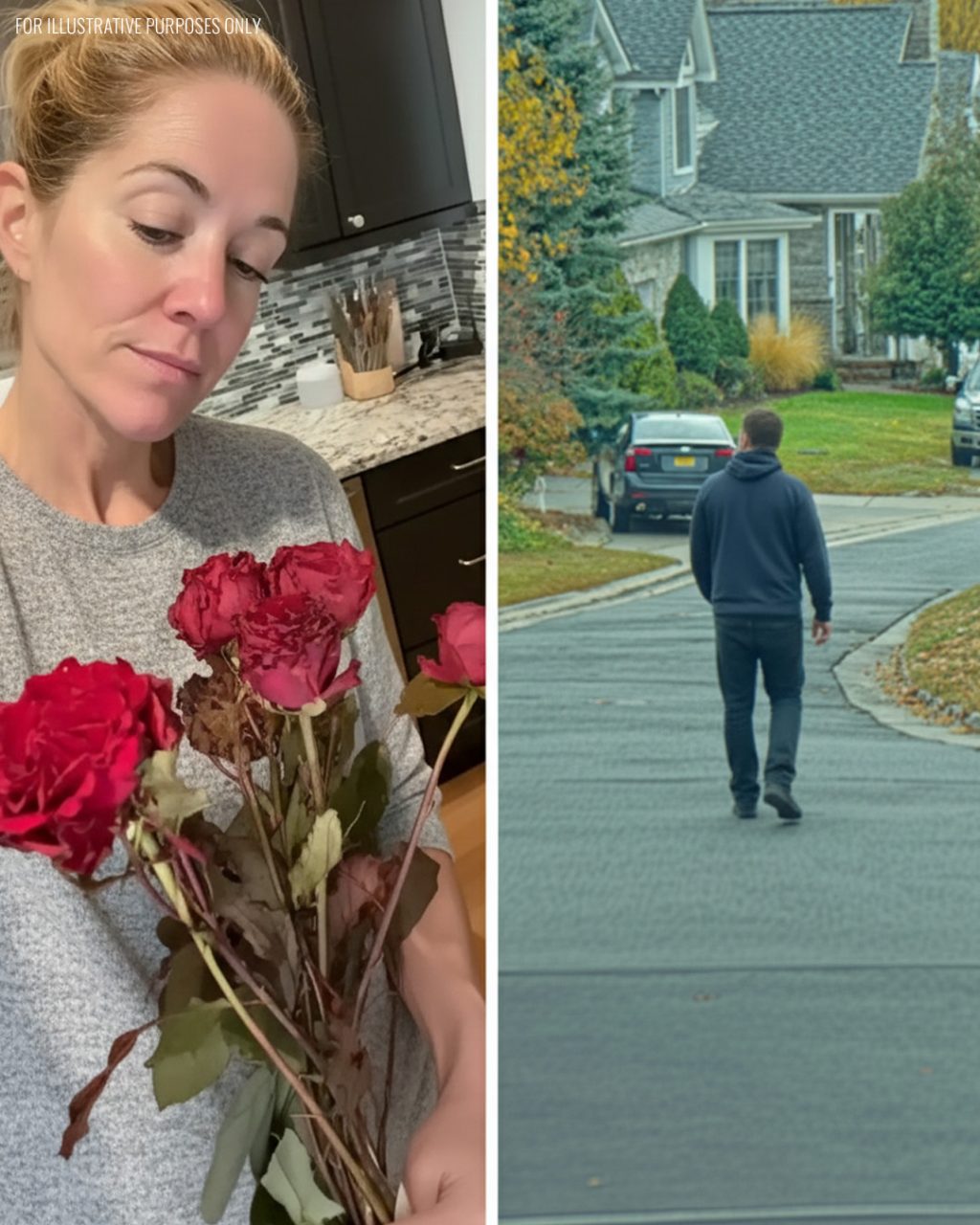
My husband began bringing home flowers every Friday—and at first, I thought it was a miracle.
After sixteen years of marriage, romance had become quiet and practical. We loved each other, yes, but love looked more like shared calendars, carpools, and collapsing into bed exhausted. So when Dan walked through the door one Friday evening with a bouquet of lilies, smiling shyly and saying, “You deserve these,” my heart actually fluttered.
The next Friday, he brought tulips.
The Friday after that, roses.
It became a ritual. Every Friday evening, right after work, he’d come home with flowers. I’d put them in a vase on the kitchen counter, right where the light hit them in the morning. I felt grateful—almost embarrassed by how much it meant to me. I’d complained before that romance was gone, that we were just co-managers of a household. And here he was, proving me wrong.
Still, after a few weeks, something didn’t sit right.
Some of the bouquets looked… handled.
The wrapping paper was slightly wrinkled, as if it had already been opened. The stems were damp and uneven, like they’d recently been pulled from water. Once, I noticed a crushed petal, bent in a way that didn’t look like shipping damage—but like someone’s fingers had pressed it.
I told myself I was overthinking. Sixteen years of marriage teaches you how to doubt your own instincts.
But when I casually asked where he was buying them, his answers never matched.
“Near work.”
“That little place by the gas station.”
“Somewhere on Main.”
Each answer came too quickly. Too rehearsed.
Then came last Friday.
Dan was in the shower, steam fogging the bathroom mirror. I went to the kitchen to throw out the previous week’s flowers—petals browning, stems limp. As I pulled the bouquet from the vase, something slipped loose from the wrapping paper and fluttered to the counter.
A note.
Not a card.
Not addressed to me.
Just a small, folded piece of paper.
I opened it.
See you next Friday.
That was it.
No name.
No heart.
No explanation.
I stood there for a long time, the sound of the shower running while my chest felt like it was caving in. Shock came first. Then disbelief. Then a hollow kind of calm that scared me more than panic would have.
I didn’t confront him.
Not yet.
I needed to know.
So the following Friday, I took the day off work. I kissed the kids goodbye, sent them off to school, and drove straight to Dan’s office parking lot. His car was there.
I waited.
Three hours before his shift was supposed to end, he walked out of the building, got into his car, and drove away—in the opposite direction of our home.
I followed him, keeping two cars back.
My hands trembled on the steering wheel. My stomach twisted tighter with every turn he made. I already knew, deep down, but knowing didn’t make it hurt less.
He slowed down in a quiet residential neighborhood.
Then he pulled into a driveway.
I stopped across the street.
My heart dropped.
I recognized that house.
It belonged to Ellen—a woman I knew only vaguely. A widow from church. Late forties. Kind smile. The sort of person people described as “sweet” and “lonely.”
Dan got out of the car.
And he wasn’t carrying flowers.
He walked up the steps like he’d done it a hundred times before.
I didn’t scream. I didn’t cry. I sat there, numb, until the front door closed behind him.
Then I drove home.
That night, when he came back—with another bouquet—I accepted the flowers and placed them gently on the counter.
After the kids went to bed, I set the note between us on the table.
“Who is she?” I asked.
His shoulders sagged instantly.
He didn’t deny it.
He didn’t lie.
“She lost her husband two years ago,” he said quietly. “She volunteers near my office. It started as coffee. Then talking. Then… I don’t know.”
“How long?” I asked.
“Six months.”
The same six months as the flowers.
“Why bring me flowers?” I asked, my voice shaking now. “Why this whole performance?”
He swallowed. “Because I didn’t want to feel like a bad guy. And because—” He stopped. “Because I still love you.”
That might’ve hurt more than if he hadn’t.
I didn’t throw anything. I didn’t yell.
I told him to sleep in the guest room.
The next week was quiet. Too quiet. We moved around each other like strangers sharing a space. The kids sensed it. They always do.
On Thursday night, I made a decision.
Friday came.
Dan dressed for work as usual. Before he left, I handed him the bouquet he’d bought the night before.
“You forgot these,” I said calmly.
He stared at them, confused.
“I know where you go,” I added. “And I’m done helping you lie.”
He left without saying a word.
That afternoon, I went to Ellen’s house.
She opened the door and froze when she saw me.
“I’m not here to yell,” I said. “I just want the truth.”
She cried. Immediately.
She told me she thought we were separated. That Dan said our marriage was “over in everything but paperwork.” That the flowers were hers first—he’d bring them to her on Fridays, stay for dinner, then take the leftovers home to me.
I thanked her for being honest.
Then I went home.
The divorce wasn’t dramatic. It was sad. Clinical. Exhausting.
But here’s the part that surprised me:
The Fridays didn’t feel empty.
They felt free.
I stopped waiting for gestures that weren’t meant for me. I stopped wondering if love was hiding in small acts.
I planted my own flowers in the yard that spring.
They bloomed honestly.
No notes.
No lies.
And every Friday, when I see them, I remember this:
Sometimes the most romantic thing you can do…
is choose yourself.