My stepmother kicked me out two days after my father died.
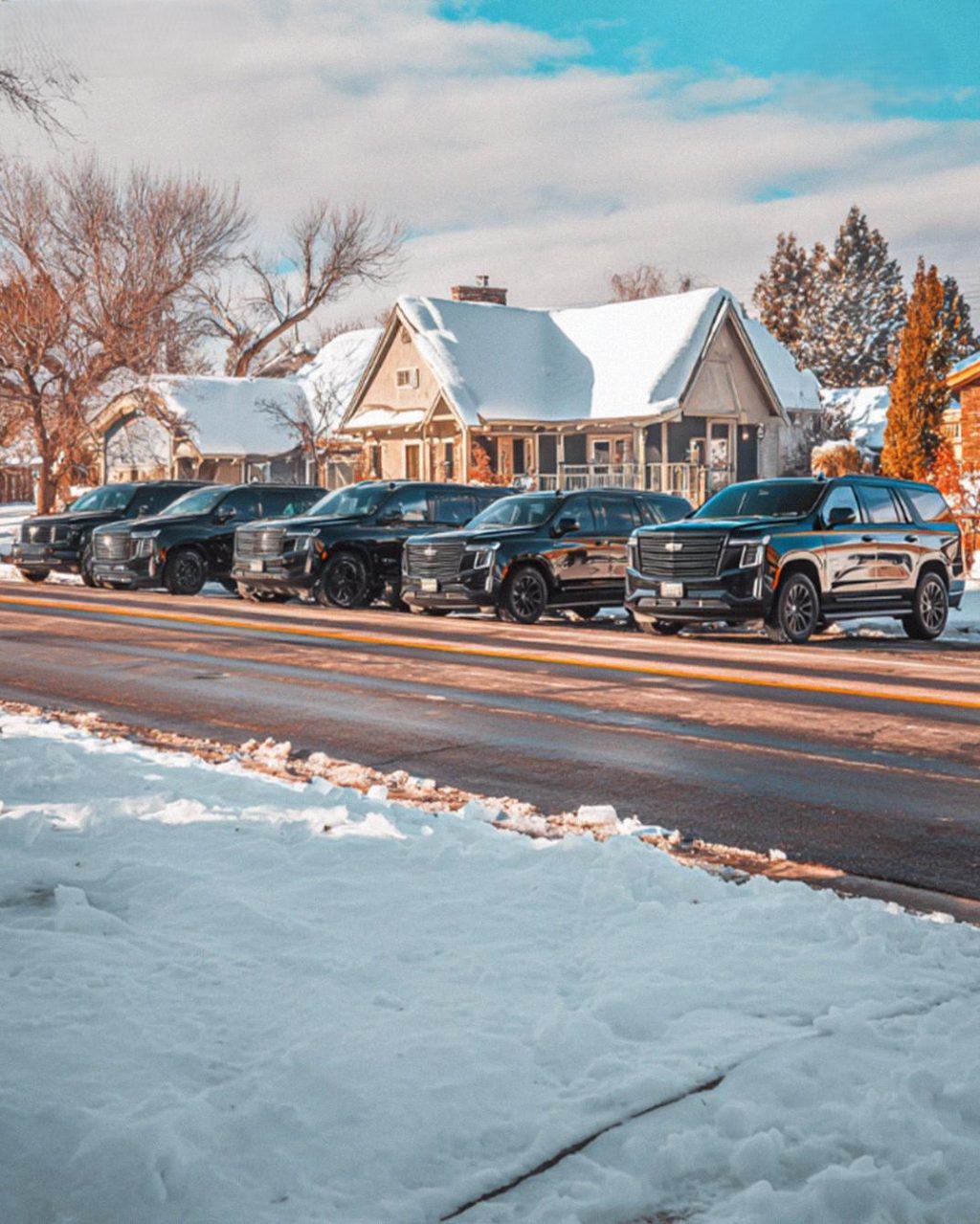
The very next morning, a line of black SUVs showed up in front of her house.
My mom died when I was ten. Dad held it together for a few years, doing his best to be both parents at once. He burned dinners, forgot laundry sometimes, but he never missed a school event and never let me feel alone.
When I was fourteen, he married Cheryl.
She was the kind of woman who smiled too wide when other people were watching and snapped too fast when they weren’t. She never raised a hand to me, but she never let me forget I wasn’t hers. Every rule came with a reminder. Every kindness had strings attached.
“Your room needs to be cleaner.”
“My house, my rules.”
“You’re old enough to know better.”
Dad tried to keep the peace. I could see it in his eyes—how tired he was, how much he wanted things to work. So I swallowed my resentment and stayed quiet.
Then, five years later, Dad died of a sudden heart attack.
I was nineteen.
Cheryl didn’t even wait for the funeral flowers to wilt.
Two days after he passed, she stood at the top of the stairs, arms crossed, blocking the hallway like a judge delivering a sentence.
“You’re not family anymore,” she said flatly.
“Get out.”
No sympathy.
No warmth.
Just ice.
I packed a duffel bag and grabbed my guitar—the only thing that felt like it was truly mine. That night, I slept on my best friend Mark’s couch, staring at the ceiling and wondering how grief could burn and freeze at the same time.
The next morning, I realized I’d left behind clothes, notebooks, photos—pieces of my life. I decided to go back and get the rest.
When I pulled up to the house I was raised in—the one my great-grandfather had built with his own hands—my stomach dropped.
Five black SUVs were parked along the curb.
My first thought was that Cheryl had hired security to keep me away.
Heart pounding, I walked up to the door and rang the bell.
It creaked open slowly.
Cheryl stood there, pale as a sheet.
“Oh! You’re here!” she said, her voice suddenly syrupy. “I was just… just about to call you, sweetheart.”
Sweetheart.
She hadn’t called me that once in five years.
I frowned. “What’s going on?”
Before she could answer, a man in a dark suit stepped forward from the living room.
“Are you Daniel Hayes?” he asked.
“Yes,” I said cautiously.
He nodded. “Good. We’ve been waiting for you.”
Behind him, the house was full of strangers—men and women in suits, carrying briefcases and folders. One of them was speaking quietly into a phone. Another was examining the walls like he was memorizing them.
Cheryl laughed nervously. “There’s been a little mix-up,” she said. “Why don’t you come in?”
I stepped inside, my pulse racing.
The suited man gestured toward the dining table. “Please, have a seat.”
I didn’t sit.
“What is this?” I asked.
He exchanged a glance with a woman standing beside him, then cleared his throat.
“I’m Mr. Lawson. I represent the Hayes Family Trust.”
My ears rang. “The what?”
“Your great-grandfather established a trust nearly eighty years ago,” he continued calmly. “It has passed from generation to generation. Your father was the most recent trustee.”
I looked at Cheryl.
Her smile was cracking.
“No,” she said quickly. “That can’t be right. My husband never mentioned any trust.”
Mr. Lawson nodded. “That’s correct. He was advised not to.”
I felt dizzy. “Why are you here now?”
“Because your father amended the trust six months ago,” the woman said, opening a folder. “In the event of his death, ownership of the property and all associated assets transfer immediately to his biological child.”
She turned the folder toward me.
My name was printed at the top.
The house.
The land.
The accounts.
Everything.
Silence swallowed the room.
Cheryl’s face twisted. “That’s impossible,” she snapped. “I’m his wife!”
Mr. Lawson’s voice was calm, almost gentle. “You were granted a temporary right of residence—thirty days. However, that right is forfeited if you attempt to evict the beneficiary.”
All eyes turned to her.
“You kicked him out,” the woman added. “That voided your claim.”
Cheryl’s mouth opened, then closed.
For the first time, she looked small.
“What about me?” she whispered. “Where am I supposed to go?”
No one answered.
Mr. Lawson turned back to me. “We’re here to secure the property and ensure your belongings are returned. If you’d like, we can also escort Mrs. Hayes while she collects her personal items.”
I swallowed hard. My hands were shaking.
“Yes,” I said quietly. “I’d like that.”
Cheryl stared at me, fury and panic battling in her eyes. “You did this on purpose,” she hissed.
I shook my head. “No. You did.”
Over the next hour, the house changed hands.
Cheryl packed in silence, supervised by security. She tried to argue, to bargain, to cry. None of it worked.
When she left, she didn’t say goodbye.
The SUVs followed her down the street and disappeared.
The house felt unbearably quiet afterward.
I walked through the rooms slowly, touching doorframes, remembering birthdays, Christmas mornings, Dad’s laugh echoing down the hallway.
In his study, I found a sealed envelope on the desk.
Inside was a letter, written in his familiar handwriting.
Danny,
If you’re reading this, then I didn’t get the chance to protect you myself. I’m sorry for that. I saw more than you think. I did what I could. This house was built for family—and you are my family. Always.
—Dad
I sat on the floor and cried until my chest ached.
That was three years ago.
I still live in that house.
I fixed the leaky roof. I refinished the old floors. I turned Dad’s study into a music room where I play the guitar I carried out that night in a duffel bag.
Sometimes, I think about Cheryl and wonder if she ever understood what she lost.
Not the house.
Not the money.
But the chance to be kind—when it mattered most.
And every morning, when sunlight pours through the windows my great-grandfather installed, I remember something important:
Blood may not always make a family.
But love—and truth—decide who gets to stay.