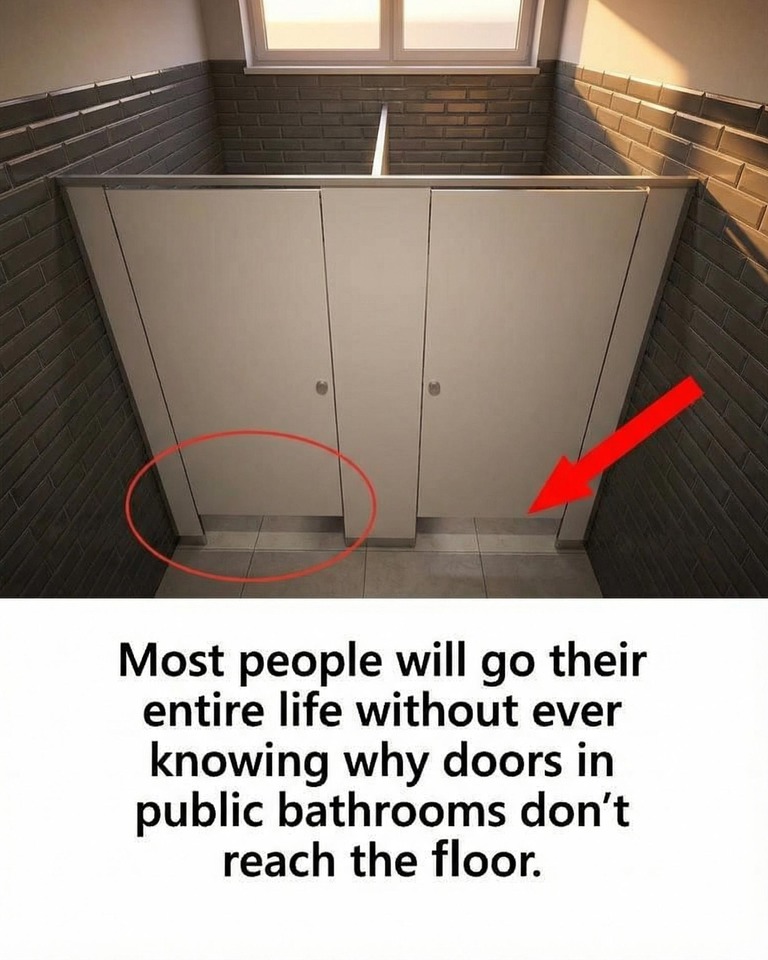
(And Why That Annoying Gap Is Actually There for a Reason)
Almost everyone has noticed it. You step into a public restroom, close the stall door… and there it is. That awkward, unmistakable gap between the bottom of the door and the floor. Big enough to see shoes. Big enough to feel exposed. Big enough to make you wonder, who designed this and why?
It turns out the answer isn’t laziness, cheapness, or a secret plot to make us uncomfortable — although it can feel that way. The gap exists for several practical, safety-driven reasons, and once you know them, the design starts to make a little more sense.
1. Safety Comes First
The biggest reason is emergencies.
If someone inside a stall faints, gets sick, or needs help, the gap allows others to notice something is wrong. Shoes that haven’t moved. A body visible on the floor. Sounds that don’t match what’s expected.
Without that gap, a locked stall could delay help at exactly the moment it’s needed most. In public spaces, especially high-traffic ones, designers prioritize access over total privacy.
2. Faster Cleaning, Better Hygiene
Public restrooms need to be cleaned quickly and thoroughly.
The open space at the bottom allows:
- Water to drain easily during mopping
- Cleaning tools to reach every corner
- Air to circulate, helping floors dry faster
Doors that go all the way to the floor would trap moisture, encourage mold, and slow down cleaning crews — which would make restrooms dirtier, not cleaner.
3. Cost and Practicality
Extending doors to the floor may seem simple, but it’s not cheap.
Floor-level doors require:
- More durable materials
- Precise installation on uneven floors
- Additional hardware to prevent dragging or damage
In large public buildings with dozens (or hundreds) of stalls, that extra cost adds up fast. The gap is a practical compromise between function, durability, and budget.
4. Ventilation Matters More Than You Think
Let’s be honest — bathrooms need airflow.
The gap helps improve ventilation, allowing odors and humidity to escape rather than linger. Fully enclosed stalls would trap smells, moisture, and heat, making the space far less pleasant for everyone involved.
5. It Discourages Misuse
This reason is less talked about, but very real.
Open-bottom stalls reduce:
- Long-term loitering
- Vandalism
- Inappropriate behavior
Visibility, even limited visibility, changes how people behave. The design quietly encourages people to use the space for its intended purpose and move on.
So… Why Does It Still Feel So Awkward?
Because privacy is personal.
Our brains associate closed doors with safety and separation. Even a small gap can feel like a violation of that expectation — especially in vulnerable moments. Some countries prioritize privacy more strongly, which is why you’ll see floor-length stalls in parts of Europe and Asia.
In places like the U.S., Canada, and parts of the UK, the design leans toward function over comfort.
The Bottom Line
That gap under public bathroom doors isn’t an accident — and it isn’t there to make your life harder.
It’s about:
- Safety
- Cleanliness
- Ventilation
- Cost efficiency
- Public responsibility
You may never like it. But next time you notice those shoes on the other side of the stall, you’ll know there’s more going on than poor design.
Sometimes, even the most annoying details exist for surprisingly sensible reasons. 🚻