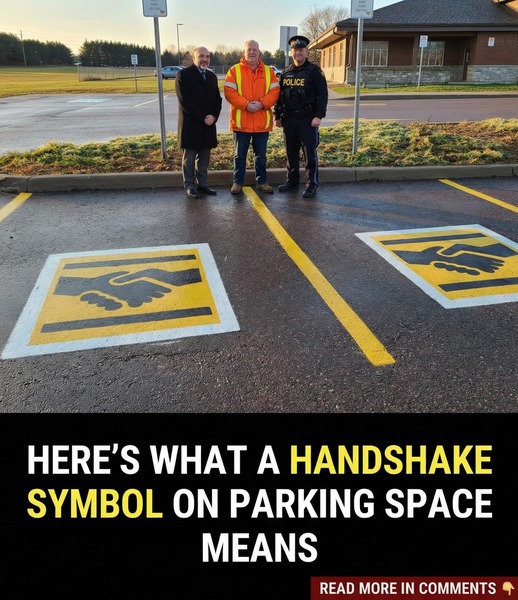
If you’ve spotted a bright yellow handshake painted on a parking space lately, you’re not alone. Drivers across several towns have been doing double takes, wondering if they missed a memo. Is it reserved parking? A new courtesy rule? Some kind of secret civic club?
The truth is a lot more practical — and surprisingly reassuring.
The Symbol That’s Sparking Curiosity
The handshake icon is deliberately eye-catching. Painted boldly on the pavement, it doesn’t resemble familiar symbols like handicap access, electric charging, or car-share parking. That’s exactly why people notice it — and why it’s working.
This new symbol marks a Safe Exchange Zone.
What Is a Safe Exchange Zone?
Safe Exchange Zones are designated public areas — often located near police stations, municipal buildings, or well-monitored facilities — where people can safely meet to complete transactions or exchanges.
Think:
- Buying or selling items from Facebook Marketplace, eBay, or classifieds
- Exchanging items after an online sale
- Custody handoffs or supervised meet-ups
- Any situation where two parties want a neutral, visible, and secure place to meet
The handshake represents agreement, trust, and transparency — but with an important backup: security.
Why Cities Are Introducing Them Now
Online buying and selling has exploded. While most transactions are harmless, scams and meet-up thefts have become common enough that local authorities started looking for simple solutions.
Rather than issuing warnings, many communities chose a proactive approach:
- Highly visible locations
- Good lighting
- Camera coverage or proximity to police
- Clear markings so everyone knows the purpose
The handshake symbol quickly became the visual shorthand for “This is a safe place to meet.”
Why the Symbol Matters
What makes this symbol powerful isn’t just what it represents — it’s how it changes behavior.
When someone suggests meeting in a Safe Exchange Zone:
- Scammers often back out immediately
- Legitimate buyers and sellers feel more comfortable
- Tensions drop because the setting feels neutral and protected
It quietly discourages bad behavior without confrontation.
Not Reserved — But Purposeful
These spaces usually aren’t “reserved” in the legal sense. You won’t get ticketed for parking there briefly, but they’re meant to stay available for short, intentional meet-ups — not long-term parking.
In other words, it’s less about enforcement and more about community awareness.
A Small Symbol With a Big Message
At first glance, the handshake looks almost old-fashioned — a nod to trust in a time when trust feels rare. But paired with modern safety measures, it sends a powerful message:
You can do everyday business without putting yourself at risk.
As more towns adopt the symbol, it may soon become as recognizable as a crosswalk or bike lane. So next time you see that painted handshake, you’ll know — it’s not decoration. It’s a quiet promise of safety, cooperation, and common sense.
And honestly? That’s not a bad thing to see more of in public spaces.