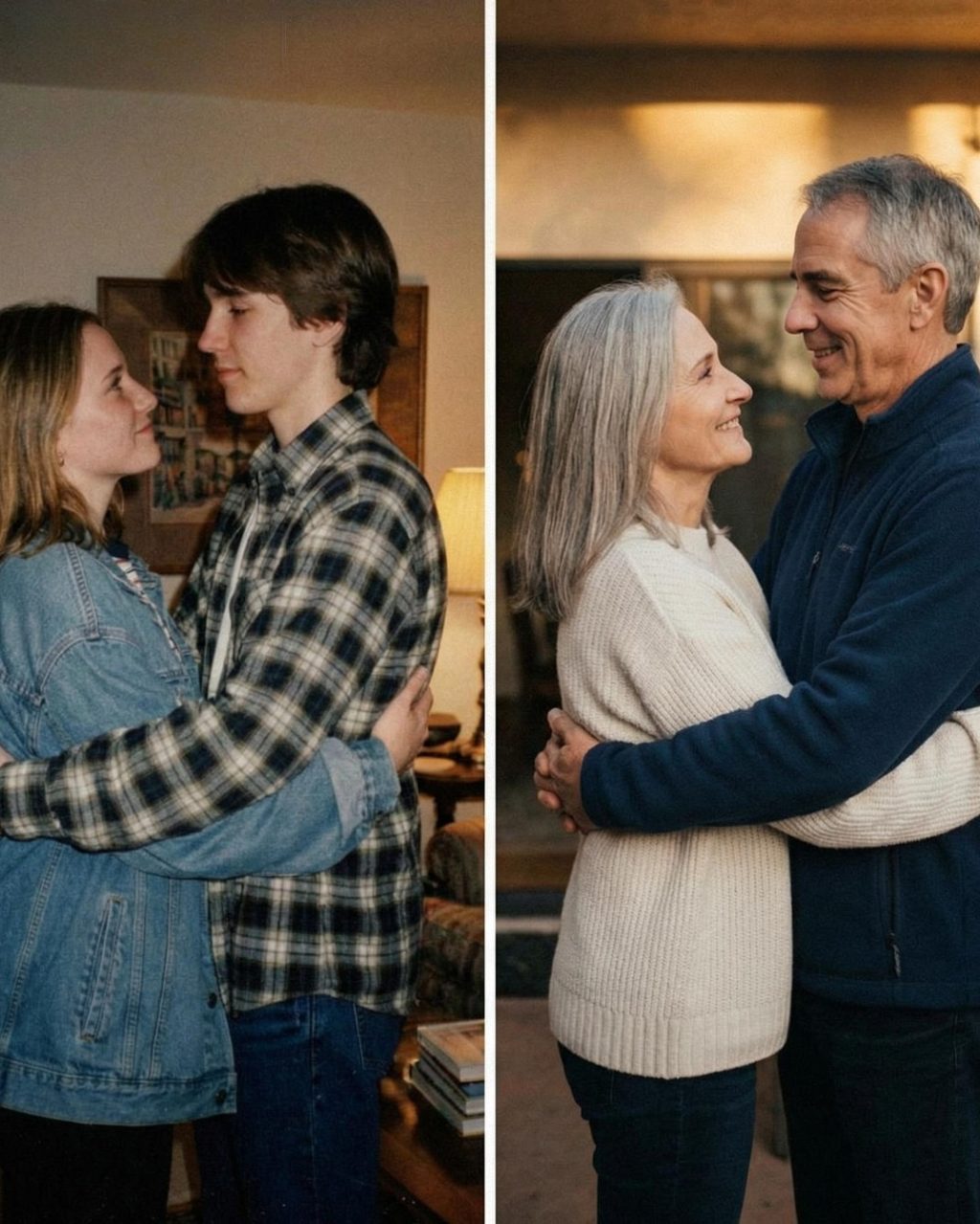
I’m fifty-five years old, and for the first time since I was nineteen, I don’t have anyone to call my husband.
Greg and I were married for thirty-six years. Not the kind of love story people turn into highlight reels or anniversary posts filled with hearts and hashtags. Ours was quieter than that. Built on grocery lists stuck to the fridge, shared dentist appointments, and the way he always insisted on taking the outside seat at restaurants, like his body alone could keep the world from bumping into me.
That’s what made his death feel impossible to accept.
One phone call. One rainy Tuesday. One accident. And suddenly I was standing in a funeral home, choosing casket lining colors like that decision mattered more than my ability to breathe.
By the morning of the funeral, I felt hollowed out. Like I’d cried so much there was nothing left inside me but air. My face in the mirror looked swollen and unfamiliar, as if grief had rearranged my features overnight.
The viewing was already underway when I arrived.
Soft music drifted through the chapel. Voices stayed low. People hugged me gently, touching my shoulder as if I were fragile glass instead of a woman who had survived decades of life.
And there he was.
Greg lay beneath the chapel lights, perfectly still, wearing the navy suit I’d bought him for our last anniversary. His hair was combed the way he always did before weddings, smoothing it down with his palm like he could tame every strand into place.
He looked peaceful.
Too peaceful.
I told myself this was my last chance to do something for him. One final, ordinary act of love — the kind our marriage was built on.
So when the line of visitors thinned, I stepped forward. I leaned over the open casket and lifted a rose, planning to tuck it gently between his folded hands.
That’s when I saw it.
Something pale. Rectangular. Carefully tucked beneath his fingers, hidden in a way that felt deliberate. Like he hadn’t wanted anyone else to notice.
At first, I assumed it was a card from the funeral home. Maybe something placed there by mistake.
But as I leaned closer, my stomach dropped.
It wasn’t an envelope. It wasn’t formal.
It was folded paper. Creased. Soft at the edges, like it had been opened and closed more than once.
Who would leave something like that with him… and not tell me?
This was my husband.
I stood there frozen for what felt like forever, my fingers hovering above his hands. Guilt flooded me instantly. Was it wrong to touch it? Was I crossing some invisible line?
But another thought rose louder than the rest.
If anyone had the right to know, it was me.
So I gently slipped the note from beneath his fingers, folded it into my palm, and walked straight to the bathroom at the end of the hall.
I locked the door.
Only then did I realize my hands were shaking.
I stared at the folded paper for a long moment, pressed against the cool marble counter, my breath coming too fast. Part of me wanted to shove it back into my purse and pretend I’d never seen it.
But I didn’t.
I unfolded the note.
“If you’re reading this, I’m already gone.”
My chest tightened so hard it felt like something inside me cracked.
“I’m sorry,” the note continued, written in Greg’s familiar handwriting — slightly slanted, careful but imperfect. “I wanted to tell you all of this while I was alive, but I was afraid it would hurt you. And I couldn’t stand the thought of adding pain to your life.”
Tears blurred the words.
“I need you to know something important,” he wrote. “I didn’t die with regrets about us. You were the best thing that ever happened to me.”
I sank onto the small bench beneath the mirror, clutching the paper like it might disappear.
“But there is one truth I carried quietly,” the note went on. “Not because it would have changed my love for you — it never could — but because I didn’t know how to say it without breaking something delicate between us.”
My heart pounded in my ears.
Greg had never been secretive. Not really. He was the kind of man who talked through everything — finances, repairs, even his fears. So the idea that he’d carried something alone all these years made my throat ache.
“I was sick longer than you knew,” he wrote.
The room felt suddenly too small.
“I noticed the signs months before the accident. The exhaustion. The pain. The doctor visits I told you were routine. I didn’t want you living every day afraid. I wanted our time to feel normal. Joyful.”
I covered my mouth, stifling a sound that wanted to escape.
“The accident wasn’t planned,” he added. “But if I’m honest, I think some part of me knew I was running out of time.”
I reread those lines again and again, my mind struggling to accept them.
“I left this note because I need you to do something for me,” he wrote. “Please don’t spend the rest of your life wondering if there was more you could’ve done. You gave me everything. Love. Home. Purpose.”
At that point, the tears came freely.
“And please,” the final lines said, “don’t close yourself off. Don’t turn my memory into a reason to stop living. Fall in love with mornings again. Laugh loudly. Take the window seat if you want it. I’ll still be right beside you.”
I folded the note back up and pressed it to my chest.
I stayed in that bathroom until someone knocked gently on the door.
“Are you okay?” a woman’s voice asked.
I wiped my face, straightened my dress, and opened the door.
“I will be,” I said quietly.
I placed the rose back in Greg’s hands before the service began. This time, I did it without fear.
I didn’t put the note back.
I keep it in my nightstand now, folded just the way he left it.
Some nights, when the house feels too quiet, I take it out and read it again. Not because it hurts — but because it reminds me that love doesn’t end when someone leaves.
Sometimes, it becomes a final act of care.
And in that small, crumpled piece of paper, Greg gave me one last gift: permission to live.