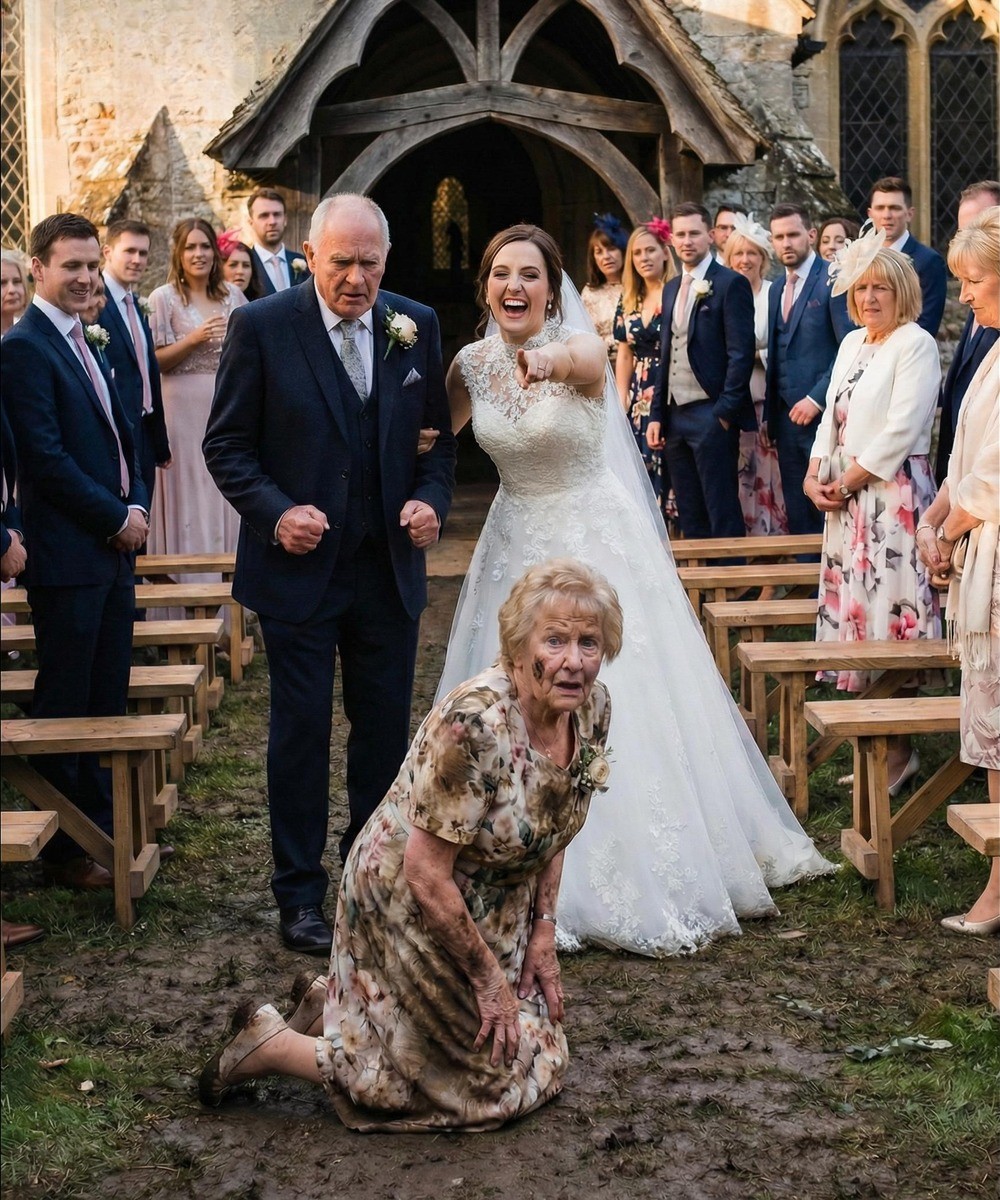
At my son’s wedding, I stood motionless as my wife was pushed into the mud.
Before I could even take a step toward her, my daughter-in-law laughed and said, “Don’t act like this is anything more than a grab for attention.”
That was the moment everything changed.
The wedding was supposed to be perfect. It took place on a beautiful estate just outside Toledo, the kind with manicured gardens, white tents, and soft music drifting through the air. Guests sipped champagne, sunlight filtered through tall trees, and laughter floated from every corner.
I stood beside my wife, Elena, watching our son, Daniel, greet guests with a nervous smile. I felt proud. Emotional. And, if I’m honest, a little uneasy — the way fathers sometimes do when they realize their child’s life is officially no longer centered around them.
Then it happened.
It was fast. A sudden, careless-looking shove near the garden path. Just awkward enough to be brushed off as accidental. But I saw it clearly.
Elena stumbled, lost her balance, and fell into the muddy edge of the walkway. Her pale dress darkened instantly. Mud streaked her hands, her knees, the fabric she’d chosen so carefully.
For a brief moment, the entire world seemed to pause.
Before I could reach her, Clara laughed.
Not a nervous laugh. Not embarrassment. It was sharp. Controlled.
She looked down at my wife and said, with a smirk, “Don’t act like this is anything more than a grab for attention.”
Something inside me snapped.
Anger surged first — hot, immediate. Then came shame. Shame that I hadn’t moved faster. Shame that so many people stood frozen, pretending they hadn’t seen what just happened. I looked around desperately for my son.
Daniel wouldn’t meet my eyes.
I helped Elena up without saying a word. Her hands were shaking. Her lips pressed into a thin line, not from anger, but from humiliation. She didn’t cry. She didn’t argue. She simply brushed the mud from her dress as best she could.
No apology came.
Clara turned away, already laughing with her bridesmaids, as if nothing had happened at all.
And that was when I chose silence.
Not because I didn’t care. Not because I was afraid.
But because I was watching.
Throughout the reception, I paid attention in a way I hadn’t before. I noticed how Clara spoke to the staff — polite words, cold tone. How she corrected Daniel in front of others with a smile that never quite reached her eyes. How her jokes always landed at someone else’s expense.
No one challenged her.
Not the guests. Not her friends.
Not even me.
I smiled when expected. I raised my glass during the toasts. I played my role. But inside, something had shifted permanently.
That night, while music echoed and people danced, I made a quiet decision.
I wouldn’t react in anger. I wouldn’t cause a scene. I wouldn’t embarrass my son on his wedding day.
I would prepare.
What Clara did wasn’t an accident. It was a message. A test of boundaries. A declaration of power.
And I would never allow Elena to be humiliated like that again.
In the weeks that followed, life returned to its routine. Or so it seemed. Daniel and Clara settled into married life. Dinners were polite. Conversations were surface-level.
But I was paying attention.
I noticed how Clara spoke for Daniel instead of letting him answer. How she rolled her eyes when Elena offered help or advice. How she subtly excluded her from conversations, family plans, even photographs.
Elena noticed too.
“She doesn’t like me,” she said one evening, her voice calm but tired.
“It’s not about liking,” I replied. “It’s about control.”
That was when I began setting boundaries. Quiet ones. Firm ones.
I stopped funding things that Clara assumed would be covered. I redirected family assets into trusts with clear conditions. I made sure Daniel knew — gently, privately — that financial independence mattered.
Clara didn’t notice at first.
Then she did.
Requests were met with delays. Expectations were met with polite refusals. Invitations came with conditions that required respect, not entitlement.
Her tone changed.
“Why are you being distant?” she asked one day, her smile tight.
“I’m not,” I said calmly. “I’m just being intentional.”
The real turning point came months later, at a family gathering. Clara made another joke at Elena’s expense. Same sharp edge. Same dismissive laugh.
This time, I didn’t stay silent.
“That’s enough,” I said, not loudly, but clearly.
The room went still.
Clara stared at me, stunned. “I was joking.”
“No,” I said. “You were belittling. And it stops now.”
Daniel looked between us, uncomfortable but listening.
I continued, my voice steady. “My wife deserves respect. In this family, that’s not optional.”
Clara laughed once, uncertain. No one joined her.
For the first time, she realized something had changed.
Power only works when people allow it.
I didn’t raise my voice. I didn’t accuse. I simply refused to look away.
Later that night, Elena squeezed my hand. “Thank you,” she whispered.
I wish I could say everything was fixed overnight.
It wasn’t.
But something fundamental shifted. Clara learned that her words had consequences. Daniel began finding his voice. And Elena stood taller, knowing she wasn’t alone.
As for me?
I learned something important.
Silence isn’t always weakness.
Sometimes, it’s strategy.
And the moment my wife was pushed into the mud wasn’t the day I failed her.
It was the day I decided no one ever would again.