Turning 70 doesn’t usually come with fireworks or dramatic announcements. There’s no sudden switch that flips overnight. In fact, for most people, the change is so gradual that it’s easy to miss at first.
But according to years of clinical observation and aging research, something quietly happens to nearly everyone around this age. Not an illness. Not a diagnosis. Something far more subtle, and far more important.
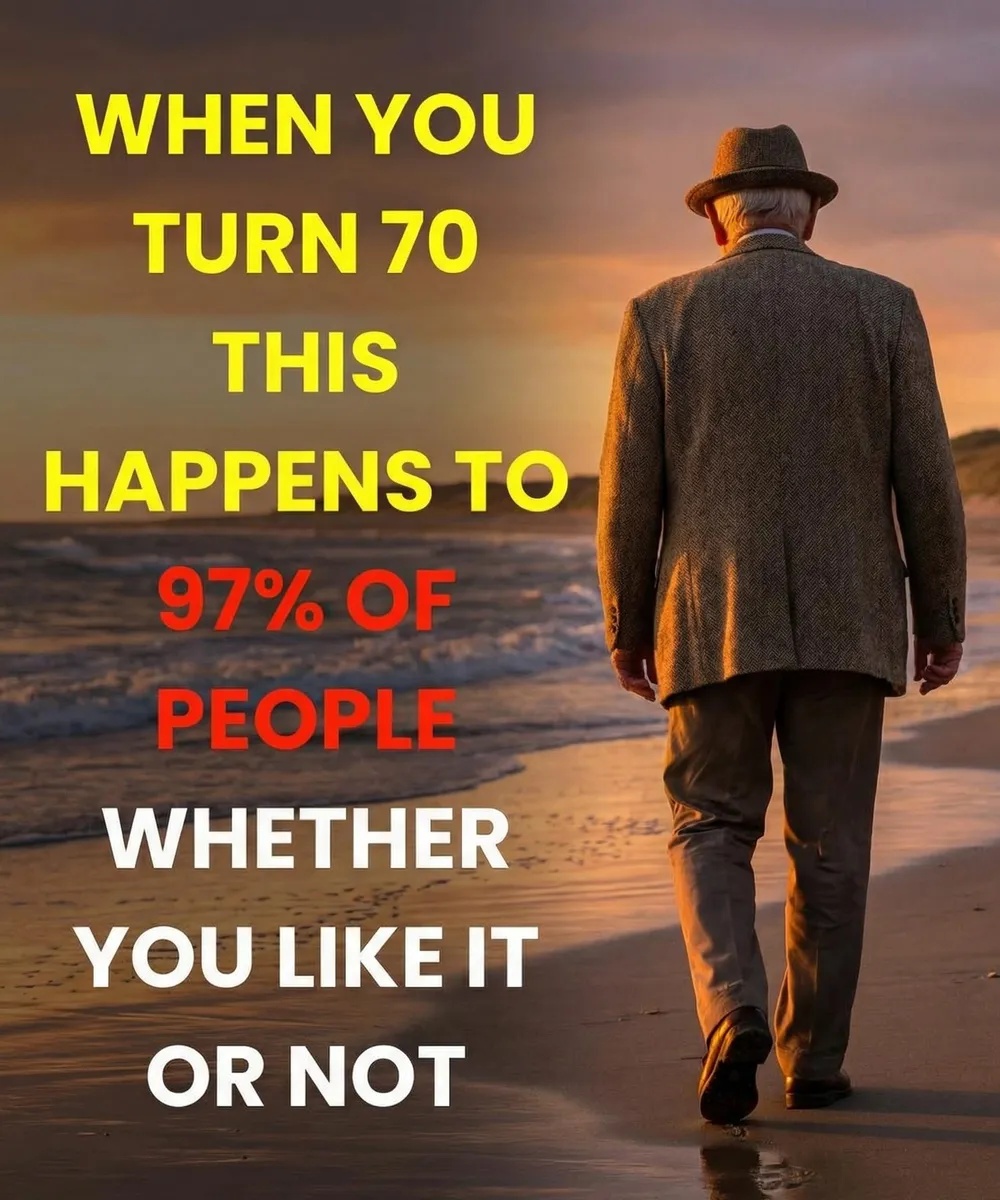
By the time you reach 70, about 97% of people experience a noticeable decline in reserve.
Doctors don’t talk about it much, because it doesn’t fit neatly into a chart or a prescription. But it affects almost every part of daily life.
Reserve is what carries you through.
It’s the extra energy you didn’t realize you had. The balance that saved you when you stumbled. The mental flexibility that helped you adapt when plans changed. The strength you used to borrow from tomorrow without thinking twice.
When you’re younger, your body and brain have a buffer. You can sleep poorly and still function. Skip meals and bounce back. Recover quickly from stress, illness, or injury.
Around 70, that buffer gets thinner.
Not gone. Just smaller.
You may notice it physically first. You tire faster. Muscles don’t respond as quickly. A minor fall takes longer to shake off. A cold lingers. Recovery requires intention instead of happening automatically.
Then there’s mental reserve.
You’re still intelligent. Still capable. Still sharp. But multitasking becomes draining. Loud environments feel overwhelming. Learning something new takes more effort. Decision fatigue shows up sooner than it used to.
This isn’t cognitive decline. It’s efficiency changing.
Your brain still works well. It just asks for more rest between tasks.
Emotionally, reserve shows up in a different way.
Many people around 70 find they have less tolerance for unnecessary stress. Small annoyances feel heavier. Loud arguments, constant negativity, and emotional chaos suddenly feel exhausting rather than manageable.
This isn’t weakness.
It’s clarity.
Your nervous system becomes more honest about what it can and cannot carry.
So why don’t doctors talk about this more openly?
Because medicine is trained to treat problems, not transitions.
Reserve loss isn’t a disease. There’s no pill for it. No single test. It’s a normal part of aging that shows up differently in everyone, but almost everyone experiences it.
And here’s the part most people don’t hear.
Losing reserve doesn’t mean losing independence.
It means changing how you protect it.
People who thrive after 70 aren’t the ones who try to live exactly like they did at 50. They’re the ones who adapt early, intentionally, and without shame.
They rest before exhaustion instead of after it.
They move daily, but gently and consistently.
They simplify their schedules.
They say no more often.
They choose quality over quantity in relationships.
They protect sleep like it’s medicine.
They eat for nourishment, not punishment.
They build routines that support them instead of draining them.
One of the biggest mistakes people make is pushing harder when things start to feel harder.
That approach worked in midlife. It backfires later.
After 70, the goal isn’t to prove strength. It’s to preserve capacity.
That means strength training instead of only cardio.
Balance work instead of just walking.
Mental stimulation without overload.
Connection without obligation.
Another quiet change that happens around this age is recovery time.
Your body still adapts. It still improves. But it needs more space between stressors. Exercise works best with rest. Socializing works best with downtime. Busy days need quieter ones afterward.
People who ignore this often feel like something is “wrong” with them.
Nothing is wrong.
Your body is simply speaking a different language now.
There’s also something deeply positive that comes with this stage, though it’s rarely framed that way.
As reserve narrows, priorities sharpen.
Many people report feeling more emotionally grounded after 70. Less reactive. More selective. More aware of what truly matters and what doesn’t.
You may care less about appearances.
Less about impressing.
Less about tolerating things that drain you.
And more about peace.
Meaning.
Comfort.
Authentic connection.
That’s not decline.
That’s refinement.
The real danger isn’t aging.
It’s misunderstanding aging.
When people expect their 70s to function like their 50s, they feel frustrated and defeated. When they understand the shift and work with it, not against it, this decade can be one of the most stable and satisfying of life.
So if you’re approaching 70, or already there, here’s the truth doctors often don’t say out loud:
Almost everyone feels this change.
It’s normal.
It’s manageable.
And it doesn’t take your life away.
It simply asks you to live it differently.
With more intention.
More care.
And a lot more self-respect.