Let’s talk about something most women notice at some point but rarely admit out loud.
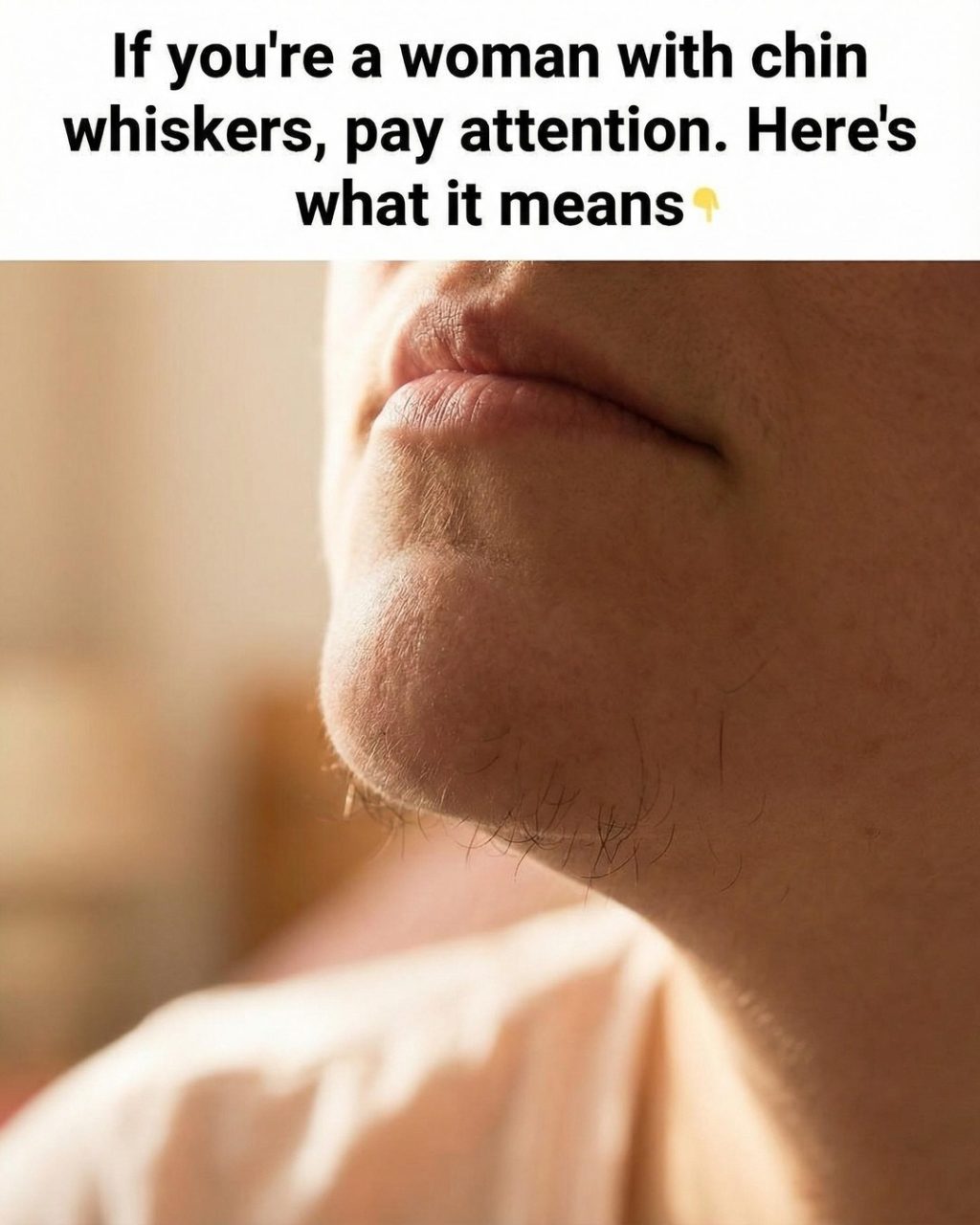
You’re standing in front of the mirror. The light hits your face just right. And there it is—a stubborn little hair on your chin. Or maybe two. Or maybe a few that seem to come back no matter how often you pluck them.
It’s annoying. Sometimes embarrassing. And it can make you wonder: Why is this happening?
The truth is, chin whiskers are incredibly common—and in most cases, completely normal. But sometimes, they can offer gentle clues about what’s going on inside your body.
Not warnings. Not diagnoses. Just signals worth paying attention to.
First, let’s clear something up
Facial hair does not mean something is “wrong” with you.
Every woman produces androgens—hormones often labeled as “male hormones,” though women need them too. Testosterone is one of them, and it plays a role in muscle strength, energy levels, bone health, and even mood.
When everything is in balance, these hormones quietly do their job.
But when levels shift—even slightly—you might notice changes in places you weren’t expecting. Like your chin.
Hormonal changes are the most common reason
One of the biggest reasons chin hairs appear is hormonal fluctuation.
This can happen during:
- Puberty
- Pregnancy
- Perimenopause and menopause
- Times of high stress
As estrogen levels dip or fluctuate, testosterone can become more noticeable—not because you suddenly have more of it, but because it’s no longer being “balanced out” the same way.
That’s why many women notice chin whiskers appearing in their late 30s, 40s, or beyond, even if they never had them before.
It’s not unusual. It’s not shameful. It’s biology.
Stress plays a bigger role than you think
Chronic stress doesn’t just affect your mood or sleep—it can throw your hormones off balance.
When your body is under constant stress, it produces more cortisol. Elevated cortisol can interfere with estrogen and progesterone levels, indirectly tipping the scale toward androgen dominance.
That imbalance may show up as:
- Increased facial hair
- Acne along the jawline
- Thinning hair on the scalp
- Irregular periods
Your chin might be quietly reflecting what your nervous system has been dealing with for months.
Polycystic Ovary Syndrome (PCOS)
For some women, chin whiskers are part of a bigger picture.
PCOS is a common hormonal condition that affects how the ovaries function. One of its hallmark features is elevated androgen levels.
Women with PCOS may experience:
- Coarse, dark hair on the chin or upper lip
- Irregular or missed periods
- Weight gain that’s hard to manage
- Acne or oily skin
Not every woman with chin hair has PCOS—but if facial hair is increasing rapidly or paired with other symptoms, it’s worth discussing with a healthcare provider.
Insulin resistance can influence hair growth
Here’s something many people don’t realize: blood sugar regulation and hair growth are closely linked.
Insulin resistance—when the body doesn’t respond well to insulin—can stimulate the ovaries to produce more androgens. Over time, this can encourage thicker, darker facial hair.
This connection is why chin whiskers sometimes appear alongside:
- Sugar cravings
- Fatigue after meals
- Difficulty losing weight
- Darkened skin patches
Again, this isn’t a reason to panic—but it is a reason to listen.
Genetics matter more than we admit
Sometimes, the explanation is much simpler.
If your mother, grandmother, or aunts had chin hairs, chances are you will too. Genetics determine how sensitive your hair follicles are to hormones.
Two women can have the same hormone levels—one grows chin hairs, the other doesn’t. It’s not about “too much testosterone.” It’s about how your body responds to it.
Aging changes hair patterns
As we age, hair growth doesn’t disappear—it relocates.
Estrogen levels naturally decline with age, especially after menopause. This shift can cause:
- Thinner hair on the scalp
- Coarser hair on the chin or jawline
It’s frustrating, but it’s also part of the body adapting to a new hormonal rhythm.
When chin whiskers are not a big deal
If your chin hairs:
- Grow slowly
- Are few in number
- Haven’t changed much over time
- Aren’t paired with other symptoms
Then they’re likely just a normal variation of human biology.
Pluck them, wax them, laser them—or leave them be. None of those choices say anything about your health or worth.
When it might be worth checking in
You may want to talk to a healthcare professional if:
- Facial hair increases suddenly
- Hair becomes much thicker or darker
- Periods become irregular
- You notice acne, hair thinning, or unexplained weight changes
Not because something is “wrong,” but because your body may be asking for attention.
The bigger picture
Your body is constantly communicating with you—in subtle, sometimes inconvenient ways.
Chin whiskers aren’t a flaw. They’re not a failure. They’re not something to be embarrassed about.
Sometimes they’re just hair.
Sometimes they’re a nudge to slow down, manage stress, nourish your body, or check in with your health.
Either way, they don’t define you.
They’re just another reminder that your body is alive, adaptive, and always trying to find balance—even if it does so in slightly annoying ways.