We hired a new caregiver, Alyssa, to help with my 82-year-old mother after her hip surgery.
She came highly recommended—young, polite, professional, with a calm voice that immediately put me at ease. She helped Mom bathe, prepared meals, managed her medications, and kept her company while I was at work.
At first, everything seemed perfect.
But after a few weeks, I noticed something unsettling.
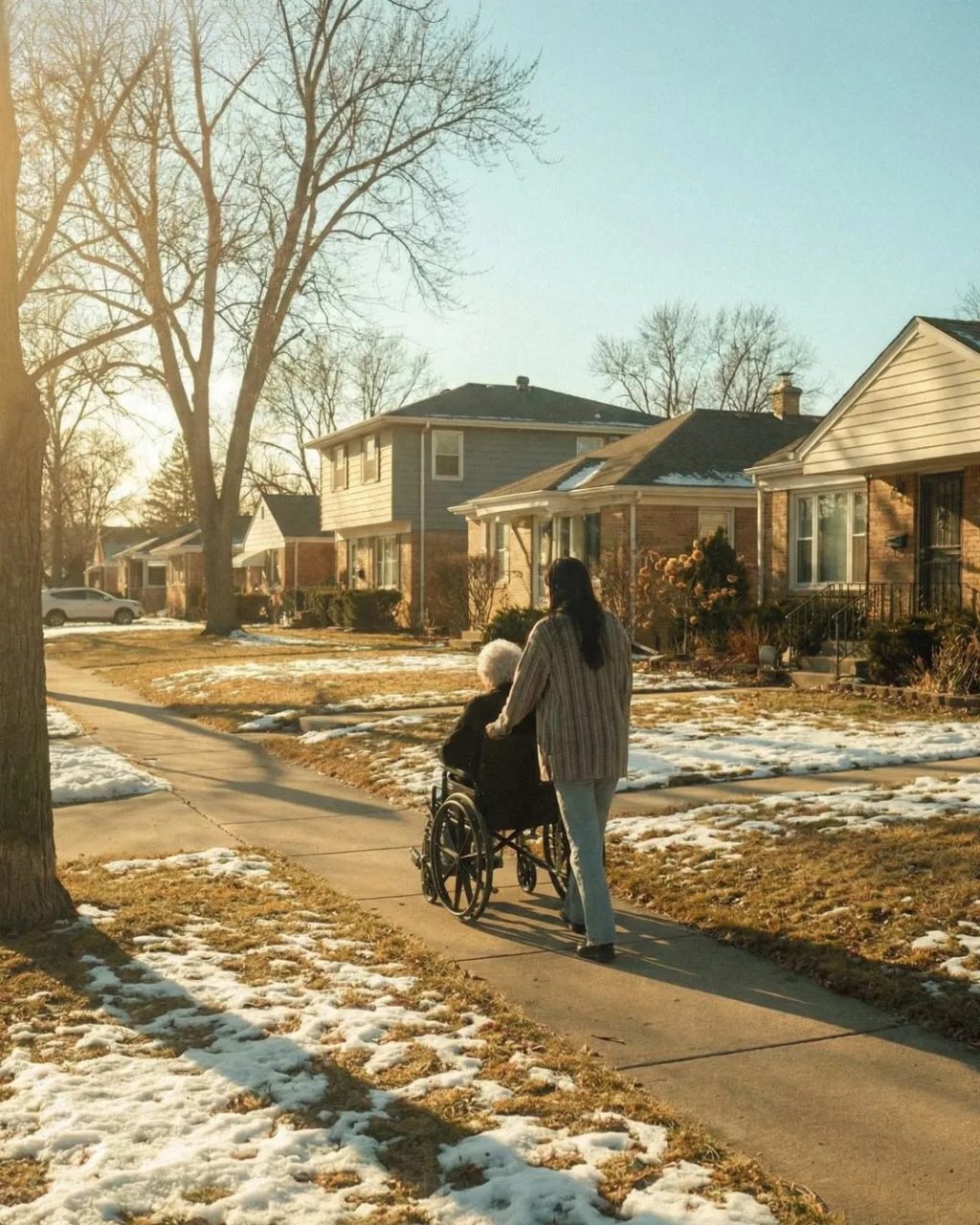
Every Sunday afternoon, Alyssa would take my mother out for what she called “short walks.” She said it was good for circulation, confidence, and recovery. I trusted her judgment.
Except every time they came back, my mom looked… different.
Her shoulders were tight. Her smile didn’t reach her eyes. And she never met my gaze.
When I asked how the walk went, she always answered the same way:
“It was nice, honey.”
But I’ve known my mother my entire life.
She was lying.
The First Real Warning Sign
One Sunday evening, after they returned, I noticed Mom sitting at the kitchen table long after Alyssa had gone home. Her tea had gone cold. Her hands were shaking.
“Mom?” I asked gently. “Did something happen?”
She startled, wiped her eyes quickly, and forced a smile.
“No, no. Just tired.”
But there were tear tracks on her cheeks.
That night, something inside me wouldn’t let it go.
So I opened the doorbell app—not because I suspected Alyssa, but because I needed reassurance. I told myself I was being paranoid.
I clicked on the most recent recording.
And then I froze.
The Doorbell Audio
The camera showed them arriving home. Alyssa steadying my mother as she climbed the steps. Everything looked normal.
Then the audio picked up my mother’s voice, low and shaking:
“I can’t keep this from my daughter. She deserves to know what you told me.”
There was a pause.
A long, heavy silence that made the hair on the back of my neck stand up.
Then Alyssa replied.
Her voice was calm. Too calm.
“You’re not ready to tell her yet,” she said. “She might… react badly. We should wait a little longer.”
My chest tightened.
Then my mother whispered something so quietly I almost missed it.
“But what if something happens to me first?”
Alyssa leaned closer, her voice firm now.
“That’s why we’re doing this carefully.”
I couldn’t breathe.
Sunday Came Too Quickly
I barely slept that night.
Every possible explanation ran through my head—medical confusion, misunderstanding, maybe something innocent blown out of proportion.
But one thing was clear.
Something was being kept from me.
The following Sunday, I made a decision.
I told Alyssa we wouldn’t need her for the full day. I said I wanted some one-on-one time with my mom.
She hesitated—just for a second—but then smiled.
“Of course,” she said. “That’s probably a good idea.”
That smile stayed with me long after she left.
The Confrontation
Once the door closed behind her, I turned to my mother.
“Mom,” I said softly, sitting across from her, “what are those walks really about?”
Her hands trembled in her lap.
She didn’t answer.
I reached for her hand. “I heard the recording.”
Her face crumpled.
“Oh, sweetheart,” she whispered. “I didn’t want you to find out like that.”
“Find out what?” I asked, my heart pounding.
She took a long breath.
Then she said the words that changed everything.
The Truth About Alyssa
“She isn’t just a caregiver,” my mother said. “She was sent to me.”
“Sent by who?” I asked.
My mother swallowed hard.
“By your father.”
I laughed once, sharply. “Dad’s been gone for twelve years.”
“I know,” she said. “That’s what makes this so hard.”
She explained slowly, carefully.
Before my father died, he’d set up a legal arrangement—a contingency plan in case my mother ever needed care. Alyssa wasn’t just trained in elder assistance.
She was trained in end-of-life counseling.
And she wasn’t there for my mother’s hip.
She was there because of a diagnosis my mother had been hiding.
The Diagnosis No One Told Me About
Terminal pancreatic cancer.
Diagnosed six months earlier.
My legs gave out beneath me.
“She didn’t want you burdened,” my mother whispered. “You’ve already lost so much. She was helping me prepare… emotionally. Legally. Spiritually.”
The “walks” weren’t walks.
They were conversations about death, closure, forgiveness, and what comes next.
Alyssa wasn’t manipulating her.
She was protecting her wishes.
But not telling me was the one thing my mother couldn’t live with.
Why Alyssa Wanted to Wait
“Alyssa told me you weren’t ready,” my mother said. “That you’d stop living your life to take care of me. That you’d drown in grief before you had to.”
Tears streamed down her face.
“She was right,” I whispered.
But that didn’t make it okay.
The Final Weeks
We told Alyssa I knew.
She apologized—not defensively, but with genuine regret.
“I was following your mother’s instructions,” she said. “But she’s right. You deserved to know.”
The weeks that followed were heartbreaking and beautiful all at once.
We talked more than we ever had.
We laughed. We cried. We remembered.
And when my mother passed peacefully, holding my hand, I understood something I hadn’t before:
Sometimes the scariest secrets are kept not out of malice—but love.
Epilogue
I kept Alyssa’s number.
Months later, when a friend asked for caregiver recommendations, I gave it without hesitation.
Because sometimes the people we fear are the ones quietly helping us survive the hardest goodbyes.