Brian was my first love.
Back then, I truly believed we would get married and build a family together. We talked about the future the way only teenagers do—certain, fearless, convinced that love alone was enough to carry us anywhere.
Then, after prom, he left.
No explanation. No fight. No goodbye that made sense. One moment we were laughing in the rain, and the next, I was on the ground, soaked and sobbing, watching his back disappear down the street. I remember the ache in my chest more vividly than anything else from that night. It felt physical, like something had been ripped out of me.
For years, I carried that moment with me. I replayed it endlessly, wondering what I’d done wrong, what I’d failed to see. I built entire versions of myself around that unanswered question.
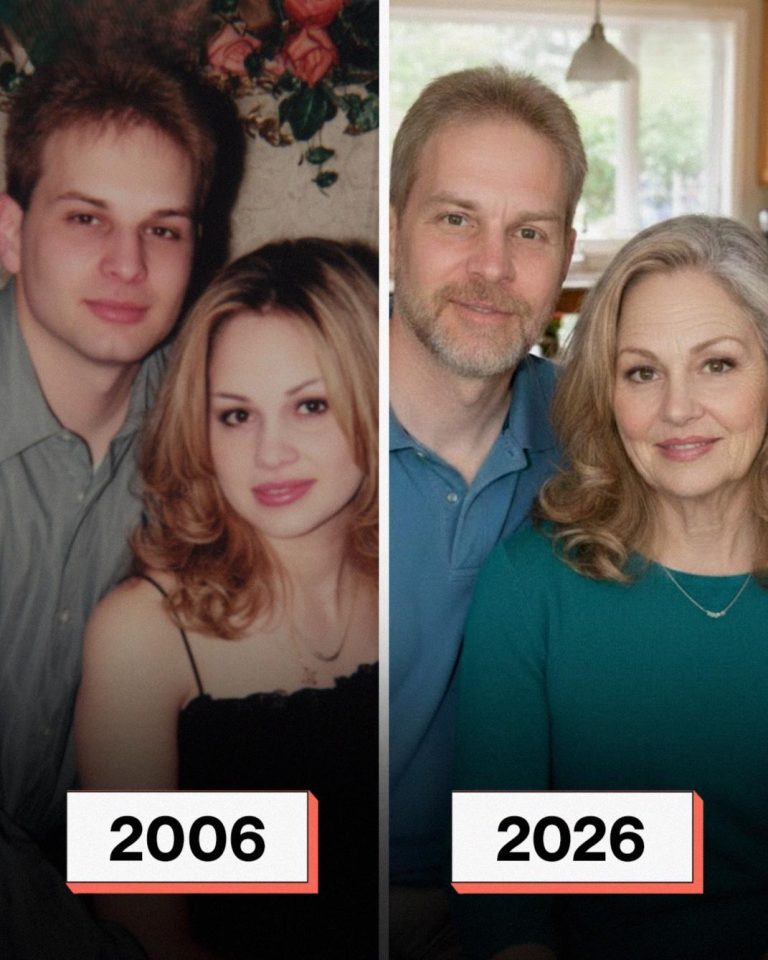
And then fifteen years passed.
Life moved forward, whether I was ready or not.
I went to college. I moved cities. I dated, loved, lost again—though never quite the same way. There was always a small, quiet part of me that compared everyone else to Brian, even though I hated myself for it.
When the invitation to our high school reunion arrived, I almost threw it away. But curiosity has a way of sneaking in through old cracks. The email mentioned something unexpected: our class would be digging up a time capsule we had buried together senior year.
I remembered it instantly.
Brian and I had stayed late that afternoon, laughing as we sealed the container and pressed it into the dirt behind the football field. We’d promised we’d open it together someday.
I never imagined “someday” would come without him.
The day of the reunion, the field looked smaller than I remembered.
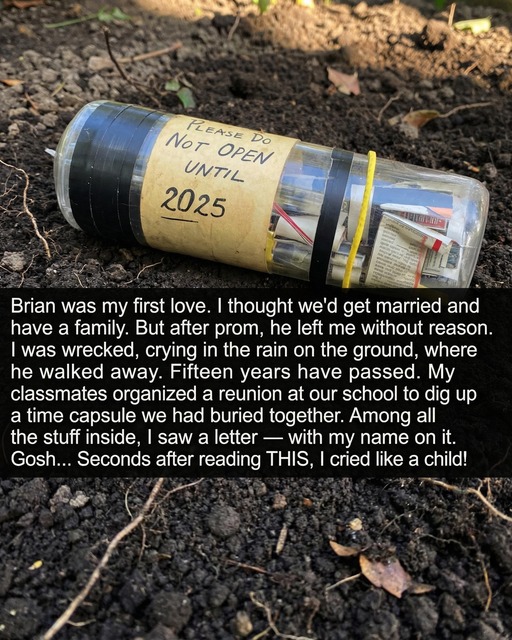
We stood in a loose circle as someone shoveled dirt away, the metal container finally emerging, scratched and weathered but intact. Taped to the lid was a yellowed note: PLEASE DO NOT OPEN UNTIL 2025.
Someone laughed. Someone clapped. And then the lid came off.
Inside were old photos, ticket stubs, handwritten notes, and small tokens of who we used to be. I smiled politely as items were passed around—until I saw it.
A letter.
Folded carefully. My name written across the front in handwriting I would recognize anywhere.
Brian’s.
My hands started shaking before I even opened it.
The first sentence broke me.
If you’re reading this, it means I didn’t get the chance to tell you everything.
I had to stop there, blinking back tears as the noise around me faded. Then I kept reading.
Brian wrote about the night he left. About how scared he was. About his father’s diagnosis—something he’d hidden from everyone. About being told his family was moving away immediately, no room for discussion, no chance to explain.
He wrote about the argument he’d had with his parents, about wanting to stay, about choosing between love and family when he was barely old enough to drive.
I thought leaving quietly would hurt less than staying and breaking your heart over time, he wrote. I was wrong.
The letter ended with words that felt like a hand reaching across fifteen years.
You were never the reason I left. You were the reason I almost stayed.
I cried like a child.
Right there, surrounded by people who barely remembered us, I cried for the girl I used to be—the one who thought she wasn’t enough.
After the reunion, I drove home in silence.
That night, I read the letter again. And again. And again. Each time, something heavy loosened inside me. Not everything—but enough.
A week later, I found a message waiting in my inbox.
It was from Brian.
He’d seen me at the reunion but hadn’t known if he should approach me. He apologized for the years of silence, for the pain he never meant to cause. He told me he’d married young, divorced quietly, and spent a long time trying to forgive himself.
We agreed to meet for coffee.
Just coffee.
But when I saw him walk in—older, quieter, eyes still the same—I realized something surprising.
I wasn’t angry.
I wasn’t broken.
I was… whole.
We talked for hours. About who we were. About who we’d become. About the people we’d loved since. There was warmth there, and familiarity—but no ache.
And that’s when I understood the real gift the letter had given me.
Closure.
We didn’t fall back in love.
We didn’t try to rewrite the past.
We hugged goodbye, genuinely wishing each other happiness.
That night, I placed the letter in a drawer, not as a wound, but as a reminder: sometimes the stories we tell ourselves are the ones that hurt us the most.
Not every ending is a failure.
Some are just beginnings that took longer to understand.
And sometimes, healing waits patiently underground—until you’re finally ready to dig it up.