How an Old Woman Counting Pennies Changed My Life
The cashier laughed at an elderly woman trying to count out pennies for a loaf of bread, and I completely lost it right there in line. Something inside me just broke.
In forty-three years of riding and sixty-seven years on this earth, I had never felt anger like I did in that moment.
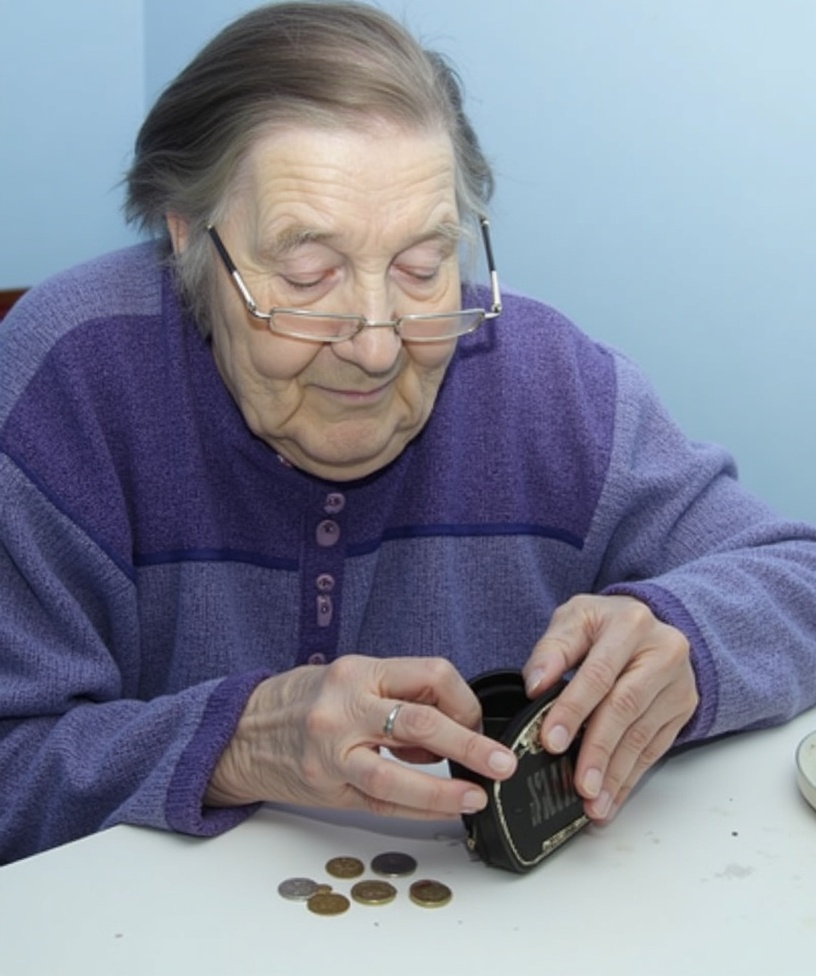
She had to be around eighty. Small. Bent over. Her hands trembled as she placed each coin on the counter, one at a time. Mostly pennies. A couple of nickels. Her fingers were swollen with arthritis, and she kept having to start over.
“Ma’am, you’re twenty-three cents short,” the cashier said. She couldn’t have been older than nineteen. She rolled her eyes and let out an exaggerated sigh. “There’s a line.”
“I’m sorry,” the woman said softly. “I thought I had enough. Let me count again.”
Someone behind me muttered, “Seriously? Some of us are in a hurry.”
Her shoulders began to shake. She was crying. Crying over a $2.49 loaf of bread she couldn’t afford. Crying while a store full of people stared—and no one stepped in.
Then the cashier laughed.
Actually laughed.
“Maybe you should hit up the food bank next time, sweetie.”
That’s when I stepped forward and slapped a twenty on the counter.
“Her groceries are covered. And you’re going to apologize to her. Right now.”
The cashier’s grin vanished.
“Excuse me?”
“You heard me. Apologize.”
“Sir, I don’t have to—”
“You just humiliated an elderly woman over twenty-three cents. In front of everyone. You made fun of her.”
My hands were shaking with rage. “So you can apologize, or I’ll stand right here and make sure every customer who walks in knows exactly who you are.”
The manager came rushing over. Young guy. Tie too tight. Eyes full of panic.
“Sir, what seems to be the issue?”
“There is an issue. Your employee just mocked a senior citizen for being broke.”
The old woman lightly tugged on my jacket.
“Please, it’s alright. I don’t want any trouble. I’ll just leave.”
“No, ma’am.”
I knelt slightly so she could see my face. “You are not leaving without your bread. And you’re not leaving here feeling embarrassed. You did nothing wrong.”
The manager looked at the cashier. Then at the stunned line of customers. Then at me—6’2″, 240 pounds, leather vest covered in patches, beard down to my chest.
“I’m going to have to ask you to leave, sir. Before I call the police.”
That’s when I noticed something that changed everything.
The old woman was… smiling.
The Smile That Didn’t Match the Moment
It wasn’t gratitude.
It wasn’t relief.
It was a knowing smile—soft, gentle, almost amused. Like she had expected this outcome long before I stepped in.
“Ma’am?” I asked quietly.
She squeezed my hand.
“It’s alright, dear. Let’s go.”
Her voice changed somehow—stronger than before. More confident.
Before I could question anything, she slipped her arm through mine, and together we walked toward the exit.
The manager didn’t follow.
The cashier didn’t speak.
The entire store fell silent as this tiny, fragile-looking woman and a grizzled biker walked side-by-side out the automatic doors.
As soon as we were outside, she stopped, pulled the loaf of bread to her chest, and said:
“Thank you, son.”
My throat tightened. No one had called me that in years—not since my mother died.
“It was nothing,” I muttered. “Just basic human decency.”
She chuckled.
“Oh, it was more than that.”
A Strange Request
“Can I buy you lunch?” I asked.
“You just bought my groceries,” she said. “It should be me buying you lunch.”
I raised an eyebrow.
“With pennies?”
She laughed—a warm, delicate sound.
“Fair enough,” she said. “But I have a better idea. Will you walk me home?”
It wasn’t far. Just a few blocks away, in a neighborhood I hadn’t been to in years.
As we walked, she told me her name was Agnes. She lived alone. No children. Her husband had passed away twenty years ago. She didn’t want to be a burden on anyone, so she “made do.”
But something about her tone didn’t sit right with me.
She didn’t talk like a helpless person.
She talked like someone who chose to be alone.
When we reached her house—a tiny, aging cottage with peeling paint—she motioned for me to follow her inside.
“Come in,” she said. “I want to give you something.”
“Ma’am, I didn’t help you for a reward.”
“This isn’t a reward,” she said. “It’s… a responsibility.”
That sent a chill down my spine.
The Box on the Table
Her house was spotless. Not a speck of dust. Fresh flowers on the counter. A kettle already warming as if she’d planned company.
She walked to a small wooden table and picked up a metal tin—old, dented, and secured with a rusted latch.
“Sit,” she said.
I did.
She placed the tin in front of me.
“What’s this?”
“Open it.”
Inside were hundreds—maybe thousands—of newspaper clippings, photos, documents, handwritten notes, and maps. All neatly organized into envelopes.
“What is all this?”
Her eyes softened.
“You’re a biker. You wander. You see things. You understand people. You’re strong, but your heart is stronger. I’ve been waiting for someone like you.”
“Waiting for what?”
She poured two cups of tea.
“To finish something I can’t.”
A Story I Wasn’t Ready For
She sat across from me and clasped her hands.
“I wasn’t counting pennies today because I’m poor,” she said. “I was testing you.”
I blinked.
“Testing me?”
“I needed to know what kind of man you were. And you showed me.”
She nodded at the tin.
“That box… contains everything I have left of a man who was taken from me before he could finish his work.”
“Your husband?”
She hesitated.
“My brother.”
She opened one of the envelopes and slid out a photograph. A younger man stood beside a motorcycle, wearing the same kind of vest I wore—patched, worn, full of stories.
“He was a rider,” she said. “Like you. But he wasn’t just riding for fun. He helped people—people who had no one else. He protected runaways, sheltered women escaping abuse, tracked down missing kids when the police gave up. He was… a guardian for those forgotten by everyone else.”
I swallowed, stunned.
“He died before he could finish his last case,” she whispered. “And I have spent twenty years waiting for someone who could.”
I stared at her.
“I’m not a hero, ma’am. I’m just a guy who yelled at a cashier.”
“You’re a man who stood between cruelty and an innocent soul,” she said. “That’s more than most.”
She pushed the tin closer.
“Will you help me finish what he started?”
The Decision
I should have said no.
I should have walked out, wished her well, and returned to my simple, quiet life.
But something in her eyes reminded me of someone I used to know—someone I failed to protect.
And I suddenly realized… maybe I wasn’t done protecting people.
“Tell me about the case,” I said.
She smiled that same strange, knowing smile from the grocery store.
“I knew you wouldn’t walk away.”
The Missing Girl
Agnes opened another envelope and slid it across the table.
Inside was the picture of a little girl—about twelve—smiling weakly at the camera.
“She disappeared twenty-one years ago,” Agnes said. “My brother promised her mother he would bring her home.”
“Did he?”
“No.”
Her voice cracked.
“He died three days before he found her.”
I felt a heaviness settle in my chest.
“And you think… I can?”
“I think your path crossed mine today for a reason.”
She reached out and rested her hand on mine.
“You’re not just a biker. You’re exactly the kind of man my brother was. And I believe you can finish his last promise.”
I closed the envelope slowly.
“Where do we start?”
Her eyes lit with something almost fierce.
“We start,” she said, “with the man who took her.”