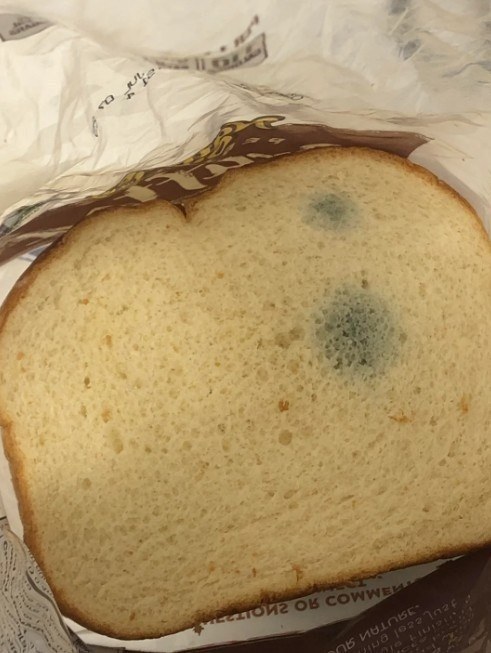
The sight of fuzzy green, white, or black spots on a slice of bread is a common kitchen frustration. If you’ve ever seen these tell-tale signs of spoilage (like the image provided), those spots are mold, and food safety experts unanimously advise against eating the bread.
The green spots are colonies of microscopic fungi that are reproducing and thriving on the bread’s surface. Here is why you should always discard the entire loaf immediately.
The Hidden Danger Below the Surface
When you see mold on a soft, porous food like bread, the visible spot is just the “tip of the iceberg”.
- Deep Roots: Mold is a fungus that uses thread-like structures to embed deep within the food, far below what your eye can see. These threads absorb nutrients and quickly spread throughout the entire loaf.
- Porous Spreading: Unlike hard cheeses or firm vegetables where mold generally cannot penetrate deeply, the soft, porous texture of bread allows the mold’s microscopic roots to spread quickly and easily.
- The “Cut It Off” Myth: The U.S. Department of Agriculture (USDA) advises discarding the entire loaf of bread if it has developed mold. Cutting off the visible moldy part is not enough to remove the potential risks because the unseen roots have likely contaminated the surrounding bread.
🚨 The Health Risks of Moldy Bread
Mold on bread can pose several health risks, particularly for vulnerable populations like the elderly, children, pregnant women, and people with weakened immune systems.
- Mycotoxins: Some molds produce poisonous substances called mycotoxins. These toxins can spread through the bread and may cause digestive upset or other illnesses. Long-term exposure to certain mycotoxins, like aflatoxin (produced by specific Aspergillus species), has even been linked to an increased cancer risk.
- Allergic Reactions: Eating moldy bread or even inhaling the spores from an open package can trigger allergic reactions and respiratory problems, especially in people with asthma or mold allergies.
- Food Poisoning: Moldy food may also have invisible bacteria growing alongside the mold, which increases the risk of food poisoning. Symptoms can include nausea, vomiting, and diarrhea.
🍞 Preventing Mold Growth
Mold requires moisture and warmth to thrive. To extend the shelf life of your bread:
- Store Properly: Keep bread in a cool, dry place. High humidity creates the ideal environment for fungi to grow.
- Use the Freezer: If you don’t plan to use the bread quickly, the best way to prevent mold is to freeze it.
- Check First: If you see any signs of discoloration, a musty odor, or fuzzy spots, avoid consuming the bread and discard the entire loaf.
It is always better to err on the side of caution and throw out the bread when you see any mold.